No products in the basket.
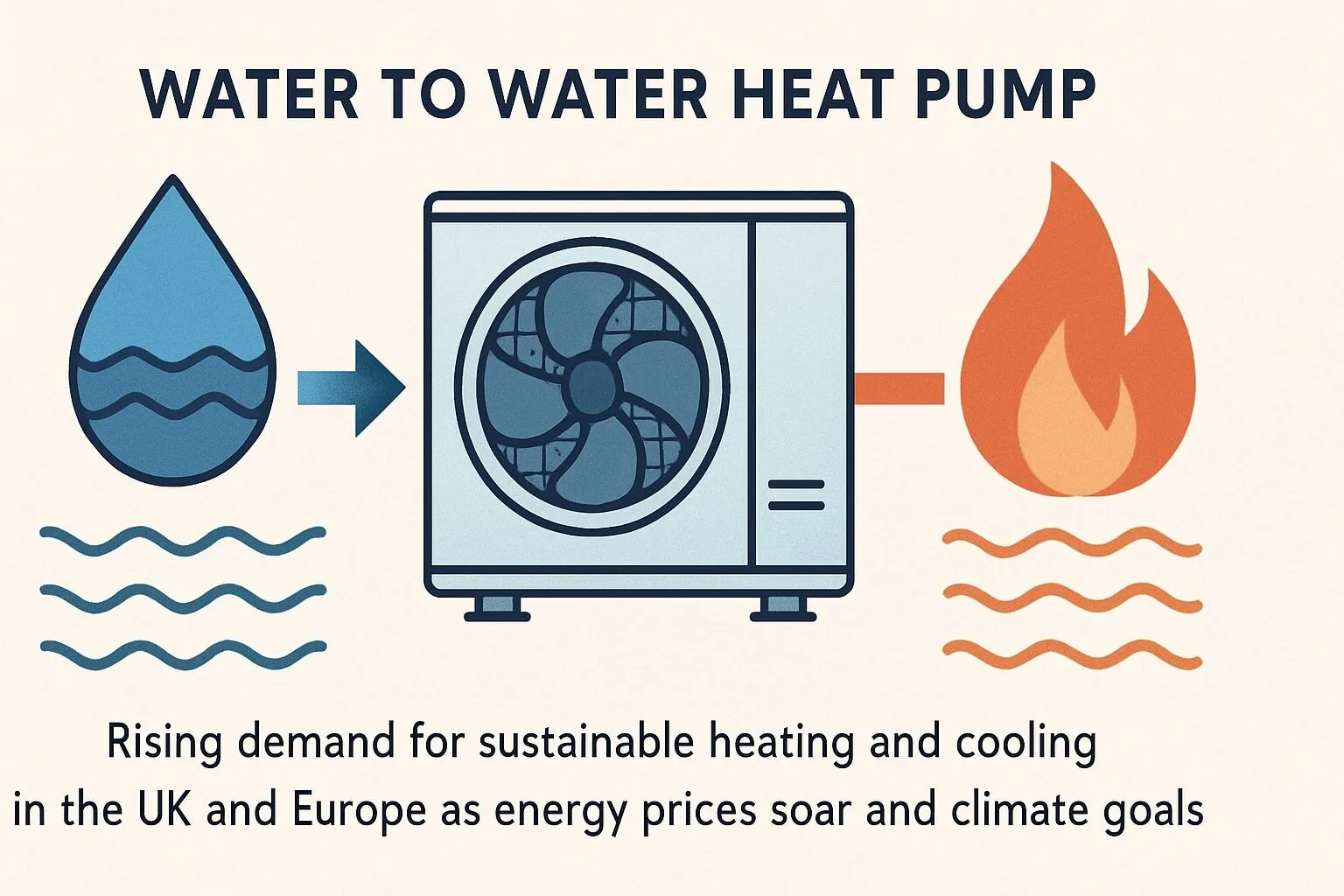
As energy prices continue to soar across the UK and Europe, demand for sustainable heating and cooling solutions is reaching new heights. Tighter climate targets are driving building owners and businesses to seek smarter, more efficient systems.
This guide is here to demystify the water to water heat pump, a technology at the forefront of the green energy transition. We will explore how these systems work, their remarkable efficiency, the latest technologies, and what makes them future-ready for 2026.
Discover the real cost and carbon savings possible with advanced heat pump solutions. See how you can benefit, and get expert guidance to make the right choice for your needs.
The water to water heat pump is a sophisticated renewable heating solution gaining attention in the UK and Europe. Unlike air or ground source models, these systems extract and transfer heat between water sources to deliver efficient heating and cooling. Their adaptability makes them suitable for a range of environments, from residential homes to commercial buildings and even industrial facilities. For instance, large-scale district heating schemes and modern office complexes often rely on water to water heat pump technology for stable, low-carbon energy delivery. To explore other renewable options alongside water to water systems, you may find this Renewable energy heating systems overview helpful.
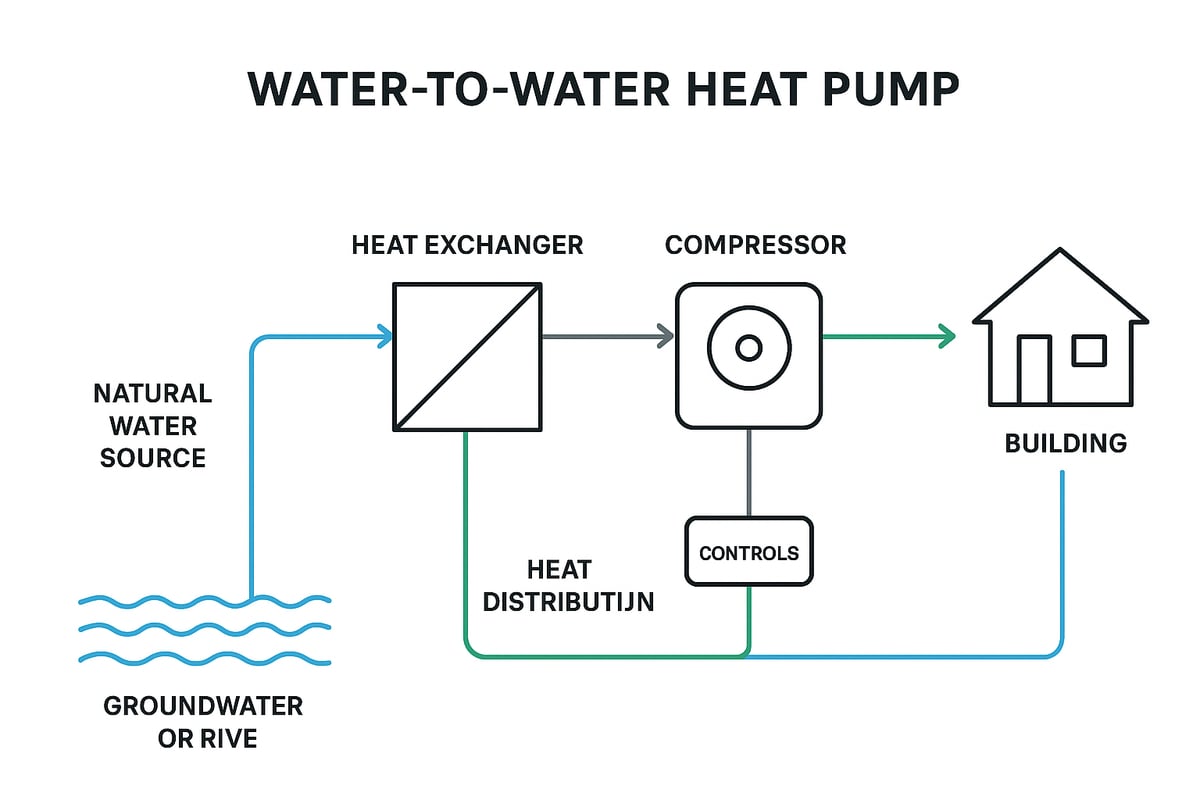
A water to water heat pump operates by moving thermal energy between two water circuits, enabling efficient heating or cooling. This system is distinct from air source heat pumps, which draw heat from the air, and ground source heat pumps, which use the earth itself as a thermal reservoir. Instead, a water to water heat pump interacts directly with groundwater, lakes, rivers, or recirculated water.
These pumps are versatile, serving residential needs, large office blocks, and even entire districts. For example, district heating schemes use water to water heat pump technology to provide low-carbon warmth to numerous properties from a centralised plant. Their design supports a broad range of applications, making them a future-ready solution for various sectors.
The operation of a water to water heat pump follows a clear process. First, the system draws heat from a water source, such as a borehole or river. This heat is absorbed by a refrigerant circulating within the unit’s evaporator. The refrigerant, now warmed, is compressed, raising its temperature further.
Next, the hot refrigerant passes through a condenser, releasing heat into a secondary water circuit that supplies heating or cooling to the building. The refrigerant then cools, returns to its original state, and the cycle repeats. This closed-loop process efficiently transfers renewable energy from water sources to internal heating systems, ensuring high performance and reliability.
A water to water heat pump comprises several advanced elements. The heat exchanger is crucial, enabling efficient energy transfer between the water source and the refrigerant. Compressors, such as scroll, screw, or centrifugal types, amplify the refrigerant’s energy. Modern systems also include sophisticated controls and sensors to optimise performance and allow for remote monitoring.
Environmentally conscious designs now prioritise low-GWP refrigerants, reducing environmental impact. Integration with building management systems is common, supporting seamless control and energy efficiency. These technological advancements ensure the water to water heat pump remains a leading choice for sustainable heating and cooling.
There are two main configurations for a water to water heat pump: closed-loop and open-loop systems. Closed-loop designs recirculate water through a network of pipes, while open-loop systems draw directly from, and discharge back to, natural sources like rivers or aquifers. Both configurations offer simultaneous heating and cooling, a valuable feature for buildings with varied thermal demands.
Systems are modular and scalable, with capacities ranging from 15 kW for smaller sites up to 3000 kW for large facilities. Leading manufacturers like Trane and Carrier provide a wide selection of models, ensuring a water to water heat pump can be tailored for any application, from compact urban projects to expansive district heating networks.
Exploring the benefits of a water to water heat pump reveals why these systems are gaining traction in the UK and Europe. From impressive energy savings to robust reliability, their advantages are clear across a range of applications.
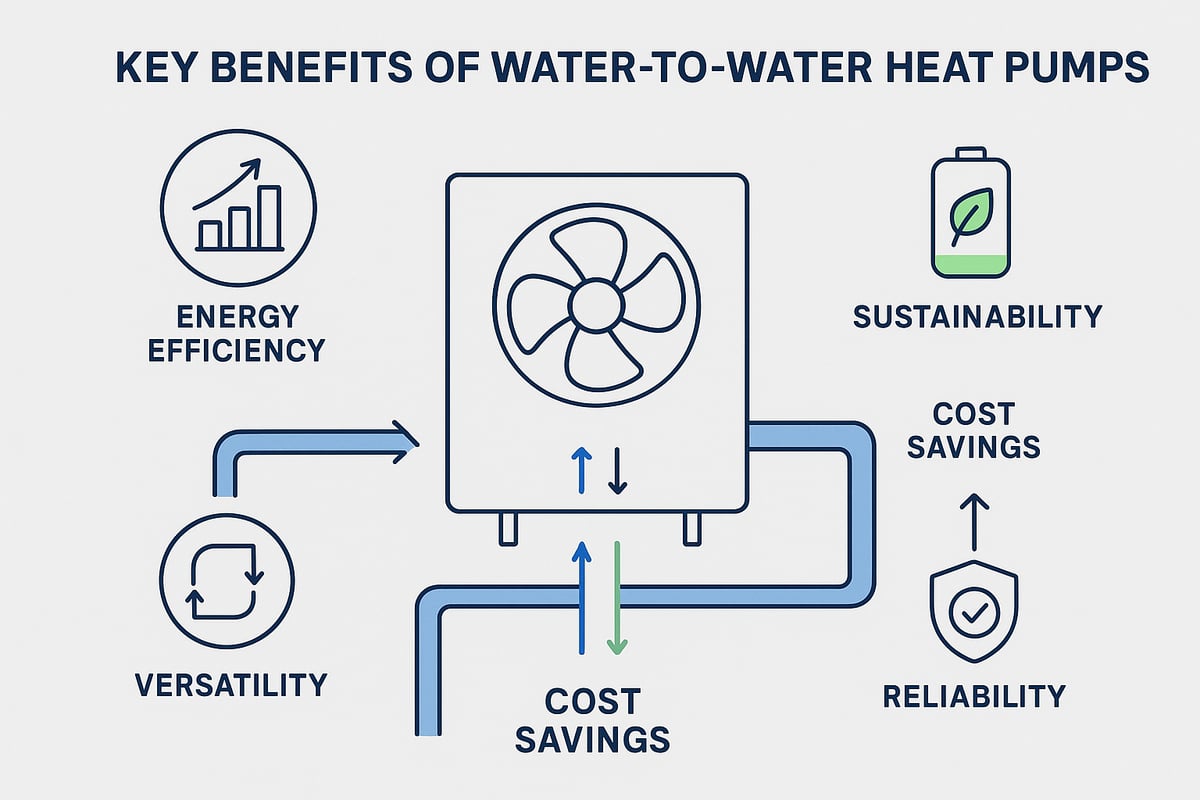
A water to water heat pump stands out for its exceptional energy efficiency, delivering seasonal coefficients of performance (SCOP) up to 6.42 and seasonal energy efficiency ratios (SEER) up to 7.31. These metrics translate to energy savings of up to 50 percent when compared with conventional heating or cooling systems.
For a closer look at real-world savings and performance, see the heat pump energy cost savings guide. With rising energy prices, these savings provide a compelling case for upgrading to a water to water heat pump.
A water to water heat pump makes use of renewable energy sources, including groundwater and waste heat, to reduce environmental impact. These systems cut CO₂ emissions dramatically, supporting the UK's and EU's push towards net zero targets by 2050.
Sustainability is embedded in the design and operation of the modern water to water heat pump, making it a future-ready solution for any building.
A water to water heat pump is highly adaptable, providing heating, cooling, and domestic hot water from a single system. Its wide operating temperature range (up to 120°C) covers a vast array of applications.
This versatility ensures a water to water heat pump can address evolving needs across sectors, making it a sound investment for the future.
Reliability is a cornerstone of every water to water heat pump. These systems use proven compressor technologies, such as scroll, screw, and centrifugal compressors, all designed for durability and high performance.
Choosing a water to water heat pump means investing in a solution built to last, delivering comfort and efficiency year after year.
The pace of innovation in water to water heat pump systems is accelerating as we approach 2026. Advanced technologies are driving remarkable gains in efficiency, sustainability, and flexibility, making these systems more appealing than ever for a range of applications.
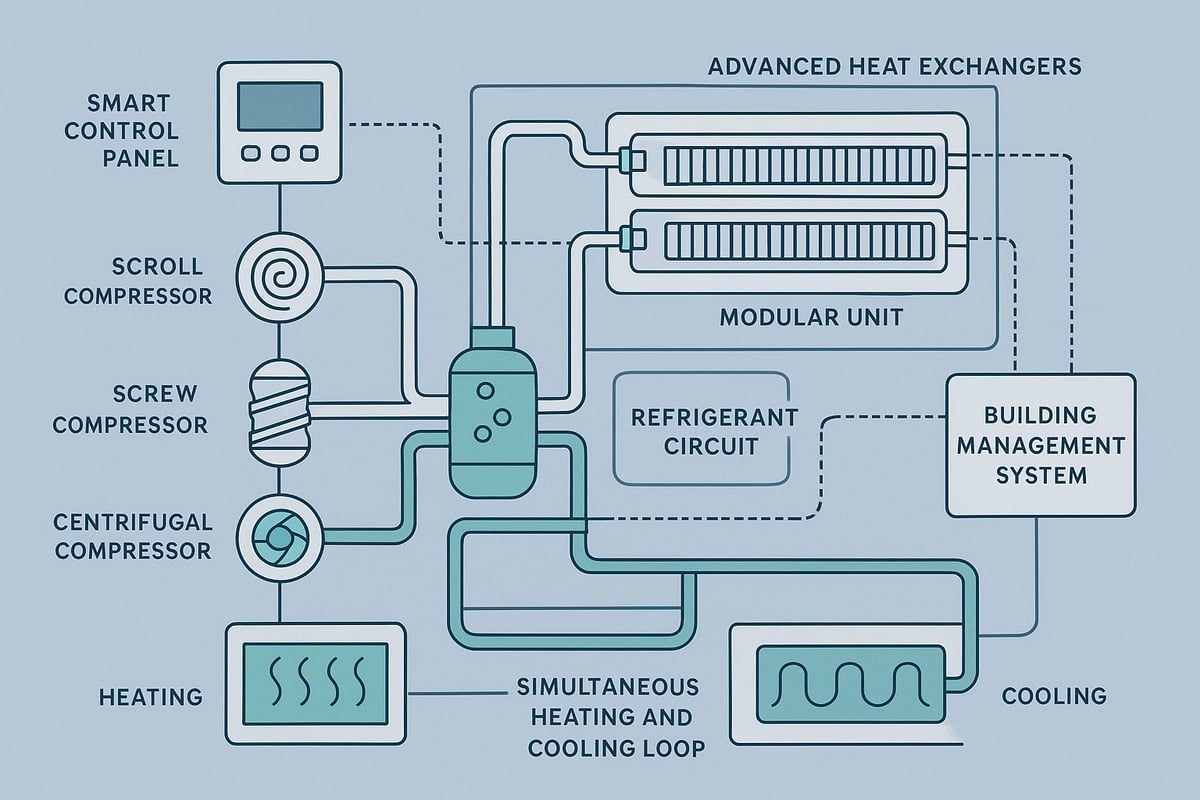
Modern water to water heat pump solutions are built around highly efficient compressors. Scroll, screw, and centrifugal compressors each offer unique benefits for different capacities and demands. Variable-speed drives are now standard, allowing the system to match output to real-time load and reduce energy waste.
Magnetic bearing technology is gaining popularity, minimising wear for longer operational life and quieter performance. For example, the Trane XStream and Carrier AquaForce series feature compressors that excel in reliability, part-load efficiency, and low maintenance. These innovations reflect the broader industry drive for decarbonisation and efficiency, as explored in Heat Pump Advancements Propel HVACR Industry Forward.
With these technologies, water to water heat pump systems deliver robust performance for both commercial and industrial settings.
The future of water to water heat pump design is closely tied to refrigerant innovation. The industry is transitioning to ultra-low GWP refrigerants such as R-1234ze, R-515B, R-1233zd, and R-454B to meet stricter environmental standards.
These refrigerants reduce greenhouse gas impact while maintaining or even enhancing system efficiency. For instance, Carrier’s PUREtec models and Trane’s HFO-optimised heat pumps have demonstrated high performance and safety with these advanced fluids. Regulatory changes across the UK and EU are accelerating this shift, ensuring compliance well beyond 2026.
Selecting the right refrigerant is now a core consideration when specifying a water to water heat pump.
Digital innovation is reshaping how water to water heat pump systems are managed. Today’s solutions integrate seamlessly with building management systems, offering real-time data on system performance and energy use.
Remote diagnostics and predictive maintenance tools help prevent downtime and optimise efficiency. Features such as digital twins, cloud connectivity, and automated alerts are becoming standard in leading brands. These capabilities ensure that building operators maintain peak performance and respond quickly to any issues.
Smart controls are essential for maximising the potential of any water to water heat pump installation.
A major trend in water to water heat pump technology is the ability to provide both heating and cooling at the same time. Multi-pipe and reversible systems are now widely available, meeting mid-season and mixed-use demands efficiently.
By connecting heating and cooling loads, these systems can transfer energy internally, significantly boosting overall efficiency. Trane’s multi-pipe units and Carrier’s variable-speed models are prime examples, supporting buildings where flexible, simultaneous operation is a necessity.
This approach makes water to water heat pump systems ideal for hotels, hospitals, and office complexes seeking maximum energy savings.
The latest water to water heat pump models can deliver output temperatures up to 120°C, opening new possibilities for industrial and district heating applications. Modular designs allow for scalable installations, from as little as 15 kW to as much as 3000 kW.
These high-capacity solutions are engineered for demanding environments such as data centres, healthcare, and large residential networks. By combining robust construction with advanced controls, manufacturers ensure reliability and compliance with future regulations.
Selecting a high-temperature water to water heat pump is now a strategic decision for organisations aiming for long-term sustainability.
Selecting the best water to water heat pump is a crucial decision that impacts comfort, efficiency, and long-term costs. To make an informed choice, it is essential to evaluate your property’s unique requirements, site conditions, efficiency metrics, compliance needs, and the level of professional support available.
The first step in choosing a water to water heat pump is understanding your heating and cooling demands. Calculate the required load by analysing your building’s size, insulation, occupancy, and usage patterns. Domestic, commercial, and industrial applications each bring unique profiles.
For example, a hotel may need simultaneous hot water and cooling, while an office might prioritise year-round climate control. Accurately sizing your water to water heat pump avoids inefficiency and ensures reliable performance through all seasons.
A water to water heat pump requires a dependable water source, such as groundwater, a river, lake, or a recirculated system. Assess the quality, temperature, and availability of water, as these factors directly affect efficiency and feasibility.
Consider site access, local regulations, and environmental restrictions. Open-loop systems use direct water intake and discharge, while closed-loop systems circulate a fixed volume. Selecting the right configuration for your water to water heat pump maximises performance and minimises environmental impact.
Evaluating the efficiency of a water to water heat pump involves understanding key performance metrics like SCOP (Seasonal Coefficient of Performance) and SEER (Seasonal Energy Efficiency Ratio). These ratings indicate how effectively the system converts energy to heating or cooling across different loads.
Compare manufacturer data, certifications (such as EN14825:2018), and part-load performance. For those considering alternatives, reviewing Electric water heat pump solutions can offer additional insight into efficiency and system comparisons. Focusing on both full and part-load ratings ensures your water to water heat pump delivers long-term savings.
Before installing a water to water heat pump, ensure compliance with evolving UK and EU regulations. This includes meeting carbon reduction goals, adhering to F-Gas refrigerant phase-downs, and satisfying planning or building code requirements.
Choose systems that use low-GWP refrigerants and align with 2026 environmental standards. Proactive compliance helps future-proof your investment and supports your sustainability objectives, making your water to water heat pump a responsible choice.
Proper installation by certified professionals is vital for the optimal operation of your water to water heat pump. Consider the expected timeline, potential site disruption, and the importance of commissioning for peak efficiency.
Ask about maintenance plans, manufacturer warranties, and after-sales support. Reliable support ensures longevity and minimal downtime, protecting your investment in a water to water heat pump for years to come.
Selecting the right water to water heat pump is crucial for optimising efficiency, sustainability, and comfort in modern buildings. With rapid advancements in technology and new models launching for 2026, let us explore the leading options from renowned manufacturers and accessible solutions for UK property owners.
Trane is a global leader in high-performance water to water heat pump technology, offering a comprehensive product line for 2026. Their Lift Booster, Exergy RE/P/S, City RTSF HT, XStream Excellent, and City Advantage models span capacities from 15 kW to 3000 kW. Trane’s City RTSF HT unit delivers up to 110°C output, ideal for demanding applications like district heating. Efficiency is a priority, with SCOP values reaching up to 6.42 and robust design ensuring long service life. These systems feature advanced compressors, low-GWP refrigerants, and seamless integration with building management platforms.
Carrier’s water to water heat pump portfolio includes the AquaSnap and AquaForce series, renowned for flexibility and environmental performance. Models use refrigerants such as R-134a, R-410A, R-1233zd, R-1234ze, and R-515B, supporting capacities from 30 kW up to 2500 kW. These pumps are widely adopted in healthcare, industry, and district heating. Carrier’s PUREtec technology ensures low global warming potential and high efficiency, while digital controls optimise operation. For a deeper understanding of real-world efficiency, see this Estimation of energy efficiency of heat pumps in residential buildings using real operation data.
Both Trane and Carrier offer state-of-the-art water to water heat pump solutions, but key differences exist. Trane models often excel in ultra-high temperature applications and boast exceptional reliability, with screw compressors rated at 99.5% uptime. Carrier systems, meanwhile, provide a broader refrigerant selection and highly customisable controls. In terms of efficiency, both brands deliver SCOP values above 6 in optimal conditions. The table below summarises their core features for 2026:
| Feature | Trane | Carrier |
|---|---|---|
| Capacity Range | 15–3000 kW | 30–2500 kW |
| Max Temp Output | Up to 110°C | Up to 120°C |
| Refrigerants | HFO, R-1234ze, R-515B | R-134a, R-410A, R-1233zd, etc. |
| Notable Models | City RTSF HT, XStream | AquaForce, AquaSnap |
For industrial and municipal projects, specialised water to water heat pump models are essential. Trane’s XStream and Carrier’s AquaForce units are engineered for ultra-high temperature output, reaching up to 120°C. These modular designs cater to district heating networks or large-scale process applications. For example, Carrier’s 61CWD and Trane’s Exergy S Series offer scalable solutions, enabling efficient heat delivery even in the most demanding sectors. Their adaptability ensures compliance with upcoming regulatory standards and future-proofs major investments.
Space constraints in urban or retrofit scenarios require compact, modular water to water heat pump options. Trane’s City Advantage and Carrier’s 61WG are designed for minimal footprint and easy integration. These units feature plug-and-play installation, rapid commissioning, and flexible configuration for different site needs. Despite their size, they maintain high efficiency and advanced control features. This innovation means even buildings with limited plant room space can benefit from decarbonised heating and cooling using the latest technology.
U and I Renewables is dedicated to making water to water heat pump systems accessible to UK homeowners. With over 17 years of experience, government approval, and full certification, they guide customers through unbiased advice, installation, and maintenance. Homeowners can secure grants up to £7,500 for air source heat pumps, making green heating affordable. Their team offers a full suite of services, including flexible finance, 24/7 emergency support, and ongoing compliance with future regulations. For those considering installation, their Thermo pump installation guide provides step-by-step assistance.

Implementing a water to water heat pump system involves a structured process to ensure maximum efficiency, compliance, and long-term performance. Each step is essential, from the initial site assessment to ongoing optimisation.
The first step in any water to water heat pump project is a thorough site assessment. Experts will evaluate the availability and quality of water sources, such as groundwater, lakes, or rivers. They also review the heating and cooling load profiles of the building to determine the system's size and capacity.
Key considerations include:
For complex projects like district heating, a detailed feasibility analysis is vital. Studies such as the Numerical Investigation and Optimization of a District-Scale Groundwater Heat Pump System offer insights into optimising performance and cost efficiency. A well-executed assessment helps ensure the water to water heat pump will deliver reliable, long-term benefits.
Once site feasibility is confirmed, the next step is designing the water to water heat pump system. Engineers select the appropriate model, capacity, and refrigerant based on the building’s requirements and the characteristics of the water source.
System design includes:
Customising controls allows for remote diagnostics and predictive maintenance, maximising uptime. For projects requiring simultaneous heating and cooling, multi-pipe or modular units may be specified. The right design maximises the performance of the water to water heat pump while reducing operating costs.
Before installation, it is crucial to obtain all necessary approvals and funding. This includes planning permission, environmental assessments, and compliance with local building codes. Authorities may require detailed documentation about water use and discharge.
Funding options to consider:
Securing funding can significantly lower upfront costs for a water to water heat pump system. Early engagement with regulatory bodies and financial advisors helps streamline the process and prevents costly delays.
Proper installation is key to the long-term success of a water to water heat pump. Only certified and experienced installers should handle the setup to ensure compliance with safety and quality standards.
The typical installation process involves:
Commissioning ensures the system operates as designed, with all controls calibrated and performance verified. Minimising disruption and maintaining clear communication with building occupants are also important during this phase.
After installation, regular maintenance is essential for optimal operation and efficiency. Scheduled servicing includes checking heat exchangers, water quality, and system pressures to prevent breakdowns.
Best practices for maintenance:
Timely maintenance extends the lifespan of the water to water heat pump and ensures it continues to deliver energy savings and environmental benefits. Performance reviews may identify opportunities for upgrades or further optimisation as technology evolves.