No products in the basket.
Energy bills are climbing across the UK, prompting more homeowners to rethink how they heat their homes. The hot water solar pump stands out as a smart, eco-friendly answer to this challenge, offering both cost savings and sustainability.
This handbook is your essential guide for 2026. Here, you will learn how hot water solar pumps work, explore their benefits, compare system types, and discover step-by-step installation and maintenance advice.
Curious about becoming less dependent on the grid? Interested in reducing your carbon footprint? Read on to unlock the knowledge and confidence needed to choose and care for your own hot water solar pump system.
Hot water solar pumps are transforming how UK homes produce hot water, offering a blend of sustainability and cutting-edge technology. As energy prices climb and environmental concerns grow, understanding these systems is crucial for anyone considering a smarter, greener way to heat water.
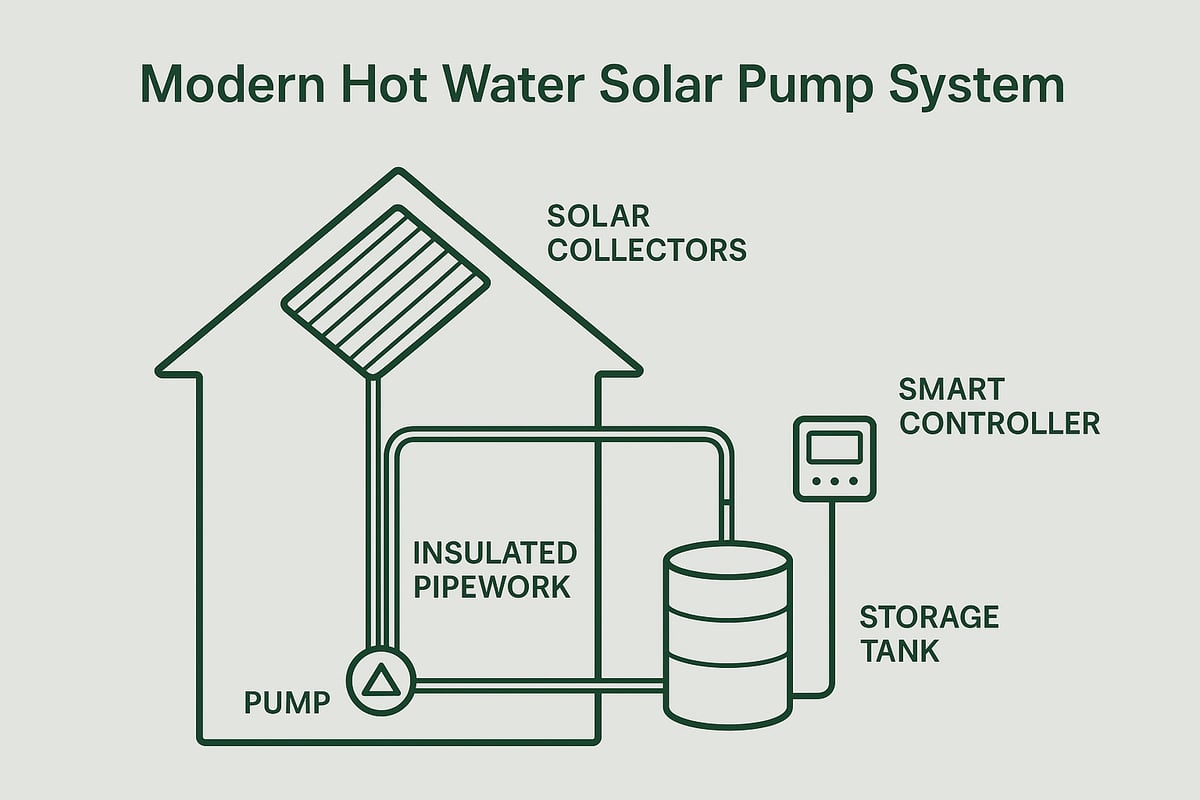
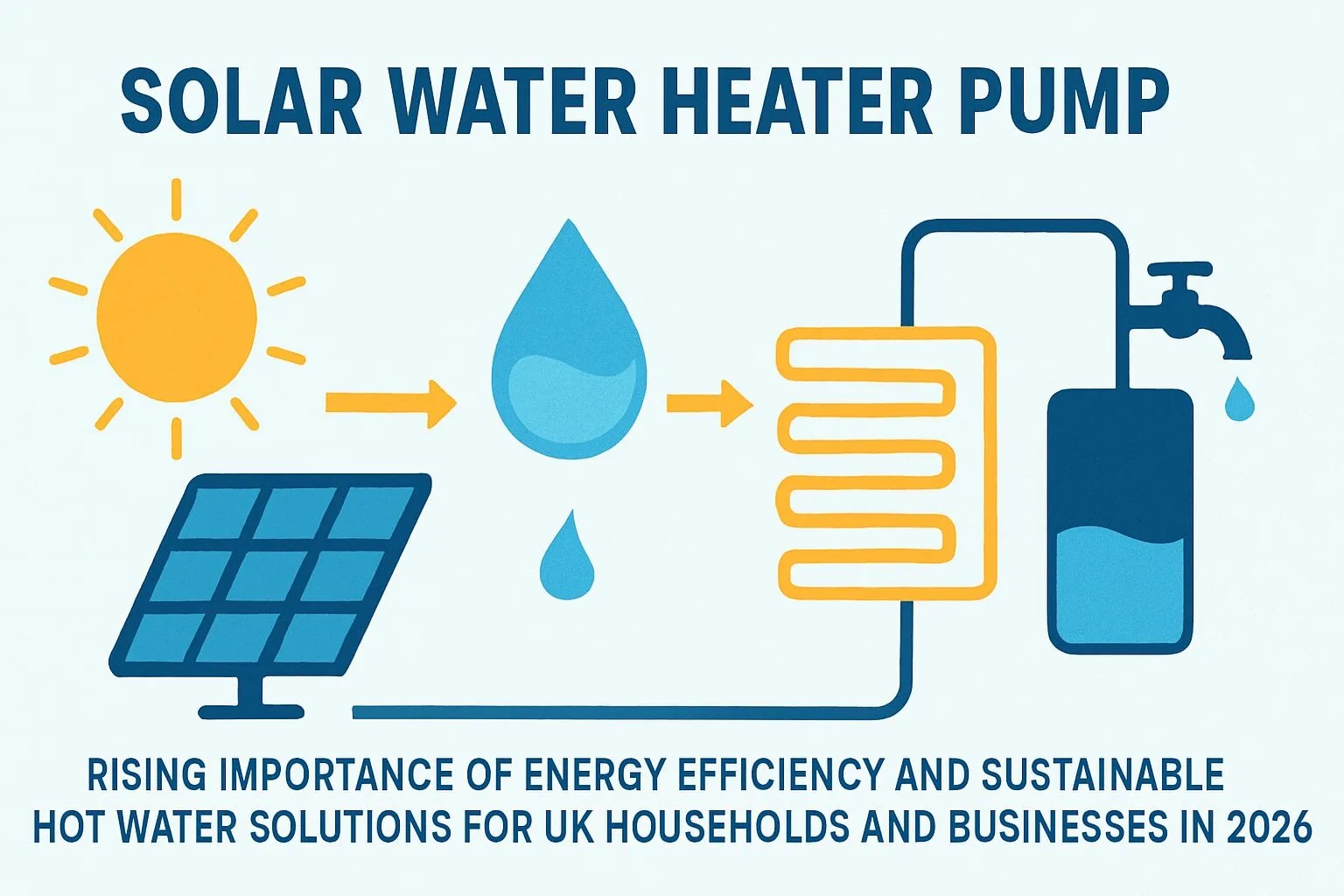
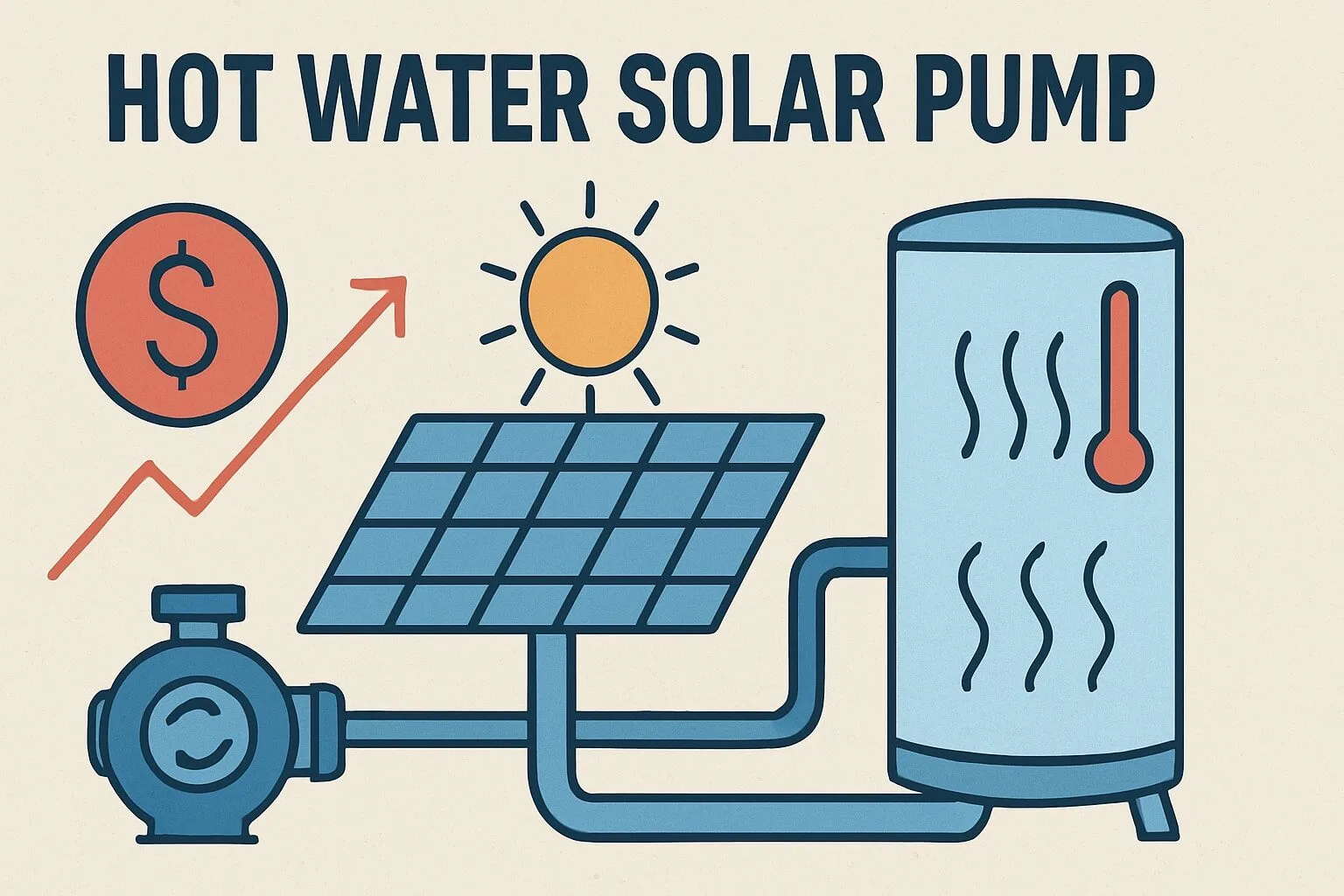
A hot water solar pump is an advanced system designed to harness solar energy for heating water, using a mechanical pump to circulate water or heat-transfer fluid between solar collectors and a storage tank. The core components include:
Unlike traditional electric immersion heaters or gas boilers, a hot water solar pump uses renewable energy, significantly lowering running costs and emissions. For example, a solar thermal pump system captures the sun’s heat, while an immersion heater relies solely on electricity from the grid, making the former far more energy-efficient.
The operation of a hot water solar pump can be compared to a central heating loop. First, solar collectors absorb sunlight, converting it into heat. The pump then circulates water or heat-transfer fluid through these collectors, carrying the absorbed heat to a storage tank. Inside the tank, a heat exchanger transfers the energy to your domestic hot water supply.
This continuous loop ensures efficient heat delivery, with the pump maintaining optimal flow regardless of weather fluctuations. Think of it as a cycle that keeps hot water moving, much like a heart pumping blood around the body, ensuring warmth is always available when needed.
Hot water solar pump systems come in several configurations to suit different needs and climates. The main categories are:
| System Type | Loop Type | Best Suited For |
|---|---|---|
| Direct (Active) | Open-loop | Mild climates, low freeze risk |
| Indirect | Closed-loop | Colder regions, all-year reliability |
Direct (active) systems move domestic water directly through the collectors, ideal for areas with minimal freezing. Indirect systems use a separate fluid, offering better freeze protection and making them suitable for most UK homes. Open-loop designs are simpler but less protected, while closed-loop systems are robust and long-lasting.
Modern hot water solar pump systems are evolving rapidly. Key components now include smart controllers that optimise performance, high-efficiency pumps with variable speed, and integrated monitoring for remote diagnostics. The rise of IoT means homeowners can track their system’s status and receive maintenance alerts on their smartphones.
According to the Solar Water Pump Technology Roadmap, adoption of connected solar pumps is expected to surge as features like brushless DC motors, predictive maintenance, and real-time analytics become standard by 2026.
Switching to a hot water solar pump can reduce household carbon emissions by up to 60 percent compared to gas or oil boilers. According to the Energy Saving Trust, the average UK home could save £100 to £200 annually on energy bills, while making a significant contribution towards the nation’s net-zero ambitions.
Adopting a hot water solar pump system offers a range of compelling benefits for UK homeowners. From significant cost savings to a meaningful reduction in carbon emissions, these systems represent a smart choice for the future of home comfort. Below, we explore the key advantages you can expect when you choose a hot water solar pump for your property.
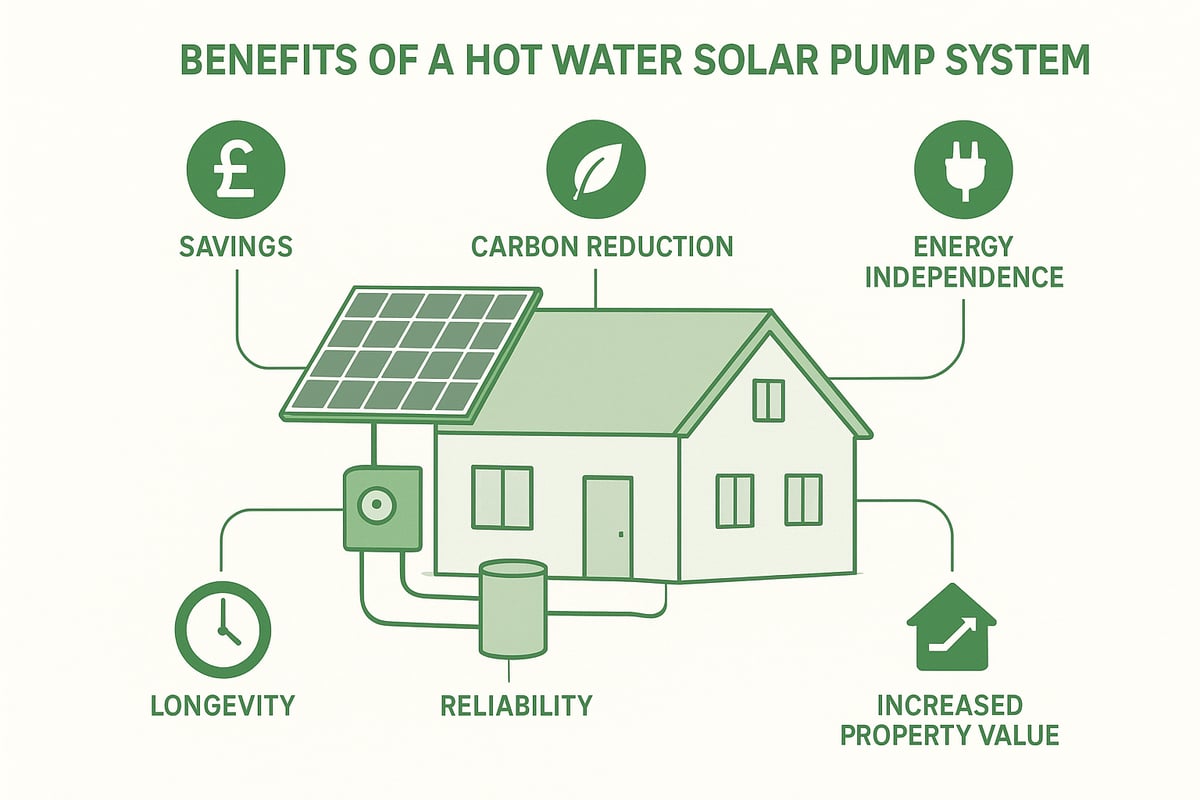
One of the most attractive reasons to invest in a hot water solar pump is the potential for substantial financial savings. By harnessing free solar energy, households can dramatically reduce their reliance on grid electricity or fossil fuels, leading to consistently lower energy bills throughout the year.
The UK government continues to support renewable heating with schemes such as the Boiler Upgrade Scheme, providing grants to help offset initial installation costs. Many homeowners find that, with these incentives, the return on investment for a hot water solar pump can be achieved within 7-10 years.
A typical family can save hundreds of pounds annually, making this a practical solution for both immediate and long-term budget planning.
Choosing a hot water solar pump is a proactive step towards reducing your household's carbon footprint. Every installation helps the UK progress towards its net-zero targets by cutting reliance on gas and oil boilers, which are significant sources of CO2 emissions.
On average, each system can save up to half a tonne of CO2 per year, depending on usage and local conditions. For a deeper understanding of these environmental benefits and how solar thermal systems work in practice, see our solar thermal heating system guide.
By making the switch, you are actively contributing to a cleaner, greener future.
A hot water solar pump reduces your dependence on grid-supplied energy and volatile fuel prices. This is especially valuable for rural or off-grid homes, where energy supply can be less reliable.
By generating your own hot water, you gain more control over your household's comfort and expenses.
Modern hot water solar pump systems are designed for durability, with an average lifespan of 15 to 25 years. Few moving parts mean fewer breakdowns and minimal maintenance.
Annual servicing and occasional checks keep the system running efficiently, giving you peace of mind and predictable upkeep costs.
Worried about grey British weather? Hot water solar pump systems are engineered to perform efficiently even on cloudy days.
Backup integration with existing heating ensures you always have hot water, whatever the weather brings.
Installing a hot water solar pump can make your home more appealing to eco-conscious buyers. Studies suggest that properties with renewable energy features see a 2-6% increase in market value.
This investment not only benefits your daily comfort but also enhances your property's long-term worth.
Selecting the ideal hot water solar pump system for your home is a crucial investment. The right choice balances efficiency, long-term value, and suitability for your property’s unique needs. This section breaks down the key considerations to help you make an informed decision and enjoy the full benefits of a hot water solar pump.
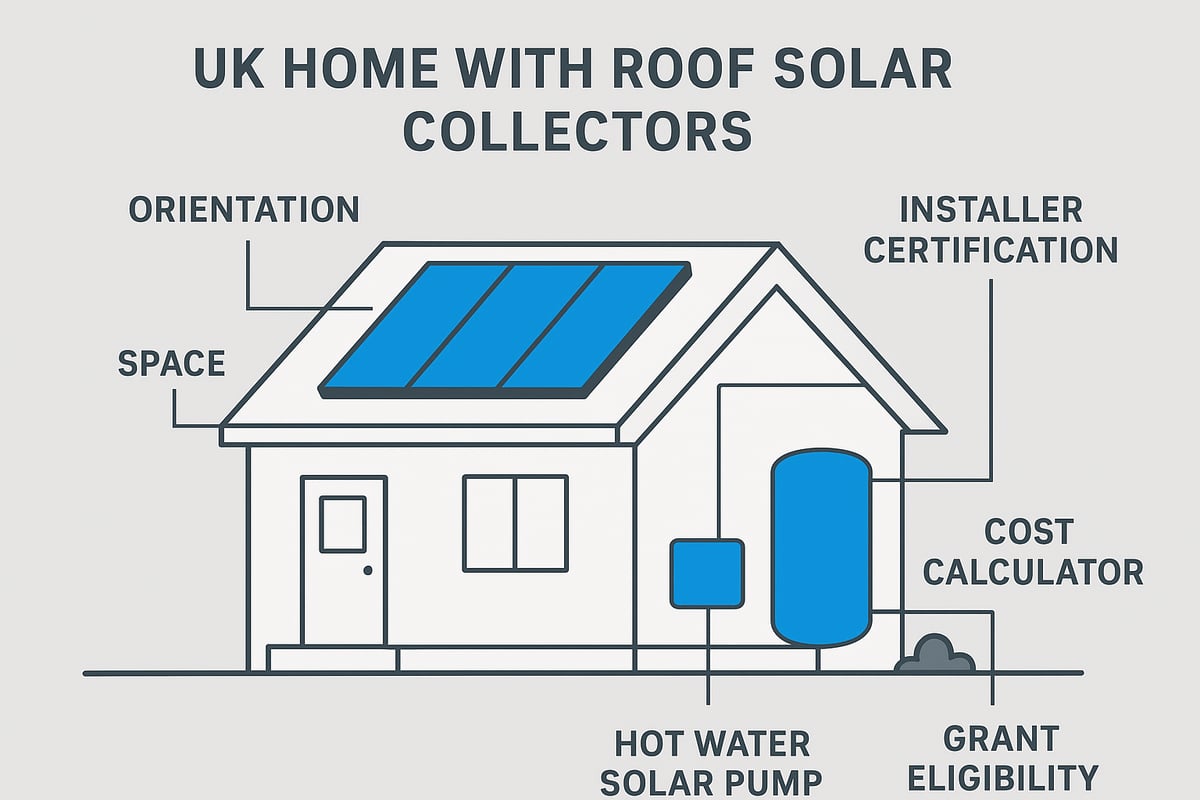
Before investing in a hot water solar pump, assess your property’s potential. Start with roof orientation—south-facing roofs are ideal, as they maximise sunlight exposure. Check for shading from trees or nearby buildings, as this can reduce system efficiency.
Evaluate the available roof space. Most households require 2–4 square metres for solar collectors. Analyse your hot water demand by considering the number of occupants and daily usage patterns. For example, a four-person family with frequent showers will need a larger system than a single occupant.
Use a suitability checklist:
Thorough assessment ensures your hot water solar pump will operate efficiently and provide reliable savings.
Choosing the right type and brand of hot water solar pump requires careful research. There are direct (active) and indirect (indirect) systems, each suited to different climates and property types. Leading manufacturers offer a range of models, with key differences in efficiency, warranty coverage, and after-sales support.
Review customer satisfaction ratings and consult independent guides. For a comprehensive overview of available options and technology comparisons, see this Solar system for water heating guide. It can help you weigh the pros and cons of various brands and system types.
Compare the following for each option:
Selecting a reputable brand increases your chances of a trouble-free hot water solar pump experience.
Understanding the financial commitment is essential. Installation costs for a hot water solar pump system typically range from £3,000 to £6,000, depending on size and complexity. Ongoing maintenance is relatively low, with annual servicing recommended for optimal performance.
Consider long-term savings on energy bills, which can offset the initial outlay over time. Use a cost comparison table to visualise options:
| System Type | Install Cost | Annual Savings | ROI Period |
|---|---|---|---|
| Basic (2-person) | £3,000 | £250 | 12 years |
| Family (4-person) | £4,500 | £400 | 11 years |
| Premium (large) | £6,000 | £550 | 11 years |
Factoring in grants and incentives can further improve the value proposition of your hot water solar pump.
Take advantage of government schemes to reduce upfront costs. The Boiler Upgrade Scheme and ECO4 offer grants for eligible households. Check the criteria, such as property type and existing heating systems, to determine if you qualify.
The application process involves submitting property details and supporting documents. Grants can cover a significant portion of the initial investment, averaging between £5,000 and £7,500 per installation.
Timelines vary, but most applications are processed within a few months. Securing funding can make a hot water solar pump more accessible and cost-effective for many UK homeowners.
Always choose an installer certified by the Microgeneration Certification Scheme (MCS) and approved by TrustMark. These certifications ensure adherence to industry standards and quality workmanship.
To verify credentials:
Certified professionals provide reliable installation, which is critical for system longevity and warranty validity.
Before making a final decision, ask suppliers and installers the following:
Asking the right questions ensures transparency and confidence in your investment.
Embarking on a hot water solar pump installation is a significant project, but with careful planning and the right approach, you can ensure a smooth process and long-term success. This guide will walk you through each step, helping you understand what to expect and how to optimise your system for years to come.
The journey to a reliable hot water solar pump system starts with a comprehensive site survey. A professional will assess your roof orientation, pitch, and available space for solar collectors. They will also check for shading from nearby trees or buildings.
Securing the necessary permissions is crucial. Most domestic installations in the UK fall under permitted development, but always check with your local authority regarding planning and building regulations. For listed properties or conservation areas, extra approvals may be needed.
A typical timeline from initial survey to completed installation ranges from 2 to 6 weeks, depending on system complexity and permissions. Creating a checklist at this stage ensures nothing is overlooked and sets the foundation for a successful hot water solar pump project.
Choosing the right size for your hot water solar pump system is essential for efficiency and cost savings. The installer will calculate the collector area and pump size based on your household's hot water demand, factoring in the number of occupants and daily usage patterns.
Local climate data also plays a role. In sunnier regions, fewer collectors may be needed, while cloudier areas might require additional panels. For a family of four, a typical system might include 4 to 6 square metres of collectors and a 200-litre storage tank.
| Household Size | Collector Area | Tank Size |
|---|---|---|
| 2–3 people | 2–4 m² | 120 L |
| 4 people | 4–6 m² | 200 L |
| 5+ people | 6+ m² | 300 L |
Accurate sizing ensures your hot water solar pump delivers optimal performance without overspending on equipment.
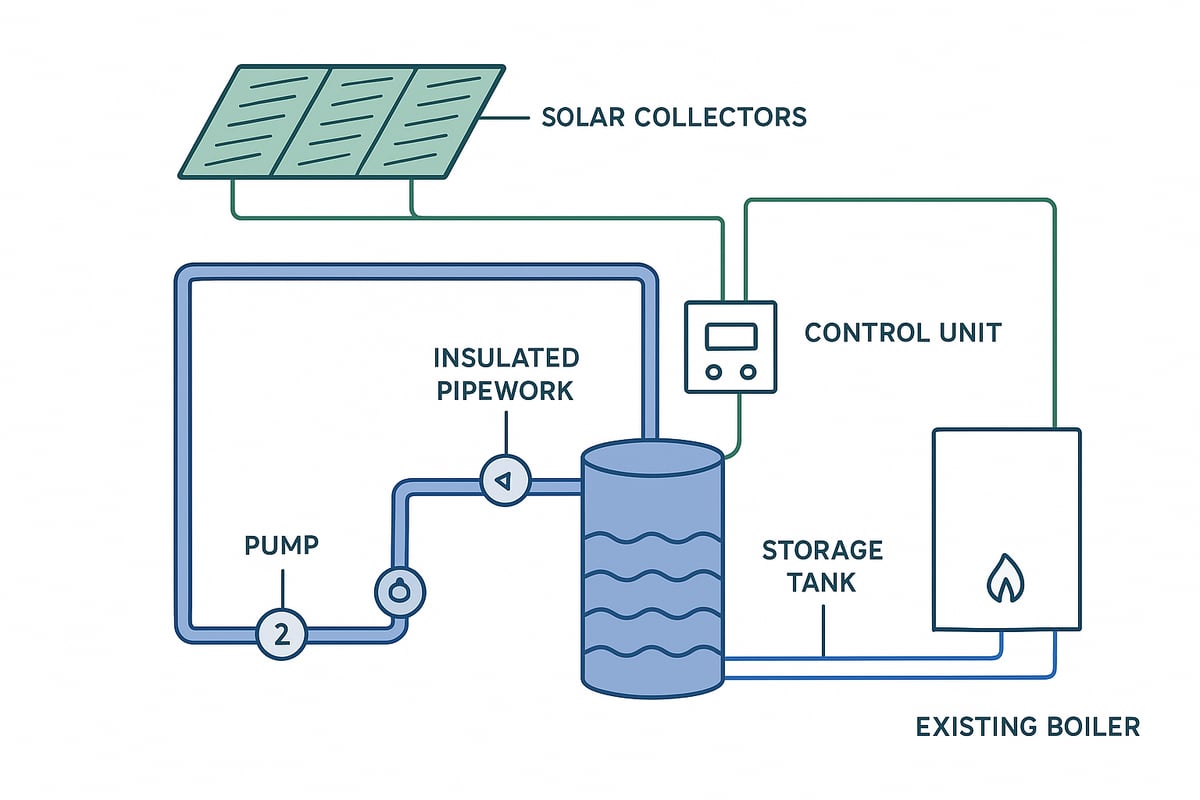
The installation of a hot water solar pump system follows a series of well-defined stages. First, the solar collectors are securely mounted on the roof or another suitable location. Next, insulated pipework is routed from the collectors to the storage tank and pump, minimising heat loss.
The pump, smart controller, and any additional sensors are then connected to regulate water flow and temperature. Health and safety are paramount—expect installers to use scaffolding, wear protective equipment, and follow best practices throughout.
For a detailed look at professional installation considerations, you may find the Heat pump hot water installation guide helpful, as it outlines common steps and quality standards for modern systems.
Modern hot water solar pump systems are designed to work alongside existing heating solutions. Whether you have a combi boiler, immersion tank, or underfloor heating, integration is usually straightforward with the right components.
Hybrid systems combine solar and conventional heating for year-round reliability. In winter or on cloudy days, your boiler or immersion heater can top up water temperatures, ensuring you never run out of hot water. This approach maximises efficiency and maintains comfort, even during unpredictable UK weather.
After installation, your hot water solar pump will undergo a thorough commissioning process. The installer will check for correct flow rates, proper temperature control, and leak-free connections. Any air trapped in the system will be purged to ensure smooth operation.
You will receive hands-on training covering controls, monitoring, and basic maintenance. Understanding how to interpret system data and respond to alerts empowers you to keep your hot water solar pump running efficiently. Emergency procedures and support contacts are also provided at handover.
Even with professional installation, some issues may arise during or after setup. Common problems include airlocks in the pipework, leaks at connections, or insufficient water flow due to pump settings.
Quick solutions often involve bleeding air from the system, tightening fittings, or adjusting controller parameters. If persistent issues occur, it is advisable to contact your installer or a certified technician for assistance.
Keeping a log of any irregularities helps identify patterns and supports warranty claims if needed. With proper attention, your hot water solar pump will provide reliable, low-maintenance service for many years.
Keeping your hot water solar pump in prime condition is essential for long-term reliability and efficiency. Proper care not only maximises performance but also protects your investment. With routine attention and smart monitoring, you can enjoy consistent hot water and peace of mind.
Regular upkeep is key to ensuring your hot water solar pump runs smoothly year-round. Begin by cleaning the solar collectors every few months to remove dirt and debris that can reduce efficiency. Check all visible pipework and joints for leaks, as even minor drips can impact performance over time.
Insulation should be inspected, especially after harsh weather, to prevent heat loss. Schedule a professional service annually to inspect the pump, valves, and sensors. This approach minimises unexpected breakdowns and keeps your system operating at peak efficiency. With these steps, your hot water solar pump will deliver reliable hot water for years.
Modern hot water solar pump systems often feature built-in monitoring, allowing you to track temperature, flow rates, and energy savings in real time. Smart controllers can alert you to performance dips or anomalies, making it easier to address small issues before they become major problems.
You can further enhance oversight by using remote apps linked to your system, enabling you to monitor your hot water solar pump from anywhere. For more on smart technology integration for hot water, see this guide on Heat water with solar panels. Consistent monitoring helps you maintain system efficiency and extend equipment lifespan.
Inevitably, you may encounter occasional issues with your hot water solar pump. Common symptoms include unusual noises, reduced hot water output, or error codes on the controller. Airlocks can form in pipework, restricting flow, while blockages may occur if debris enters the system.
If you notice a drop in performance, first check for visible leaks or insulation gaps. Resetting the controller can resolve minor sensor errors. For persistent faults or pump failures, contact a certified technician rather than attempting complex repairs yourself. Quick action ensures your hot water solar pump remains dependable.
Your hot water solar pump may require seasonal tweaks for optimal results. In winter, adjusting controller settings can compensate for shorter, cloudier days, ensuring you still receive hot water. Some systems allow you to prioritise backup heating during periods of low solar gain.
During summer, monitor system temperatures to avoid overheating. If your household’s hot water demand increases, consider upgrading to higher-capacity collectors or advanced controllers. Regularly reviewing your hot water solar pump’s performance each season keeps it running efficiently, whatever the weather.
To get the most from your hot water solar pump, register all components with the manufacturer promptly after installation. Keep a log of maintenance and servicing, as these records are often required for warranty claims. Understanding warranty terms can save you money if a covered part fails.
Most modern systems are designed to last 15 to 25 years with basic care. Following recommended maintenance and promptly addressing issues will help ensure your hot water solar pump delivers value and reliability throughout its lifespan.
The hot water solar pump market is evolving rapidly, with new technologies and smart features reshaping home heating. As we look to 2026, homeowners can expect more efficient, connected, and environmentally friendly systems. These advances promise better performance, greater savings, and a lower carbon footprint for every household.
Modern hot water solar pump systems are now equipped with advanced smart controls. These controllers can integrate with popular home automation platforms, letting homeowners schedule heating times, monitor performance remotely, and receive instant alerts for maintenance issues.
Adaptive scheduling uses weather forecasts and occupancy patterns to optimise hot water production. Remote diagnostics mean many issues can be identified and resolved before they impact comfort. This level of connectivity gives users more convenience, control, and peace of mind with their hot water solar pump.
Efficiency remains a core focus for hot water solar pump manufacturers. New generation solar collectors made with advanced coatings and materials capture more solar energy, even in low-light UK conditions. State-of-the-art heat exchangers ensure rapid, effective heat transfer to your water supply.
Some systems now use phase-change materials for heat storage, allowing excess energy to be retained and used later. This means your hot water solar pump can deliver consistent performance, reduce energy waste, and cut running costs even further.
One of the most exciting trends is the rise of hybrid hot water solar pump systems, combining solar thermal panels with photovoltaic (PV) modules and battery storage. This integration enables homes to generate both electricity and hot water, storing surplus energy for use during cloudy periods or at night.
The adoption of battery storage in hot water solar pump setups is growing quickly across the UK. Homeowners benefit from increased energy independence, stable hot water supply, and further protection against rising energy prices.
Government policy is driving innovation and uptake of hot water solar pump technology. New regulations focus on phasing out fossil fuel heating, while enhanced financial incentives make renewable systems more accessible. According to the Heat Pump Investment Roadmap, the UK expects significant growth in the adoption of these systems by 2026.
Market forecasts predict that hot water solar pump installations will become standard in both new builds and retrofits. Homeowners can look forward to more competitive pricing, greater installer expertise, and a wider range of products to suit every property.
As sustainability becomes more important, the entire life cycle of a hot water solar pump is under scrutiny. Manufacturers are designing systems with recyclable materials, minimising waste at end-of-life. Cradle-to-grave analyses now guide the selection of components and manufacturing processes.
Best practices for recycling and responsible disposal are becoming standard in the industry. By choosing an eco-friendly hot water solar pump, households can reduce their environmental footprint and contribute to a greener future.
Across the UK, real-world installations demonstrate the value of investing in a hot water solar pump. Households report high satisfaction, citing lower bills, reliable hot water, and minimal maintenance requirements. Many users have seen their annual energy costs drop by hundreds of pounds.
Recent case studies highlight increased system reliability, with most owners experiencing trouble-free operation for years. These success stories show that a hot water solar pump is not just a smart investment, but a proven solution for sustainable living.