No products in the basket.
With energy prices soaring and climate change at the forefront, choosing an efficient heating solution is more important than ever in 2025. Homeowners and property managers are searching for sustainable options that offer both savings and environmental benefits.
This essential handbook is designed to guide you through every aspect of a solar thermal heating system. You will discover how these systems work, the different types available, and how to select the right one for your needs.
By following this guide, you will learn practical steps for installation, understand costs and available grants, and see how to maintain your system for long-term performance. If you are looking to save money and reduce your carbon footprint, keep reading for a clear, step-by-step roadmap to solar thermal success.
Heating our homes efficiently is more important than ever. The solar thermal heating system is emerging as a key solution for both energy savings and environmental responsibility. Understanding how these systems work, their types, and their benefits helps you make smart, future-proof choices for your property.
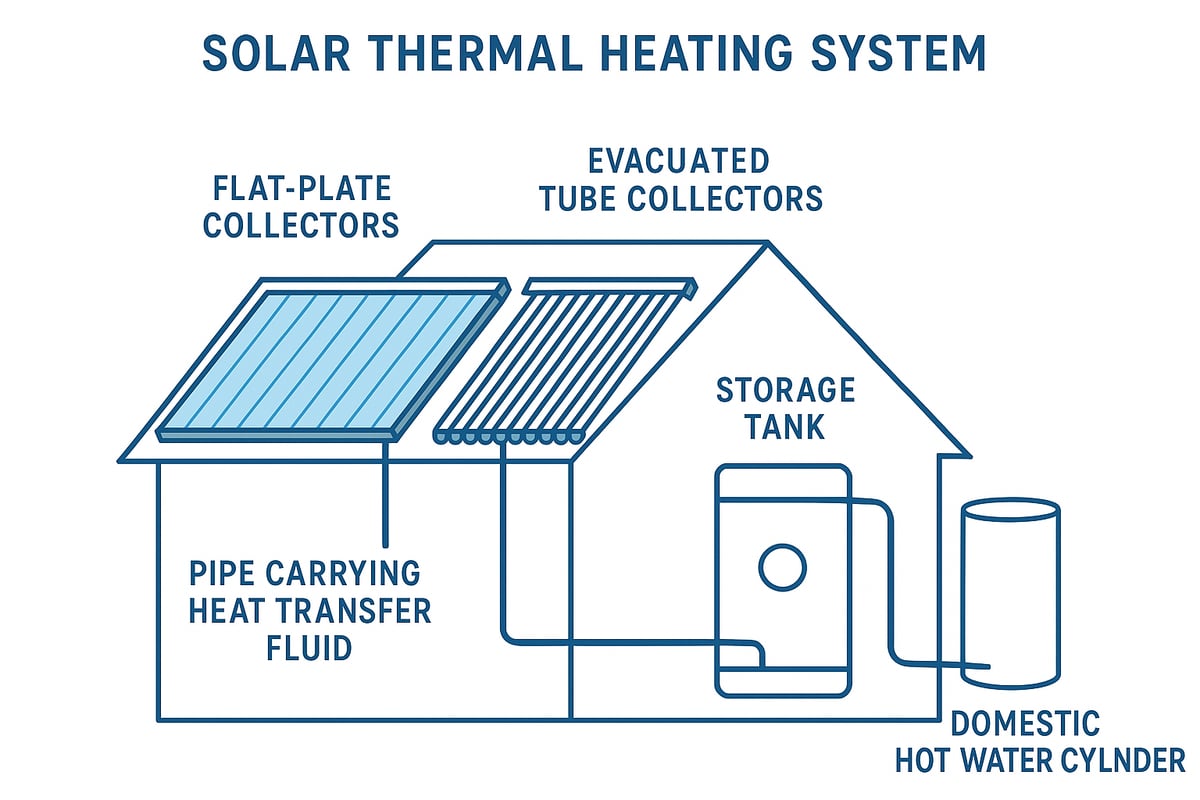
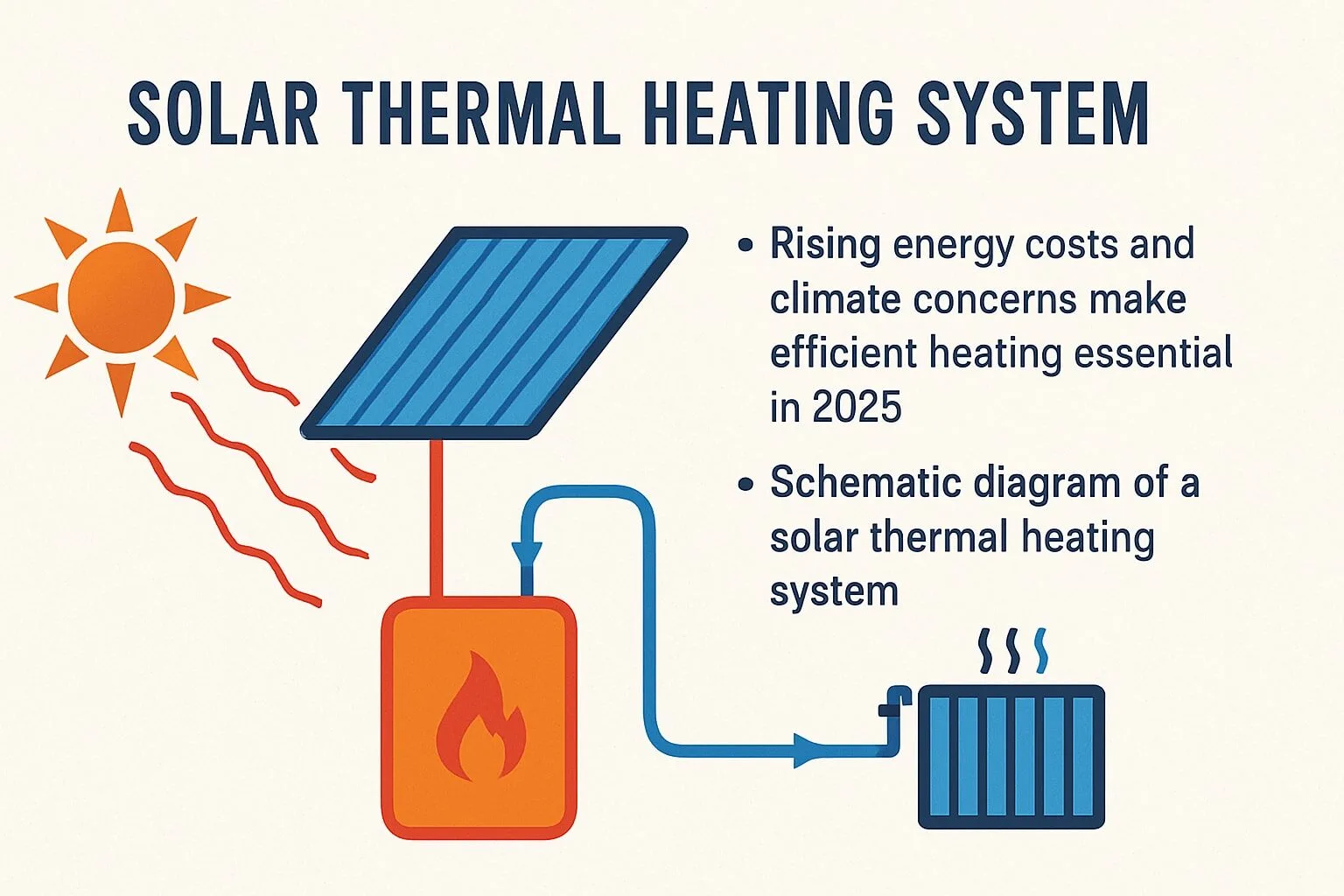
A solar thermal heating system captures the sun’s energy to provide hot water for homes and businesses. It uses roof-mounted collectors to absorb sunlight, a heat transfer fluid that moves the captured warmth, and insulated storage tanks to keep the water hot until needed. The main components are:
Unlike solar PV panels, which generate electricity, a solar thermal heating system is designed for direct heat production. For a detailed comparison of PV and thermal technologies, see our Solar PV system comparison.
| Collector Type | Efficiency | Cost | Best Use |
|---|---|---|---|
| Flat-plate | Moderate | Lower | Mild climates |
| Evacuated tube | Higher | Higher | Cooler areas |
A solar thermal heating system works by harnessing sunlight through collectors, which heat a special fluid circulating in pipes. This fluid transports the heat to a storage tank, where it transfers energy to water for domestic use. The process is continuous on sunny days, topping up hot water as needed.
Typically, these systems connect to your existing boiler or immersion heater for backup. During a domestic hot water cycle, the solar thermal heating system preheats water, reducing the reliance on conventional energy sources and ensuring a steady supply even on cloudy days.
Solar thermal heating system designs fall into two broad categories: active and passive. Active systems use pumps to move the heat transfer fluid, while passive systems rely on natural convection. There are also direct (water is heated directly) and indirect (fluid heats a coil in the tank) circulation types.
In the UK, most homes use indirect closed-loop systems. These are ideal for protecting against freezing temperatures, as antifreeze fluid circulates in a sealed loop. This versatility makes the solar thermal heating system a reliable choice across various property types.
A solar thermal heating system can supply up to 70% of a UK household’s yearly hot water needs, significantly reducing energy bills. Environmentally, each system can cut annual CO₂ emissions by up to 400kg. The technology suits the UK’s climate, even with moderate sunlight.
However, there are some limitations. Suitable roof space is required for collectors, and the upfront investment can be substantial. System performance also varies with weather, so backup heating may be needed. Despite these factors, a solar thermal heating system remains a practical step towards energy independence.
Choosing the right solar thermal heating system requires a careful look at your property, energy needs, and compliance with UK standards. By breaking down each decision point, you can ensure your investment delivers both comfort and long-term savings.
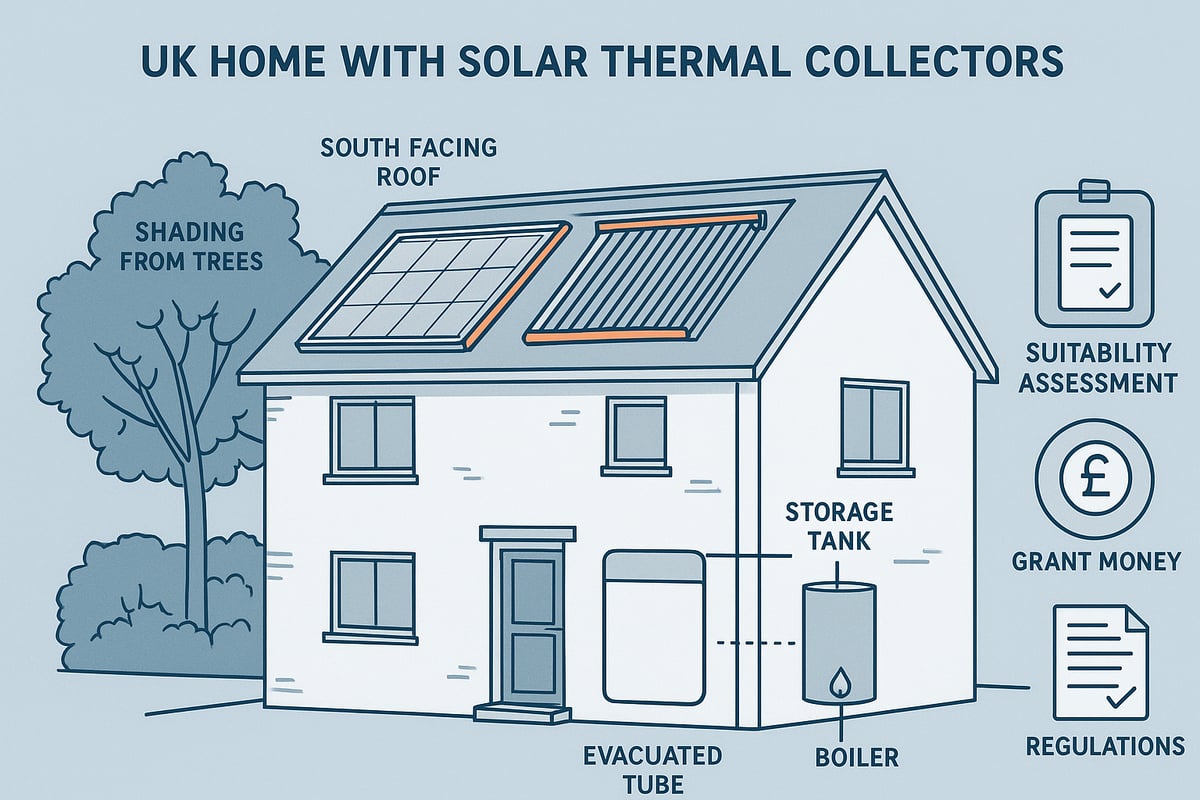
The first step in planning a solar thermal heating system is evaluating if your home is a good fit. Roof orientation is crucial, as south-facing roofs capture the most sun. Minimal shading from trees or nearby buildings ensures optimal collector performance.
Space is another factor. You need enough unshaded roof area to mount the collectors securely. Structural integrity matters, so your roof must support the extra weight. A professional survey can help identify strengths and potential issues.
For example, UK homes with south-facing roofs can see efficiency increases of up to 25 percent over east- or west-facing alternatives. Always start with a thorough assessment to maximise the benefits of your solar thermal heating system.
Accurate sizing is vital to ensure your solar thermal heating system meets your household’s hot water needs. Begin by calculating your average daily hot water usage. A typical family of four may require a system with 4 to 6 square metres of collector area.
You can choose between flat-plate and evacuated tube collectors. Flat-plate types are robust and cost-effective, while evacuated tubes perform better in colder or cloudier climates. Your choice should match your budget, roof space, and local weather.
For further advice, consult a professional for solar thermal system installation to ensure your system is tailored to your property’s specifics.
Your solar thermal heating system must integrate smoothly with your existing heating setup. Many systems work alongside boilers, heat pumps, or underfloor heating to boost efficiency and cut costs.
Retrofitting is possible in older homes, but new builds offer more flexibility for seamless integration. Hybrid solutions, combining solar thermal with other renewables, are becoming increasingly popular in modern UK homes.
For example, a hybrid system might use solar thermal collectors for hot water and a heat pump for space heating. Compatibility checks ensure your solar thermal heating system delivers reliable performance all year.
Every solar thermal heating system must comply with UK building regulations. You may need planning permission, especially if your property is listed or in a conservation area. Installers must be MCS-certified to qualify for financial incentives.
Recent updates to Part L (Conservation of Fuel and Power) require higher efficiency standards for domestic heating. Your installer will help you navigate these rules and obtain necessary approvals.
For instance, changes in 2023 streamlined the approval process, but early application is still advised. Staying compliant ensures your solar thermal heating system is safe, legal, and eligible for grants.
The UK government supports solar thermal heating system adoption through grants like the Boiler Upgrade Scheme, which offers up to £7,500 towards installation. To qualify, your system must meet specific criteria and be installed by certified professionals.
Eligibility checks include property type, system size, and installer accreditation. The application process is straightforward, but demand is high, so early action is recommended.
In 2024, uptake rates for these grants reached record levels, with thousands of households benefiting. Securing financial support makes your solar thermal heating system more affordable and improves your return on investment.
Embarking on the installation of a solar thermal heating system requires careful planning and professional expertise. Each stage is crucial to ensure efficiency, safety, and long-term performance. This step-by-step guide demystifies the process, helping you understand what to expect at every phase.
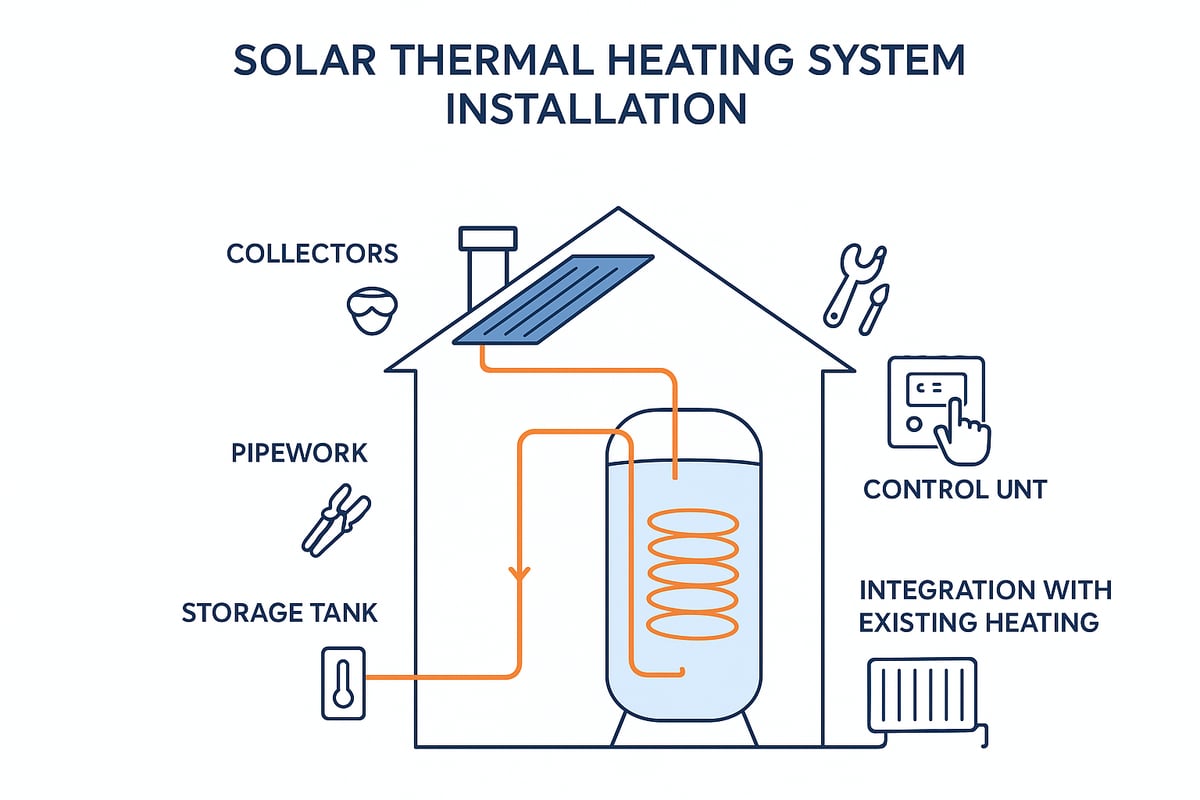
The journey to a solar thermal heating system begins with an initial consultation and comprehensive site survey. A qualified installer assesses your property to determine its suitability, focusing on roof orientation, available space, and potential shading.
During the survey, the expert identifies the optimal location for solar collectors and checks the structural integrity of your roof. In urban areas, limited roof space and shading from adjacent buildings are common challenges, whereas rural properties often offer more flexibility.
A detailed site survey ensures your solar thermal heating system is tailored to your unique needs. This step also provides an opportunity to discuss expectations, timelines, and any specific requirements for your household.
After confirming suitability, the next phase is designing your solar thermal heating system to match your household’s hot water demand and property characteristics. The installer selects the appropriate type and number of collectors, such as flat-plate or evacuated tube, based on roof size and orientation.
Component selection extends to the heat transfer fluid, storage tank size, and control systems. For example, a pitched roof may allow for more collector area, increasing efficiency. The design process also considers integration with your existing heating system for seamless operation.
For further details on system design and installation considerations, you may find the Solar Thermal Systems Guide particularly helpful.
Before installing a solar thermal heating system, it is vital to secure all necessary permissions and approvals. Most domestic installations in the UK are classed as permitted development, but exceptions apply for listed buildings or conservation areas.
Your installer submits applications to the local council if required, ensuring full compliance with UK building regulations. MCS certification is mandatory for both the system and installer, guaranteeing quality and eligibility for grants.
Approval timelines can vary, with straightforward cases resolved in weeks, while more complex projects may require additional documentation. This step ensures your investment meets all legal standards and future-proofs your installation.
Once permissions are in place, the physical installation of your solar thermal heating system begins. Installers mount the solar collectors securely on the roof, ensuring the optimal tilt and orientation for maximum sun exposure.
Insulated pipework is routed from the collectors to the hot water storage tank, typically located in a loft or utility area. All connections must be pressure-tested and weatherproofed to prevent heat loss and leaks.
Installation timeframes vary: a standard domestic system can often be completed in two to three days. Challenges include working at height, accommodating complex roof shapes, and ensuring minimal disruption to your home.
Commissioning is a critical step for any solar thermal heating system. The installer fills the system with the correct heat transfer fluid, pressurises it, and checks for leaks or airlocks.
A thorough performance test follows, ensuring the system responds correctly to sunlight and delivers hot water efficiently. Safety checks are performed on all valves, sensors, and controls to verify reliable operation.
Common commissioning issues include trapped air in pipework or incorrect sensor calibration. Professional installers resolve these quickly, ensuring your solar thermal heating system is safe and ready for daily use.
The final step in installing a solar thermal heating system is the handover and user training session. The installer demonstrates how the system operates, explains control settings, and provides a maintenance schedule.
Homeowners receive comprehensive documentation, including warranty details and troubleshooting tips. Feedback from users highlights the value of clear, hands-on training for building confidence in daily operation.
A well-conducted handover ensures you can maximise the benefits of your solar thermal heating system, maintain efficiency, and identify any issues early for prompt resolution.
Understanding the financial side of installing a solar thermal heating system is crucial for making an informed decision. This section covers upfront costs, potential savings, what impacts your return, and how grants can boost your investment.
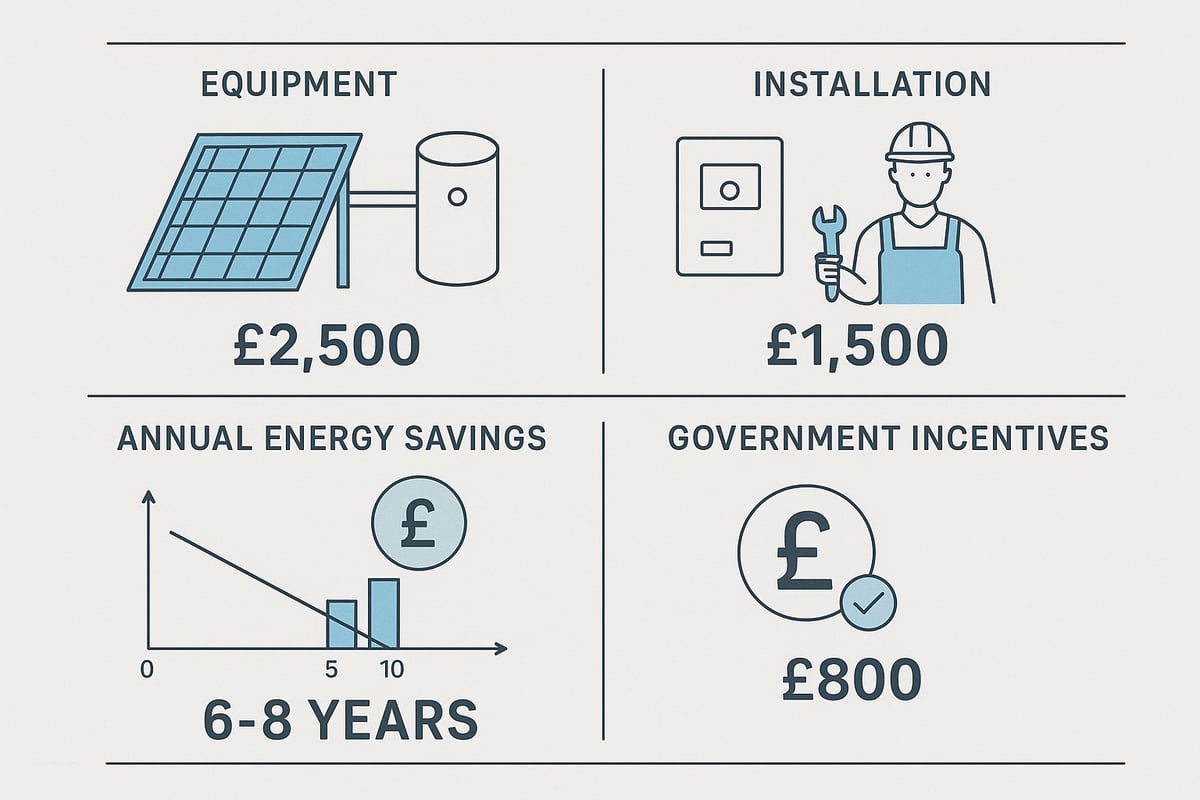
The initial investment for a solar thermal heating system typically includes collectors, storage tanks, pipework, controls, and professional installation. In the UK, most homeowners can expect to pay between £3,000 and £7,000, depending on system size and complexity.
Here is a comparison of average costs by system type:
| System Type | Average Cost (£) |
|---|---|
| Flat-plate collector | 3,000 – 5,000 |
| Evacuated tube collector | 4,000 – 7,000 |
Ancillary costs, such as scaffolding or roof strengthening, may add to the total. Thanks to the Zero VAT on Renewable Energy Installations, you can benefit from reduced tax on your solar thermal heating system, making installation more affordable.
A solar thermal heating system can cut your annual hot water bills by up to 60 percent. For a typical family, this means savings of £200 to £400 per year, depending on hot water usage and existing fuel costs.
The payback period for most UK households is between 6 and 12 years. For example, a semi-detached home with a properly sized system could recoup its investment in under a decade, especially if energy prices continue to rise. This makes a solar thermal heating system a practical, long-term solution for reducing utility costs.
Several variables influence the real-world performance of your solar thermal heating system. Key factors include:
For instance, homes in Scotland may see slightly lower savings due to fewer sunny days compared to South England, but good system design can still deliver substantial benefits. Regular maintenance ensures your solar thermal heating system operates efficiently, keeping running costs low and maximising savings.
The UK government offers support for homeowners investing in a solar thermal heating system. Schemes like the Boiler Upgrade Scheme provide grants of up to £7,500 towards installation. Eligibility depends on property type and installer certification.
Financial incentives can shorten the payback period significantly. For example, households receiving a grant often see returns on their solar thermal heating system investment within six years. Always check the latest schemes and application criteria to maximise your potential savings.
Keeping your solar thermal heating system in optimal condition is key to enjoying reliable performance and energy savings year after year. Regular attention ensures you get the most from your investment and avoid unexpected breakdowns.
Routine maintenance for a solar thermal heating system involves annual servicing and regular performance monitoring. Key tasks include checking for leaks, cleaning the collectors, and inspecting the heat transfer fluid and pressure levels.
A typical maintenance checklist covers:
Homeowners can monitor temperature displays and look for warning lights. For a more in-depth guide, see Thermal solar panel servicing for professional support and detailed advice.
Even a well-maintained solar thermal heating system can encounter occasional issues. The most frequent problems are leaks in pipework, airlocks, blockages, and faulty sensors.
Common callout reasons in the UK include:
Some minor issues, like topping up pressure or resetting controls, can be handled by homeowners. However, leaks or persistent faults should always be dealt with by qualified professionals to protect your system and warranty.
To extend the life of your solar thermal heating system, follow best practices such as scheduling annual services, replacing antifreeze every five years, and checking pump operation regularly.
Component replacement cycles typically are:
| Component | Replacement Interval |
|---|---|
| Pump | 10–15 years |
| Antifreeze | 3–5 years |
| Sensors | 10+ years |
With proper care, most systems last over 20 years, with some components outliving the system itself. Consistent maintenance is the best way to ensure long-term efficiency and savings.
Knowing when to upgrade your solar thermal heating system is vital for maintaining performance. Signs include declining hot water output, frequent faults, or visible corrosion.
Technological improvements since 2020, such as high-efficiency evacuated tube collectors, offer greater energy capture and reliability. If your system is over 15 years old, upgrading key components or the entire setup can enhance performance and reduce running costs, ensuring you continue to benefit from sustainable heating.
The future of the solar thermal heating system in the UK is shaped by innovation, policy, and growing public awareness. As we look ahead to 2025 and beyond, several trends and advances will determine how this technology evolves and benefits homeowners, developers, and the environment.
Rapid advancements are revolutionising the solar thermal heating system landscape. Modern collectors now achieve higher efficiencies, thanks to improved absorber coatings and vacuum insulation. Smart controls enable dynamic system monitoring, allowing homeowners to optimise performance in real time.
Recent developments in evacuated tube technology have led to better heat retention, making the solar thermal heating system more effective in cooler, cloudier UK conditions. Integration with thermal batteries is also increasing, providing heat storage for use during evenings or overcast days.
Innovative hybrid systems combine solar thermal with electric or biomass boilers. This approach ensures a consistent supply of hot water and heating, even during periods of limited sunlight.
Government policy is a major driver in the adoption of the solar thermal heating system. The UK's net zero targets for 2050 are pushing updates to Building Regulations and greater support for renewable technologies.
In 2025, expected reforms may include stricter efficiency standards and increased incentives for low-carbon heating. Schemes like the Renewable Heat Incentive (RHI) Overview have already provided financial motivation for homeowners and landlords to install solar thermal heating systems. Market growth is forecast to accelerate as more households seek sustainable alternatives.
Industry projections indicate a steady rise in annual installations, especially as energy prices remain volatile and public awareness grows.
The solar thermal heating system is becoming a standard feature in new homes, as local authorities and developers respond to mandatory renewable energy requirements. Modern building codes increasingly favour integrated solar solutions, ensuring long-term savings and lower carbon footprints for occupants.
Retrofitting older housing stock remains a priority. Efficient solar thermal heating system designs now cater to a wide range of property types, from Victorian terraces to post-war semis. Recent housing projects in the UK have demonstrated the feasibility and benefits of large-scale retrofits, with residents reporting improved comfort and lower energy bills.
A well-designed solar thermal heating system can deliver substantial environmental benefits. On average, a typical UK household using solar thermal can cut its carbon emissions by 300–500 kg CO₂ per year.
This contribution is significant when multiplied across thousands of homes, directly supporting national decarbonisation goals. Carbon savings are even greater in homes that combine solar thermal with other renewables, such as heat pumps.
| System Type | Annual CO₂ Savings (kg) |
|---|---|
| Flat-plate collector system | 300 |
| Evacuated tube system | 450 |
| Hybrid (with heat pump) | 600+ |
The solar thermal heating system is a proven technology that helps the UK move closer to its climate targets.
Public understanding of the solar thermal heating system has grown steadily from 2020 to 2025. Adoption rates are rising, as homeowners prioritise both savings and sustainability.
However, barriers remain. Cost concerns, misinformation, and a shortage of qualified installers can slow uptake. Surveys suggest that while over half of UK homeowners are aware of solar thermal options, only a third feel confident about the installation process.
Clear, accessible information and robust installer training programmes can help address these challenges, ensuring more households benefit from solar thermal heating system adoption.
Looking forward, the solar thermal heating system will increasingly be part of hybrid renewable energy solutions. Combining solar thermal with PV panels, heat pumps, and battery storage maximises efficiency and energy independence.
These integrated systems are already being piloted in multi-technology homes, delivering year-round hot water and heating with minimal grid reliance. For a broader perspective on combining technologies, see this Renewable heating system overview.
The future is collaborative, with the solar thermal heating system playing a central role in the UK's renewable energy landscape.