No products in the basket.
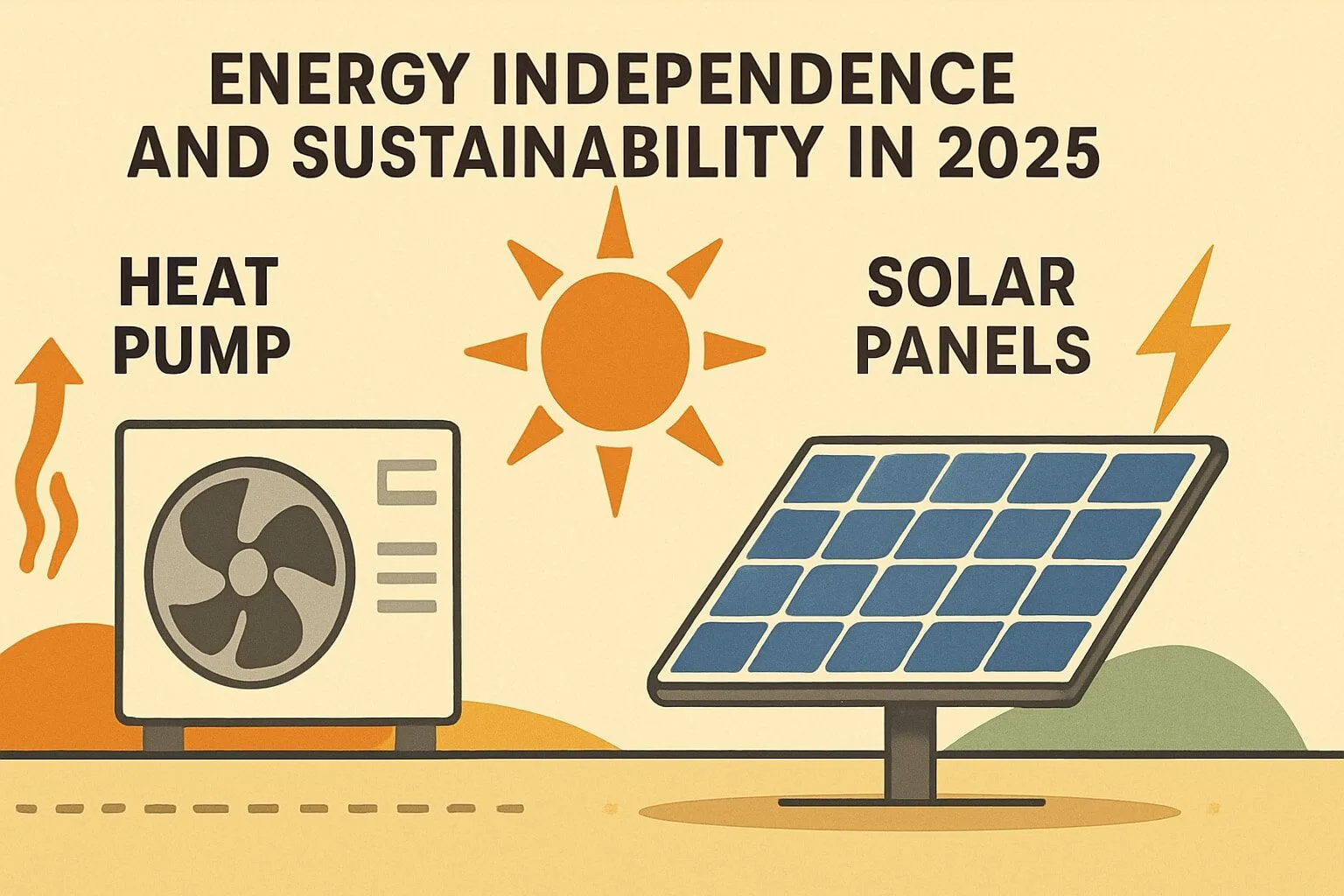
Struggling with rising energy bills? Wondering how to future-proof your home in 2025? Energy independence and sustainability have never been more important for UK homeowners, especially as costs climb and environmental concerns grow.
This guide reveals how combining a heat pump and solar panels can offer a smart, future-proof solution to cut costs and carbon emissions. Imagine slashing your bills, reducing your carbon footprint, and boosting your property’s value—all with one integrated system.
Discover how these technologies work together, the benefits they bring, what to expect for sizing and costs, installation steps, the latest government incentives, and expert tips to maximise efficiency. Read on for a step-by-step guide to making the switch and unlocking real savings for your home.
Understanding how a heat pump and solar panels work together is key to unlocking a low-carbon, cost-effective home energy system. These technologies are not only complementary but also form the backbone of future-ready, sustainable living in the UK.
A heat pump and solar panels each play a vital role in a modern home's energy strategy. Heat pumps extract warmth from the air or ground and use it for heating and cooling, making them highly efficient. Solar panels, on the other hand, capture sunlight and convert it into electricity that can power household appliances or systems.
In the UK, air source heat pumps are the most common choice due to their suitability for various property types. Solar PV systems are typically sized between 3kW and 6kW, fitting most residential roofs. For example, a 5kW heat pump paired with a 4kW solar PV system can meet the needs of a medium-sized home.
Heat pumps can reduce heating bills by up to 50 percent, while solar panels can save between £900 and £1,200 per year on electricity costs. When a heat pump and solar panels are combined, renewable energy usage is maximised, leading to significant savings and lower emissions.
The real power of a heat pump and solar panels comes from their synergy. Solar panels generate electricity during daylight hours that can directly run the heat pump for heating or cooling. This means much of your home's heating can be powered by the sun, not the grid.
Surplus solar energy, especially in summer, can be stored in batteries for use at night or on cloudy days. This setup reduces reliance on the grid and helps manage peak demand times. For example, Tim's home uses batteries to run his heat pump overnight, further increasing his energy independence.
A 3kW to 5kW solar PV system can generally cover the heat pump needs of small to medium UK homes. When combined, a heat pump and solar panels can provide nearly 100 percent renewable heating, especially with battery storage. This maximises your return on investment in renewables and supports a more resilient home energy system.
Choosing a heat pump and solar panels has a strong impact on both the environment and your finances. These systems significantly cut household carbon emissions, helping the UK move closer to its net zero targets.
Annual energy bills can be reduced by £1,250 to £2,100, according to GreenMatch. In Tim's case, his system generated 6,580kWh per year, covering about half of his home's needs. This means less dependence on the grid and protection from rising energy prices.
Additionally, installing a heat pump and solar panels can increase your home's value by improving its Energy Performance Certificate (EPC) rating. The combination shortens the payback period, with households achieving up to 90 percent electricity self-sufficiency.
A typical UK setup includes an air source heat pump, a 4kW to 6kW solar PV array, and battery storage. Larger properties may opt for ground source heat pumps. Integrating underfloor heating can further boost efficiency.
For example, Tim's system features a 2.4kW heat pump, a 6kW solar array, and three 8.2kWh batteries. Roof orientation and available space are crucial for solar panel placement, and system design should be tailored to your home's size and insulation.
Customisation is key, as every property is different. A well-designed heat pump and solar panels system ensures comfort all year round. Typically, 6 to 13 solar panels are needed, depending on heat demand and available space. To explore more about installation and sizing, visit Solar PV panel installation services.
There are some challenges to consider when installing a heat pump and solar panels. Solar generation peaks in summer, while heating demand is highest in winter, creating a seasonal mismatch. Battery storage and exporting surplus energy to the grid can help balance this.
The initial investment can be substantial, but grants are available to offset costs. Tim's system, for instance, cost £24,000 but is set to recoup the expense through savings and incentives. Careful sizing and choosing an experienced installer are essential for optimal results.
U and I Renewables provide expert installation of air source heat pumps, solar PV, battery storage, and solar thermal solutions across the UK. With over 17 years of experience, they are fully certified and government-approved to help homeowners access grants of up to £7,500.
Their tailored advice, whole-house solutions, and flexible finance options make green energy accessible. U and I Renewables assist at every step, from system design to installation, maintenance, and grant paperwork, ensuring a seamless transition to a heat pump and solar panels system.
Selecting the right heat pump and solar panels system for your home in 2025 is a significant decision. Understanding system sizing, costs, savings, and available incentives will help you make an informed investment that delivers both comfort and value.
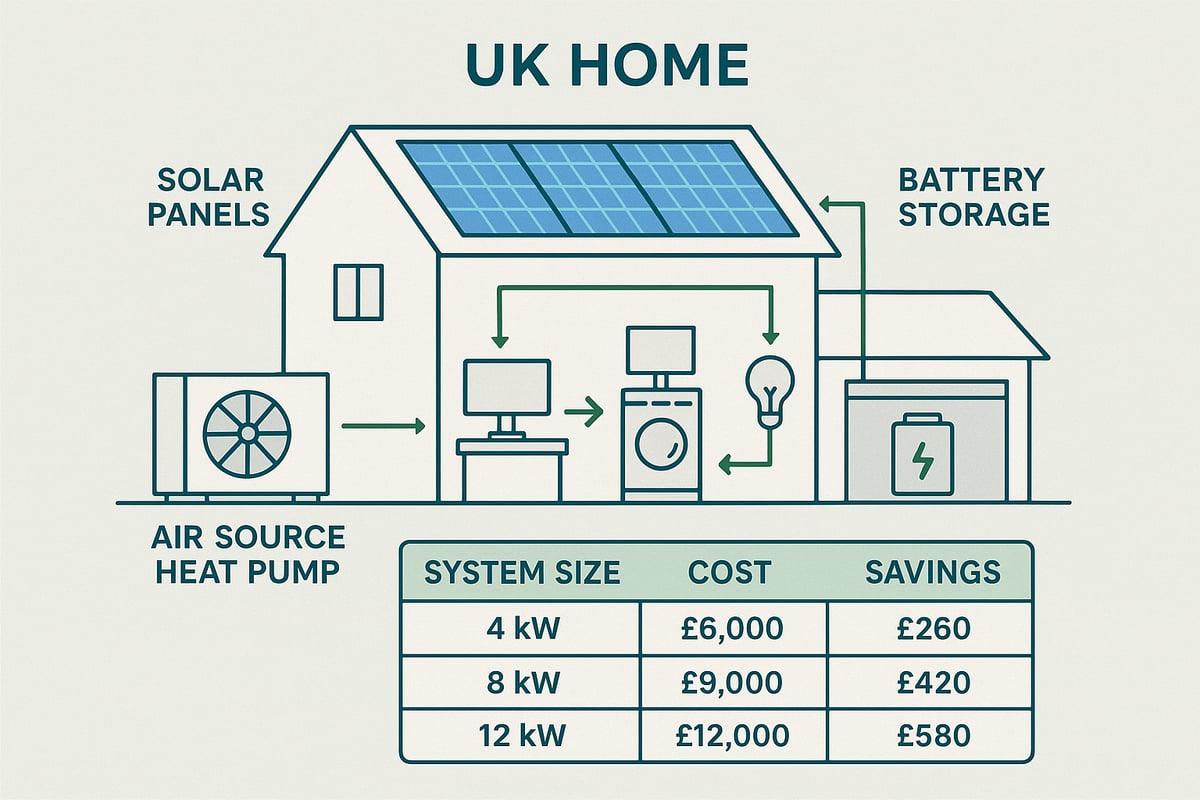
Proper sizing is crucial when planning heat pump and solar panels installations. The process starts by assessing your property’s size, insulation, heat demand, roof orientation, and available space. For example, a well-insulated 1–2 bed home may require a 3kW solar array and a 5kW heat pump, while a larger 4–5 bed property could need a 6kW solar system and a 16kW heat pump.
Accurate heat loss calculations are essential. An oversized system will waste energy, while an undersized one may struggle to heat your home. Installers use calculations based on room dimensions, insulation, and expected temperatures to recommend the optimal heat pump and solar panels setup. Each 450W solar panel adds about 0.45kW of capacity, so panel count can be tailored to your roof space and energy needs.
With the right combination, a custom heat pump and solar panels system ensures maximum efficiency, comfort, and return on investment.
The cost of a heat pump and solar panels system in 2025 will depend on your chosen configuration. Air source heat pumps range from £10,500 to £13,500, depending on output. Solar PV systems typically cost between £7,000 and £13,000, based on capacity. If you add battery storage, expect an additional £4,000 to £8,000.
Total installed system costs generally fall between £17,500 and £26,500 before grants. For example, Tim’s comprehensive setup, including batteries, came to around £24,000. Homeowners can access the Boiler Upgrade Scheme, which offers up to £7,500 off a heat pump installation. For a detailed breakdown of potential expenses and what’s included, see this guide on air source heat pump installation costs.
Finance options are available, with some providers offering plans from as low as £15–£20 per week, making heat pump and solar panels systems more accessible.
By installing heat pump and solar panels together, the average UK household can save between £1,250 and £2,100 per year on energy bills. Tim’s home, for instance, generated £900 annually from solar electricity and saved £1,200 through smart tariffs. Exporting excess solar to the grid can also provide extra income, with rates currently around 15p per kWh.
The typical payback period for a combined heat pump and solar panels system is around 7–10 years. This can be shorter if you access government grants or optimise your usage with time-of-use tariffs and battery storage. Households that maximise self-consumption and export can improve their returns even further. Tim exported 40% of his solar, using the rest to power his home and car.
Investing in heat pump and solar panels gives long-term protection from rising energy prices, making your home more resilient and cost-effective.
The UK government continues to support heat pump and solar panels adoption. The Boiler Upgrade Scheme (BUS) offers up to £7,500 towards a heat pump installation. Solar panels and heat pumps are currently zero-rated for VAT until 2027, providing additional savings.
Other schemes, such as ECO4 and regional grants, can help with insulation and renewable upgrades. The Smart Export Guarantee (SEG) allows you to earn payments for surplus solar electricity sent to the grid. Tim benefited from earlier incentives, but BUS now offers even greater upfront support for new applicants.
Early adopters of heat pump and solar panels often secure the best incentives, making now an ideal time to consider upgrading your home’s energy system.
When investing in heat pump and solar panels, consider potential upgrades such as a new hot water tank, improved radiators, or underfloor heating. Listed buildings may require planning permission, as Tim discovered with his Grade II cottage. Maintenance needs are generally low, though annual servicing is recommended.
A well-installed heat pump and solar panels system can boost your property’s value and improve its Energy Performance Certificate (EPC) rating. Tim’s installation required only minor radiator upgrades, and his modern water cylinder cut heat loss by up to 80%.
Professional advice ensures hidden costs are minimised, and your investment in heat pump and solar panels delivers the best possible comfort, efficiency, and long-term value.
Embarking on the journey to install a heat pump and solar panels can feel daunting, but a clear, stepwise approach will ensure your system delivers maximum comfort and savings. This guide breaks down each stage, so you can confidently future-proof your home.
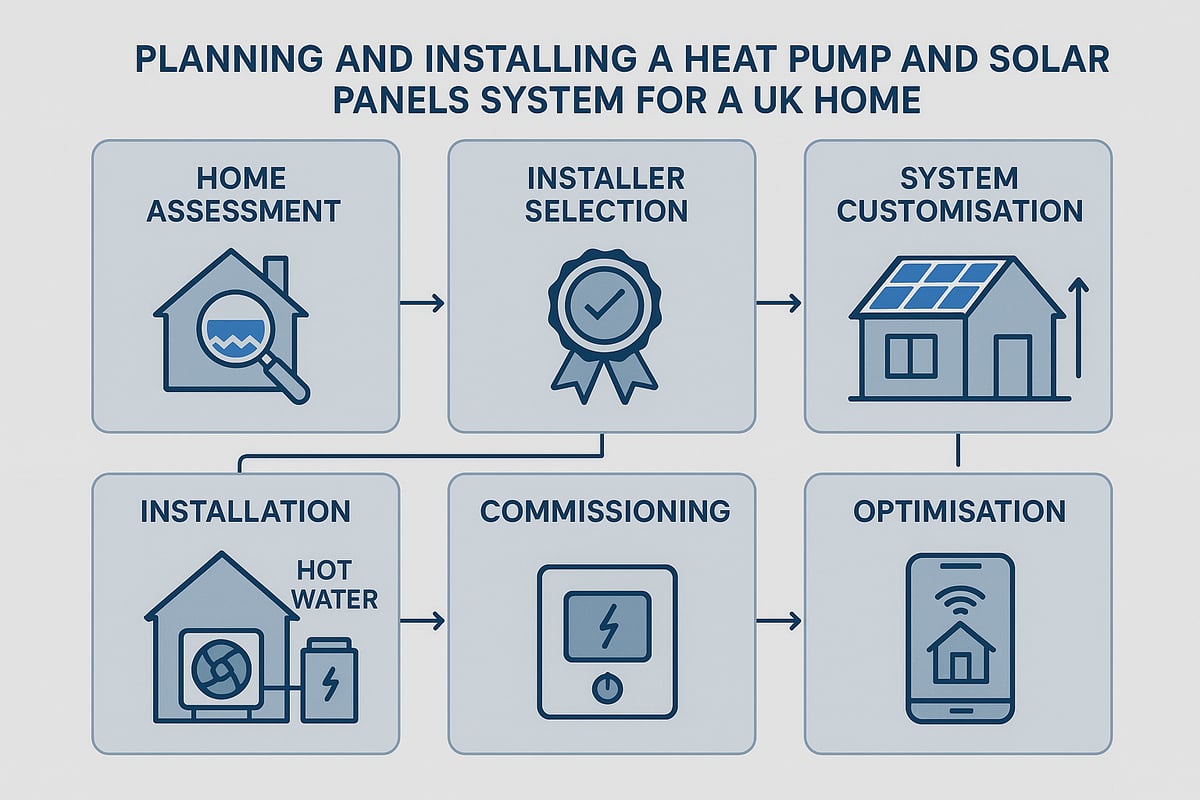
The first step towards a successful heat pump and solar panels installation is a thorough assessment of your property. Evaluate the insulation quality—well-insulated homes retain heat more efficiently, reducing demand on your system.
Check your roof’s size, orientation, and pitch. South-facing roofs are ideal for solar panels, but east or west can also work with careful planning. Assess available space for the heat pump unit and ensure there’s adequate airflow.
Consider your current heating system. Properties with modern hot water tanks and compatible radiators often require fewer upgrades. Even older or listed homes can benefit from heat pump and solar panels when assessed properly.
Choosing a reputable installer is crucial for heat pump and solar panels success. Prioritise companies with MCS certification, as this guarantees quality and grants access to government incentives.
Request multiple quotes. Tim’s experience showed price variations up to 50 percent, so comparing options can save you thousands. Ensure potential installers perform detailed heat loss calculations and offer transparent advice on system sizing.
Ask about previous installations, especially in similar property types. A knowledgeable installer will explain how heat pump and solar panels can be tailored to your needs and highlight any potential challenges or upgrades required.
Customising your heat pump and solar panels system involves aligning technology with your household’s unique requirements. Decide if you want to include battery storage for greater energy independence.
Integrate the system with your existing heating setup—radiators, underfloor heating, or both. Consider hot water needs and whether your cylinder is suitable for a heat pump. For more on this, explore Heat pump and hot water integration.
Think about where to place the outdoor unit, balancing noise, aesthetics, and neighbour considerations. Fine-tune the design to ensure your heat pump and solar panels deliver maximum comfort and efficiency year-round.
Once your system is designed, the installation of heat pump and solar panels can begin. Typically, heat pump installation takes two to three days, with an electrician handling electrical connections.
Solar panel fitting is usually completed in a day, with minimal power interruption. Battery storage is installed alongside or soon after. For some homes, planning permission may be required, especially if you live in a conservation area or listed building.
Most heat pump and solar panels installs are finished within a week. Scheduling work in summer avoids heating downtime and ensures your home remains comfortable throughout the process.
After installation, your installer will commission the heat pump and solar panels system, configuring controls, weather compensation, and export settings for grid connection. You’ll receive training on how to monitor and adjust your system for best performance.
Initial checks ensure everything runs smoothly. Export settings are enabled so you can benefit from schemes like the Smart Export Guarantee. Ongoing tweaks may be needed as you get familiar with the controls.
A properly commissioned heat pump and solar panels system sets the stage for years of reliable, efficient home energy.
To unlock the full benefits of your heat pump and solar panels, adopt smart energy habits. Use time-of-use tariffs to charge batteries at low rates, and export surplus solar electricity during peak times for additional income.
Monitor your system with smart meters or energy apps. Schedule regular maintenance for optimal efficiency and longevity. Engage with your installer for annual servicing and to address minor issues early.
By staying proactive, you ensure your heat pump and solar panels system delivers lasting savings, comfort, and energy independence for your home.
Maximising the performance of your heat pump and solar panels involves more than just choosing the right technology. It demands careful attention to system controls, energy tariffs, and regular maintenance. By understanding expert strategies and avoiding common mistakes, you can ensure your investment delivers lower bills, higher comfort, and long-term sustainability.
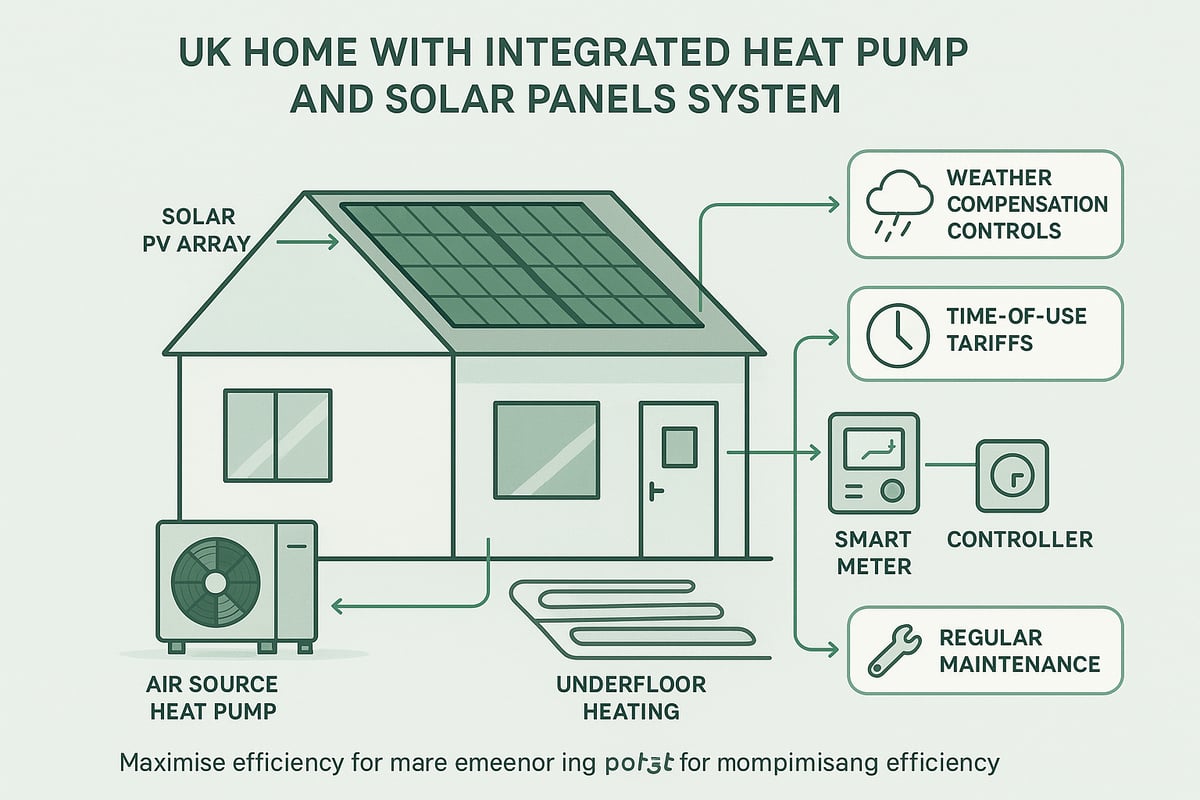
Optimising your heat pump and solar panels begins with understanding weather compensation. This feature automatically adjusts the heat pump’s flow temperature based on the outdoor temperature, improving efficiency and comfort. Many homeowners overlook this, but it can reduce energy use by up to 25 percent.
The placement of your system controller is crucial. Avoid installing it in warm rooms, as this can give false readings and impact performance. After installation, review and tweak your settings regularly, especially in the first few months.
Unlike traditional boilers, heat pump and solar panels systems are designed to run continuously rather than cycling on and off. Many complaints arise from a lack of familiarity with these modern controls. Taking time to learn and adjust your settings ensures you get the best results from your investment.
Pairing heat pump and solar panels with smart energy tariffs and battery storage can significantly boost your savings. By using time-of-use tariffs, you can charge your batteries when electricity prices are low, then run your heat pump or export power during peak periods for maximum income.
It’s important to monitor inverter and battery specifications, as charge and discharge rates may limit how much energy you can use at once. For example, if your inverter is limited to 2.6kW per hour, this restricts both charging and supply to your appliances.
Consider future upgrades if you plan to expand your system or add an electric vehicle. Many homeowners export around 40 percent of their solar energy, while batteries help store the rest for use at night. Smart management of heat pump and solar panels ensures every kilowatt counts.
Accurate system sizing is essential for heat pump and solar panels to deliver optimal efficiency. The process starts with a detailed heat loss calculation, which determines the exact heating demand of your home. Oversizing can lead to wasted energy and higher costs, while undersizing may result in inadequate heating.
Every kilowatt of heat pump output must match your home’s actual needs. Trustworthy installers will always carry out proper calculations rather than relying on rough estimates. In one example, quotes for the same property varied by up to 50 percent due to differences in assessment methods.
A tailored approach ensures your heat pump and solar panels work seamlessly together, maximising performance and minimising running costs. Never accept a one-size-fits-all solution from your installer.
Ongoing maintenance is key to keeping your heat pump and solar panels system operating efficiently for many years. Schedule annual servicing to check filters, refrigerant levels, and system controls. Battery health should also be monitored to ensure longevity and reliable performance.
Address minor issues as soon as they arise to prevent costly repairs down the line. A well-maintained system can last 15 to 25 years, providing consistent savings and comfort. Homeowners often find that after the initial bedding-in period, their system requires minimal intervention.
Relying on professional servicing not only extends the lifespan of your heat pump and solar panels but also maintains warranty protection and peace of mind.
Several pitfalls can undermine the benefits of your heat pump and solar panels. Skipping detailed heat loss calculations often leads to underperformance and higher bills. Neglecting to adjust weather compensation settings wastes energy and reduces comfort.
Choosing an installer without proper certification or training can result in poor installation and system failure. Planning for battery and inverter limitations is essential to avoid future disappointment. Many homeowners also miss out on valuable grants and incentives by not researching available options.
To avoid these mistakes, seek professional guidance and explore resources like Air source heat pump government grants for the latest support schemes. Being an informed and proactive homeowner ensures your heat pump and solar panels deliver the greatest possible return.
Tim’s journey with a heat pump and solar panels began in his Grade II-listed cottage in Somerset. Rising energy costs and a strong desire to reduce his carbon footprint motivated him to seek a more sustainable home solution. After researching the benefits of a combined system, Tim decided to invest in both technologies, selecting 2.4kW and 6kW solar PV arrays, three 8.2kWh batteries, and an air source heat pump.
When Tim evaluated his energy options, he wanted a solution that would future-proof his home and bring long-term financial stability. The heat pump and solar panels appealed to him because of their synergy and the ability to drastically cut energy bills. With a total system size tailored to his property, Tim’s setup aimed to maximise renewable generation and storage, making his home a showcase for sustainable living in 2025.
Tim’s installation journey started with a wide range of quotes from different installers, some varying by as much as 50 percent. This highlighted the importance of comparing offers and ensuring each installer conducted detailed heat loss calculations. Tim chose an MCS-certified professional, which was vital for accessing government grants. He also managed the planning permission process himself due to his property’s listed status.
Upgrades were minimal, with only a new hot water tank and one radiator needed. The installation process was smooth, thanks to careful planning and summer scheduling. Tim benefited from the UK heat pump grant expansion, which helped offset the upfront investment and made the transition to a modern, efficient system more accessible.
After switching to a heat pump and solar panels, Tim saw impressive results. Annual household electricity use reached 12,780kWh, with the heat pump using 5,741kWh and his electric car consuming 1,652kWh. Solar generation provided 6,580kWh per year, covering about half the home’s needs. Tim saved £900 annually from solar generation and an additional £1,200 through smart time-of-use tariffs.
He exported 2,678kWh to the grid at 15p per kWh, generating extra income. The total system cost was around £24,000, but with grants and ongoing savings, the payback period was significantly reduced. Tim’s experience reflects how the right combination of heat pump and solar panels can deliver tangible economic and environmental benefits and how government schemes like ECO4 and LA Flex can further support homeowners.
Tim’s key lesson was the importance of accurate heat loss calculations and working with certified installers. He found that a properly sized heat pump and solar panels system maximised efficiency and comfort. Batteries and smart tariffs made a substantial difference in savings, while understanding weather compensation controls was vital for optimal performance.
Each home requires a tailored approach, so Tim advises homeowners to seek professional guidance, explore all available grants, and consider future upgrades. He also recommends an emergency power supply for resilience. In Tim’s words, “Absolutely worthwhile investment, better than expected.” For anyone considering a heat pump and solar panels, his journey is proof that careful planning leads to lasting rewards.
Securing the right financial support is crucial when investing in a heat pump and solar panels. The UK is offering more grants and incentives than ever to help homeowners make the switch to renewable energy. Understanding these options, planning permission, and future trends will help you maximise your investment and future-proof your property.
Homeowners choosing a heat pump and solar panels can access a range of grants. The Boiler Upgrade Scheme (BUS) offers up to £7,500 towards a heat pump, making it significantly more affordable. VAT on both heat pumps and solar panels remains at 0% until 2027, reducing upfront costs.
You can also benefit from the Smart Export Guarantee, which pays you for exporting surplus solar energy to the grid. For those on lower incomes, additional support is available through the ECO4 and LA Flex schemes, which help fund energy-efficient upgrades, including heat pump and solar panels installations.
Regional grants for insulation and renewable technologies may further reduce costs. Early adoption ensures you secure the most generous incentives, as schemes can change over time.
When installing a heat pump and solar panels, understanding planning regulations is essential. Most standard homes in the UK do not require planning permission for these systems. However, if your property is listed or in a conservation area, you may need to apply for consent.
MCS certification is mandatory for most grants and for the Smart Export Guarantee. An EPC (Energy Performance Certificate) may also be required as part of your application process. The Future Homes Standard 2025 will soon require new builds to include low-carbon technologies, making heat pump and solar panels integration even more relevant.
Professional installers can help manage paperwork, ensuring compliance and a smooth grant application. Most homeowners find the process straightforward with expert guidance.
The landscape for heat pump and solar panels is evolving. Battery and inverter upgrades can improve flexibility, allowing for greater energy independence and emergency backup. Keep an eye on new tariffs and energy market changes; flexible pricing can further increase savings.
Future trends include integrating electric vehicle charging and solar thermal systems for hot water. As technology advances and government policies shift, staying informed will help you make the most of your investment. Many homeowners plan staged upgrades, starting with core systems and adding batteries or EV chargers later.
Consider how your choices today will align with tomorrow’s standards and incentives. Planning ahead ensures your home is ready for both current and future energy needs.
Combining heat pump and solar panels is a future-proof, cost-effective solution for UK homeowners. Careful planning, professional installation, and smart use of incentives can maximise both savings and comfort.
Take advantage of current grants and plan for evolving regulations. The move towards low-carbon homes is accelerating, making now the perfect time to invest in a sustainable energy future.