No products in the basket.
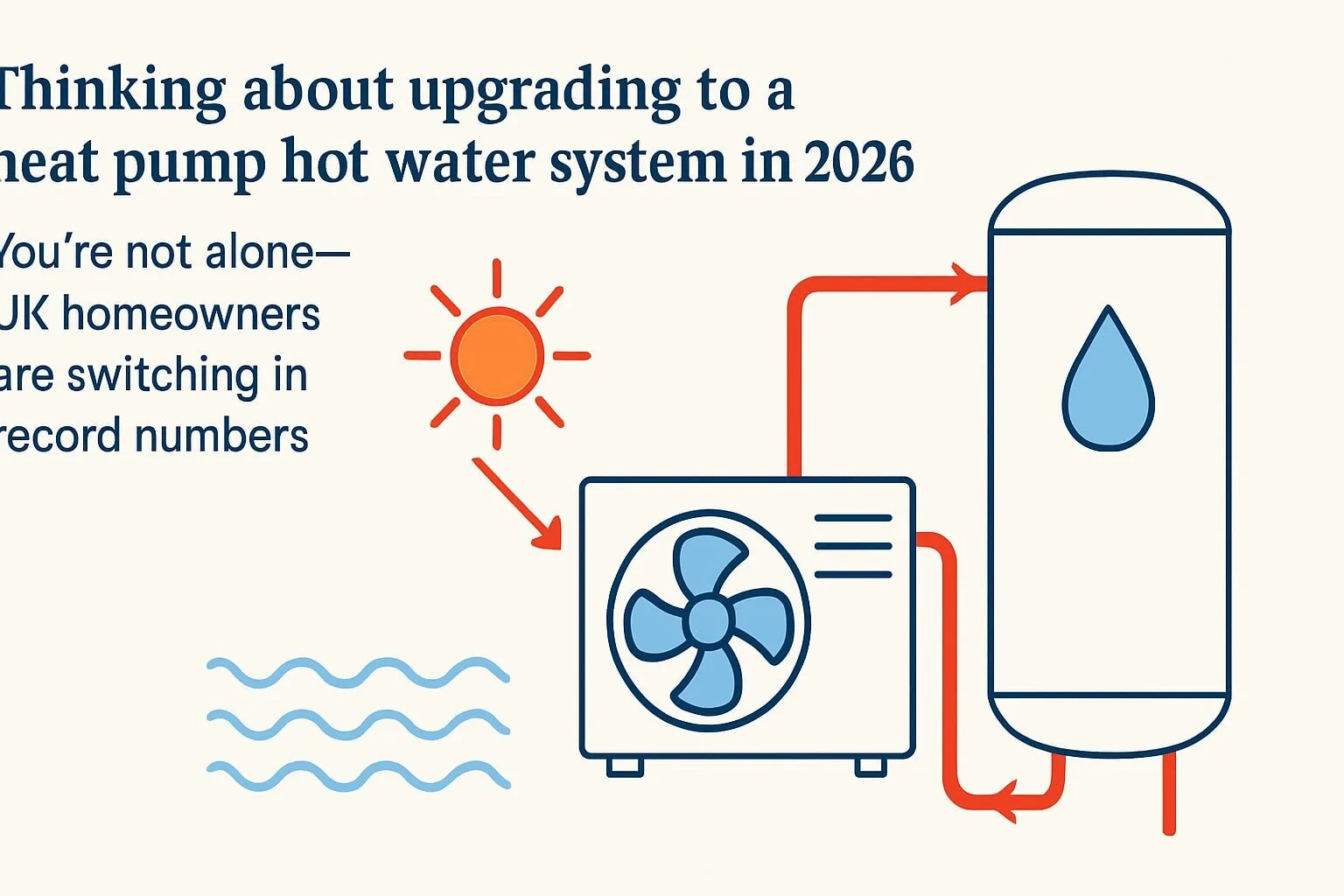
Thinking about upgrading to a heat pump hot water installation in 2026? You are not alone, as more UK homeowners are making the switch than ever before. The shift toward low-carbon heating solutions is transforming how we heat our water and future-proof our homes.
This handbook is your step-by-step guide to heat pump hot water installation. It will help you make informed choices, ensuring comfort, efficiency, and compliance as standards change.
Inside, you will discover how these systems work, the advantages for your property, and the best ways to plan and prepare. With a full installation walkthrough, compliance guidance for 2026, and answers to common questions, you will be ready to take action and benefit from the latest grants and energy savings.
Upgrading your hot water system is a major decision, especially with new energy standards on the horizon. Understanding the basics of heat pump hot water installation will help you make informed choices that are right for your home and future.
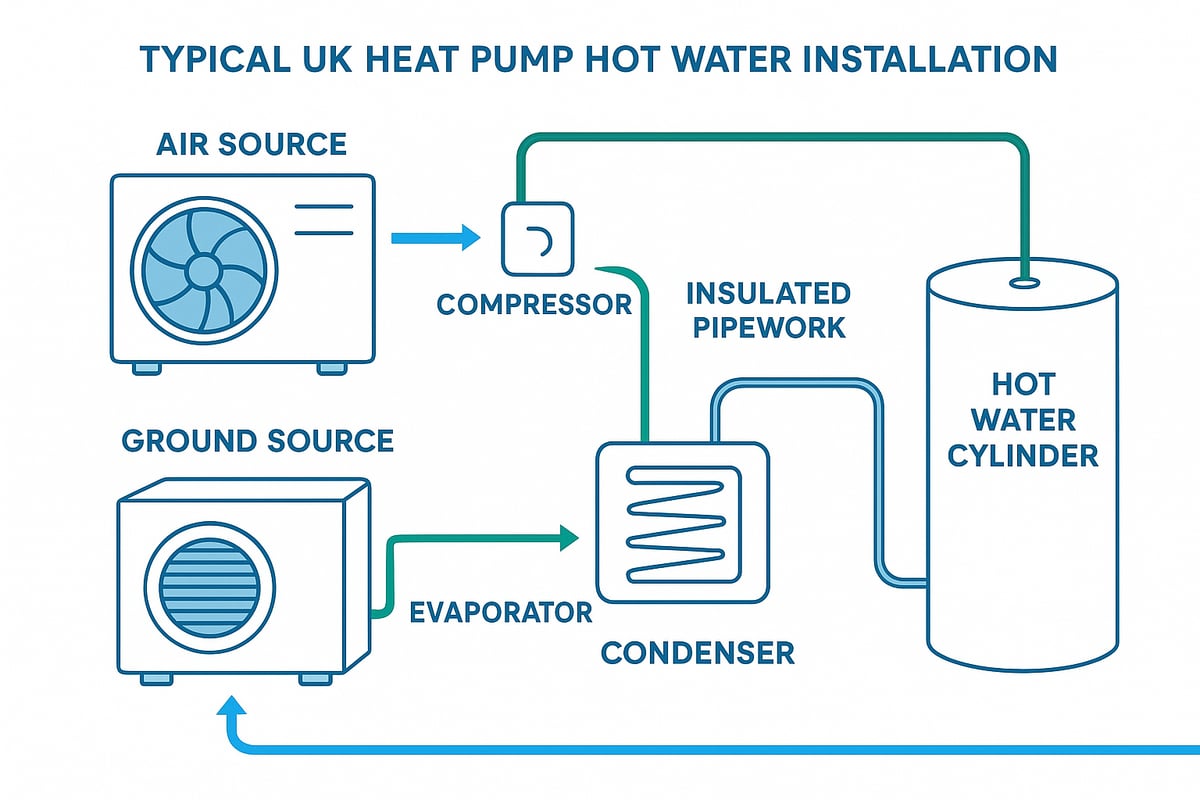
A heat pump hot water system is an advanced technology that uses electricity to transfer heat from the air or ground into your home's hot water supply. The main components include the heat pump unit, a hot water cylinder, refrigerant pipes, and control systems.
Unlike traditional water heaters that generate heat by burning gas or using electric resistance, heat pump hot water installation relies on moving existing heat, making it far more energy efficient. There are two primary types: air source heat pumps, which extract warmth from outside air, and ground source heat pumps, which use energy stored in the ground.
In a typical UK household, an air source heat pump is installed outside, connected to an indoor cylinder that stores hot water for daily use.
At the heart of every heat pump hot water installation is the refrigeration cycle. This process uses a refrigerant that absorbs heat from the air or ground, which is then compressed to raise its temperature before transferring it to the water in your cylinder.
This method is highly efficient because it moves heat rather than creates it. The efficiency is measured by the Coefficient of Performance (COP). For example, a COP of 3 means you get three units of heat for every unit of electricity used.
With the right setup, you could save up to 50% on your water heating bills compared to old-fashioned boilers or electric heaters.
Choosing heat pump hot water installation brings a range of advantages. First, it can cut your energy bills by up to £400 per year, as the system uses less electricity to deliver the same amount of hot water.
Second, it reduces your carbon footprint by more than 50%, supporting the UK's drive towards net zero. These systems are compatible with green energy tariffs, making them an excellent match for renewables.
Finally, heat pump hot water solutions are known for their long-term reliability and minimal maintenance, offering peace of mind for busy households.
There are several options to consider when planning heat pump hot water installation. Integrated systems combine the heat pump and cylinder in one unit, ideal for compact spaces, while split systems separate the two for flexible installation.
Cylinder selection is also key: unvented cylinders offer higher pressure and are popular in modern homes, while vented cylinders suit properties with gravity-fed systems. Hybrid models include an immersion heater for backup during cold snaps.
For a typical three-bedroom home, a split air source system with an unvented cylinder often provides the best mix of efficiency and performance. More details on system types are available in this Heat pump and hot water guide.
Before committing to heat pump hot water installation, assess your property's suitability. Good building insulation and low heat loss are essential for maximum efficiency.
You'll need enough space outside for the heat pump unit and inside for the cylinder. Check your water pressure and plumbing to ensure compatibility with the new system.
Use this quick checklist for UK homes:
A professional survey will confirm if your property is ready for a heat pump hot water installation, helping you avoid costly surprises later.
Careful planning ensures your heat pump hot water installation delivers the efficiency and reliability you expect. From understanding your household’s hot water demands to selecting the right installer, each step is crucial for a seamless transition to low-carbon heating.
Start your heat pump hot water installation journey by evaluating your household’s daily usage. Consider the number of people, shower habits, bath frequency, and appliance use. For example, a family of four typically requires 120–160 litres of hot water per day.
List your requirements:
By understanding your typical consumption patterns, you ensure your heat pump hot water installation is sized correctly for comfort and efficiency.
A professional survey is essential for a successful heat pump hot water installation. Experts will assess your cylinder location, available space for the outdoor unit, and existing plumbing.
Key checks include:
Common findings in UK homes are restricted loft access or outdated pipework. Addressing these early avoids delays and ensures your heat pump hot water installation proceeds smoothly.
Selecting the best system and installer is a vital part of the heat pump hot water installation process. Compare brands for efficiency, warranty length, and aftercare support.
Ask your installer:
Accredited installers ensure your heat pump hot water installation meets all legal requirements and maximises your investment’s value.
Budgeting for your heat pump hot water installation involves more than just upfront costs. Typical installations range from £4,000 to £7,500, with running costs often lower than traditional systems. The Boiler Upgrade Scheme offers grants up to £7,500, reducing your initial outlay.
For a detailed breakdown, see the Heat pump hot water cost breakdown, which explains installation fees, running costs, and available incentives. A typical payback period is 6–10 years, depending on usage and grant eligibility.
A well-organised heat pump hot water installation minimises disruption. Most projects take 1–3 days, from removal of the old system to final commissioning.
Typical steps include:
Plan for temporary water downtime, and communicate with your installer to maintain a smooth process and clear timeline for your heat pump hot water installation.
U and I Renewables brings over 17 years of expertise to every heat pump hot water installation. As government-approved installers, they help clients access grants up to £7,500 and tailor solutions for each home.

Benefits include:
Trust U and I Renewables to deliver a reliable, future-proof heat pump hot water installation.
Embarking on a heat pump hot water installation can seem daunting, but breaking it into clear steps helps ensure a smooth experience. The process involves careful planning, skilled installation, and a thorough handover. Below, we guide you through each stage so you know what to expect from start to finish.
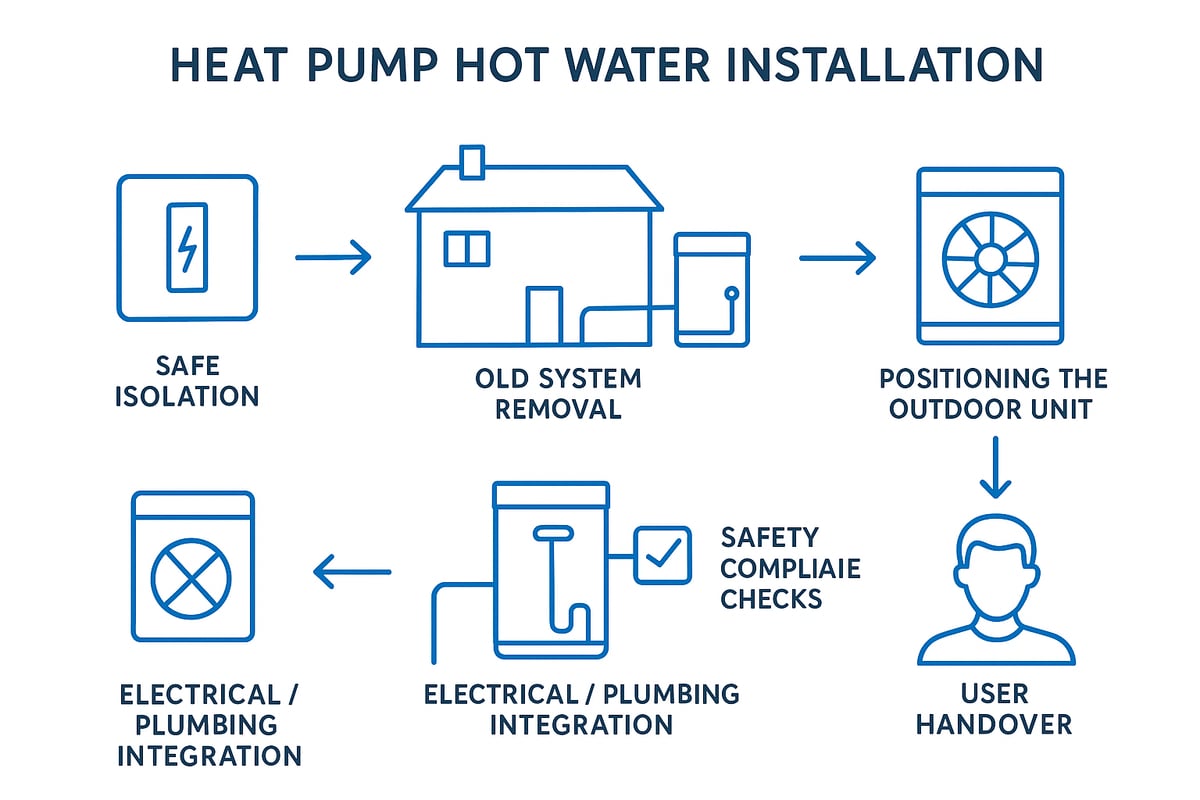
Every heat pump hot water installation begins with rigorous preparation. The installer will isolate both the electrical supply and water mains to create a safe workspace.
Safety checks are crucial at this stage. Risk assessments identify any hazards, such as electrical faults or water leaks, and installers use protective coverings to shield floors and nearby furnishings.
A tidy, protected workspace not only prevents accidents but also keeps your home clean during the project. This attention to detail sets the tone for a successful installation.
Next, the team will carefully drain and decommission your old cylinder or boiler. This step requires patience to prevent water damage and ensure safe disconnection from the mains.
Responsible disposal is standard practice. Most reputable installers recycle old units and remove any hazardous materials as required by UK regulations.
Common issues at this stage include corroded pipework or inaccessible cylinders, which may require minor adjustments to the installation plan. Addressing these early keeps your heat pump hot water installation on track.
With the old system gone, attention turns to installing the new heat pump. The unit’s placement is vital for efficiency and minimal noise. Outdoor units, for example, need clear airflow and should be positioned away from bedrooms or living spaces.
Installers use anti-vibration mounts and soundproofing measures to reduce noise. Urban homes may require extra consideration for neighbours and restricted space, while rural settings offer more flexibility.
For a closer look at the technology behind this stage, see the Air to water heat pump overview, which explains how these systems work and why correct positioning is crucial for a successful heat pump hot water installation.
The new hot water cylinder is sized to meet your household’s needs and positioned for easy access and optimal heat retention. Pipework is upgraded if necessary and fully insulated to minimise heat loss.
Installers ensure seamless integration with your existing heating system, whether it’s underfloor heating or traditional radiators. This step is key for the long-term efficiency of your heat pump hot water installation.
Selecting the right cylinder type, such as vented or unvented, also impacts performance and reliability.
A dedicated electrical circuit is installed to power the heat pump safely and reliably. Controls, sensors, and thermostats are connected to provide precise temperature regulation and responsive hot water delivery.
The plumbing is checked for compatibility, ensuring water pressure and flow rates meet system requirements. Installers may upgrade pipework or valves to support the new technology.
This integration phase is essential to guarantee that your heat pump hot water installation delivers both efficiency and comfort.
Once everything is connected, the system is filled, bled, and thoroughly tested. Installers set the correct temperature and timer settings based on your household’s usage patterns.
Comprehensive safety checks are carried out to ensure compliance with UK building regulations and manufacturer guidelines. Only after passing these tests is your heat pump hot water installation ready for everyday use.
This step provides peace of mind that the new system is safe, reliable, and performing at its best.
After commissioning, you’ll receive a detailed handover. The installer will demonstrate all controls, show how to adjust settings, and explain the system’s maintenance schedule.
You’ll receive manuals, warranty documents, and contact details for ongoing support. Clear guidance empowers you to get the most from your heat pump hot water installation and keep it running smoothly for years to come.
A good installer makes sure you feel confident using your new system before leaving the site.
To illustrate a typical heat pump hot water installation, consider a three-bedroom semi-detached home:
| Stage | Duration | Cost Estimate | Notes |
|---|---|---|---|
| Preparation & Safety | 0.5 days | Included | Site protection, risk assessment |
| Removal of Old System | 0.5 days | Included | Recycling/disposal |
| Installing Heat Pump Unit | 0.5 days | £2,000–£3,000 | Outdoor/indoor unit positioning |
| Cylinder & Integration | 0.5 days | £1,500–£2,500 | Cylinder, pipework, controls |
| Commissioning & Handover | 0.5 days | Included | Testing, user training |
| Total Project | 2–3 days | £4,000–£7,500 | After grants, energy savings apply |
Typical issues include tight loft access or old pipework, both resolved by experienced installers. Over the first year, most homeowners see up to a 50% reduction in hot water heating costs, proving the value of a professional heat pump hot water installation.
Understanding the compliance landscape is essential for a successful heat pump hot water installation. From building regulations to future standards, each step ensures your system is safe, legal, and ready for years to come. Let us break down the key compliance areas every UK homeowner must consider.
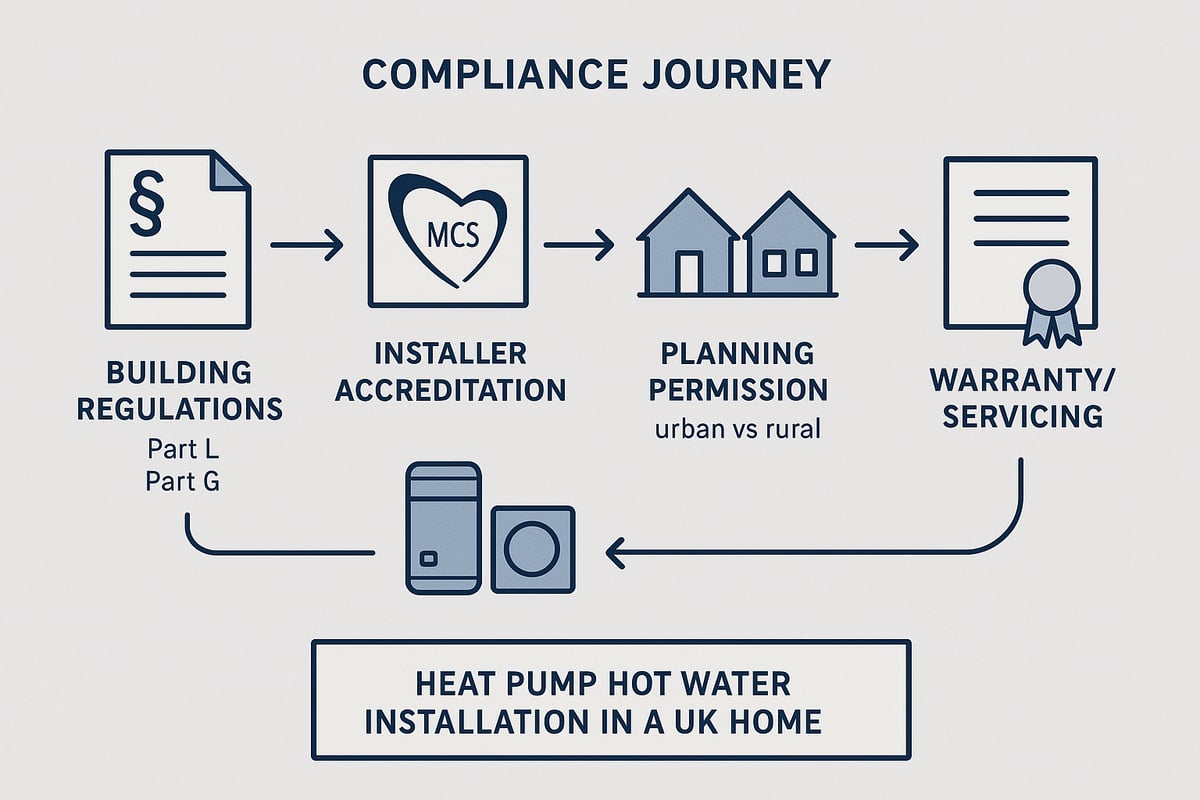
All heat pump hot water installation projects in the UK must comply with building regulations, specifically Part L (conservation of fuel and power) and Part G (sanitation, hot water safety, and water efficiency). These rules ensure your system is efficient and safe.
Notification to your local authority is required for most installations. Upon completion, you must receive Building Regulations compliance certification. Non-compliance can delay property sales or result in costly rectification.
Common compliance errors include:
For the latest regulatory details, consult the UK heat pump installation regulations. Always check with your installer that all requirements are met.
The regulatory landscape is set to tighten by 2026, with updates anticipated to SAP (Standard Assessment Procedure) and EPC (Energy Performance Certificate) ratings. The government’s low-carbon targets mean that heat pump hot water installation will become increasingly essential for meeting building standards in both new builds and retrofits.
If you install now, select equipment that exceeds today’s minimum efficiency standards. For example, opt for a high COP-rated heat pump and ensure your system is compatible with smart controls. This approach will help you avoid costly upgrades later.
Homeowners who future-proof their installation are more likely to enjoy long-term savings and compliance with upcoming standards.
Choosing an MCS-certified installer is vital for a compliant heat pump hot water installation. MCS (Microgeneration Certification Scheme) accreditation ensures your installer meets strict quality and safety standards.
Why does this matter? Only MCS installations are eligible for government grants, such as the Boiler Upgrade Scheme. Check your installer’s credentials on the MCS website and ask to see proof of accreditation.
Problems with non-certified installations include:
When comparing installers, always prioritise certification, insurance, and customer reviews.
Most heat pump hot water installation projects fall under permitted development rights. This means you usually do not need planning permission if certain criteria are met, such as maximum unit size, placement, and noise limits.
However, for properties in conservation areas, flats, or listed buildings, you may need formal consent. Noise is another key consideration, especially in urban settings. Place the outdoor unit away from bedrooms and neighbour boundaries to minimise disturbance.
Typical urban challenges include space constraints and stricter noise rules. Rural installations may offer more flexibility, but always check with your local planning authority if in doubt.
To maintain your warranty and the long-term efficiency of your heat pump hot water installation, annual servicing is essential. Most manufacturers require a yearly service, which typically costs between £100 and £200.
A standard service includes:
Regular maintenance helps prevent breakdowns and ensures your system remains compliant with evolving regulations. Consider a service plan for added peace of mind and to keep your investment protected.
Unlocking the full potential of your heat pump hot water installation means more than just switching systems. To maximise efficiency and savings, you need to fine-tune your setup, integrate renewables, and stay proactive with maintenance. Let us walk you through the best strategies for long-term performance and reduced costs.
Getting the most from your heat pump hot water installation starts with the right settings. For UK homes, setting your hot water cylinder between 50°C and 55°C strikes a balance between comfort and efficiency.
Using timers and smart controls helps match hot water production to your daily routine. For example, scheduling heating during off-peak electricity hours can cut costs. Many modern systems come with smartphone apps for easy adjustments.
Seasonal tweaks are essential. In winter, you might need slightly higher settings, while summer allows for lower temperatures. Regularly reviewing your setup ensures your heat pump hot water installation always runs efficiently.
Pairing your heat pump hot water installation with solar panels can significantly boost your home’s self-sufficiency. When your solar PV system generates excess electricity, it can directly power your heat pump, reducing reliance on the grid and lowering bills.
Battery storage can store solar energy for use during peak demand periods or at night. This synergy means you could cover 90% or more of your hot water needs with renewable energy. For more details on how to combine these technologies, see Integrating heat pumps with solar panels.
With the right approach, your heat pump hot water installation becomes a central part of a low-carbon, future-proof home.
Minimising heat loss is crucial for the efficiency of your heat pump hot water installation. Start by upgrading your cylinder insulation—modern jackets can cut heat loss by up to 80%.
Pipe lagging is another simple but effective step. Insulating pipes between the cylinder and taps helps maintain water temperature and reduces wasted energy. Draught-proofing areas around your cylinder and pipework also plays a key role.
A before-and-after comparison often shows substantial savings. By improving insulation, your heat pump hot water installation will deliver lower bills and better performance all year round.
| Upgrade Type | Estimated Heat Loss Reduction |
|---|---|
| Cylinder Jacket | Up to 80% |
| Pipe Lagging | 10–15% |
| Draught Proofing | 5–10% |
Tracking your system’s performance is essential for maximising the value of your heat pump hot water installation. Energy monitors and smart meters provide real-time data on electricity usage and system output.
By reviewing this data, you can identify inefficiencies, such as unusual spikes in consumption or suboptimal temperature settings. Some homeowners use smart home platforms to automate adjustments, further boosting efficiency.
A recent heat pump efficiency study found that model predictive control can enhance savings and comfort. Regular monitoring ensures that your heat pump hot water installation stays on track for long-term savings.
Looking after your heat pump hot water installation is the key to sustained efficiency. Schedule annual professional servicing to check for limescale, leaks, and control accuracy. This keeps warranties valid and performance high.
Over time, consider upgrading controls or adding smart thermostats for finer adjustments. Watch for signs of declining output, such as longer heat-up times or rising bills—these can signal the need for maintenance or an upgrade.
Consistent care helps your heat pump hot water installation deliver reliable, cost-effective hot water for years to come.
Thinking about heat pump hot water installation? You are not alone. Many UK homeowners have questions before making the switch, especially as regulations and technology rapidly evolve. Below, we answer the most common queries to help you plan your project with confidence.
Yes, heat pump hot water installation is possible in older properties, but some additional steps may be required. Insulation is the key factor. Older homes, such as Victorian terraces, often suffer from higher heat loss, so upgrading loft and wall insulation is recommended before installation.
A professional installer will assess your property’s suitability, considering factors like window glazing, draughts, and pipework. Retrofitting may involve minor building work, but modern heat pump systems are designed to be flexible.
For example, a recent installation in a Victorian terrace included upgrading loft insulation, fitting pipe lagging, and using a compact cylinder to suit limited space. This ensured efficient performance and long-term savings following the heat pump hot water installation.
Noise is a common concern with any heat pump hot water installation. Modern units are much quieter than older models, typically operating between 40 and 50 decibels—similar to a quiet conversation. This is usually quieter than many gas boilers.
Placement matters. Outdoor units should be installed away from bedroom windows or neighbouring properties. Vibration mounts and soundproofing can further reduce perceived noise.
In a recent comparison, a heat pump hot water installation in a semi-detached house produced less noise than the previous combi boiler, making it suitable for urban and rural environments alike.
Maintenance for a heat pump hot water installation is straightforward and cost-effective. Annual servicing by a qualified engineer is recommended to maintain efficiency and warranty coverage. This typically involves checking refrigerant levels, cleaning filters, and inspecting controls.
Homeowners can contribute by periodically checking for leaks, clearing debris around the outdoor unit, and monitoring system performance via smart controls.
A typical maintenance schedule includes a professional check every 12 months, with simple DIY checks every few months. This keeps the heat pump hot water installation running smoothly and efficiently.
Whether you need to upgrade radiators or plumbing depends on your property and the specifics of your heat pump hot water installation. Heat pumps work best with larger radiators or underfloor heating, as they deliver lower flow temperatures than traditional boilers.
A site survey will reveal if your current system is compatible. In some cases, only a few radiators need replacing or pipework insulation upgrading. This aligns with the push towards higher efficiency, as outlined in the Future Homes Standard 2025, which encourages low-carbon heating and improved heat distribution.
For example, in a 3-bed home, upgrading just two radiators and lagging exposed pipes improved comfort and efficiency after heat pump hot water installation.
Government grants make heat pump hot water installation more affordable. The Boiler Upgrade Scheme offers up to £7,500 towards installation for eligible homeowners. To qualify, your property must meet insulation and efficiency standards, and you must use an accredited installer.
The application process involves a property assessment, installer quote, and submission of documents. Full guidance is available in the Boiler Upgrade Scheme guidance.
For example, a homeowner followed a simple step-by-step process: checking eligibility, choosing an MCS-certified installer, and submitting paperwork. The grant significantly reduced upfront costs for their heat pump hot water installation.