No products in the basket.
With energy costs rising and the UK government setting ambitious 2025 targets for low-carbon homes, the demand for efficient heating is at an all-time high. The air to water heat pump offers a practical solution, transforming how homeowners heat their properties by reducing bills and carbon emissions.
Modern systems combine advanced technology with access to government grants, providing both immediate and long-term savings. This guide will walk you through everything you need to know about air to water heat pumps in 2025, including how they work, their benefits, installation steps, costs, grants, maintenance, and future trends.
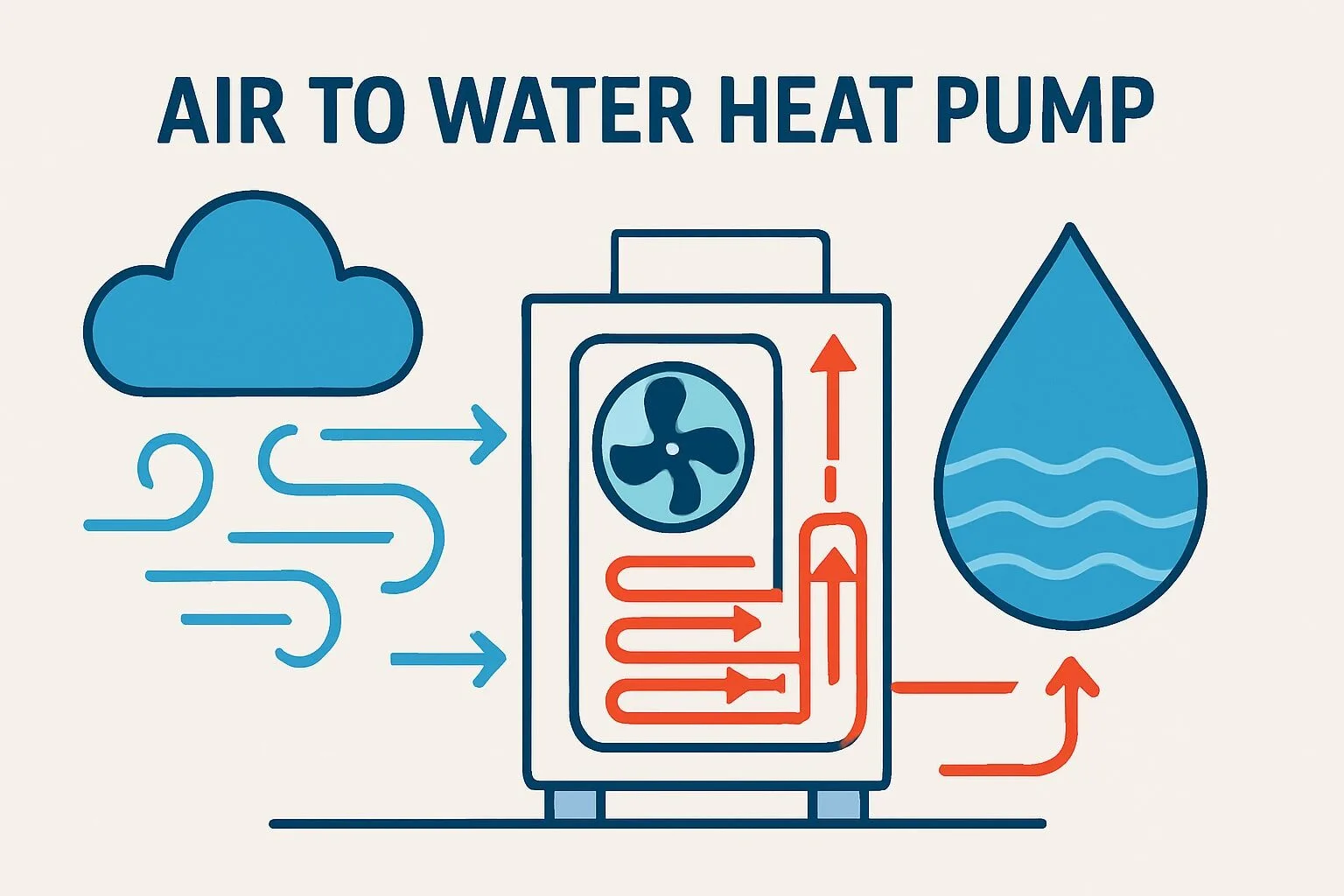
The air to water heat pump is rapidly becoming a preferred choice for efficient home heating in the UK. This system works by extracting renewable thermal energy from the outdoor air and transferring it indoors to heat water. That water is then circulated throughout radiators, underfloor heating, and hot water cylinders, providing both space heating and domestic hot water. As the UK aims to decarbonise homes, the air to water heat pump stands out for its combination of reliability, efficiency, and environmental benefits.
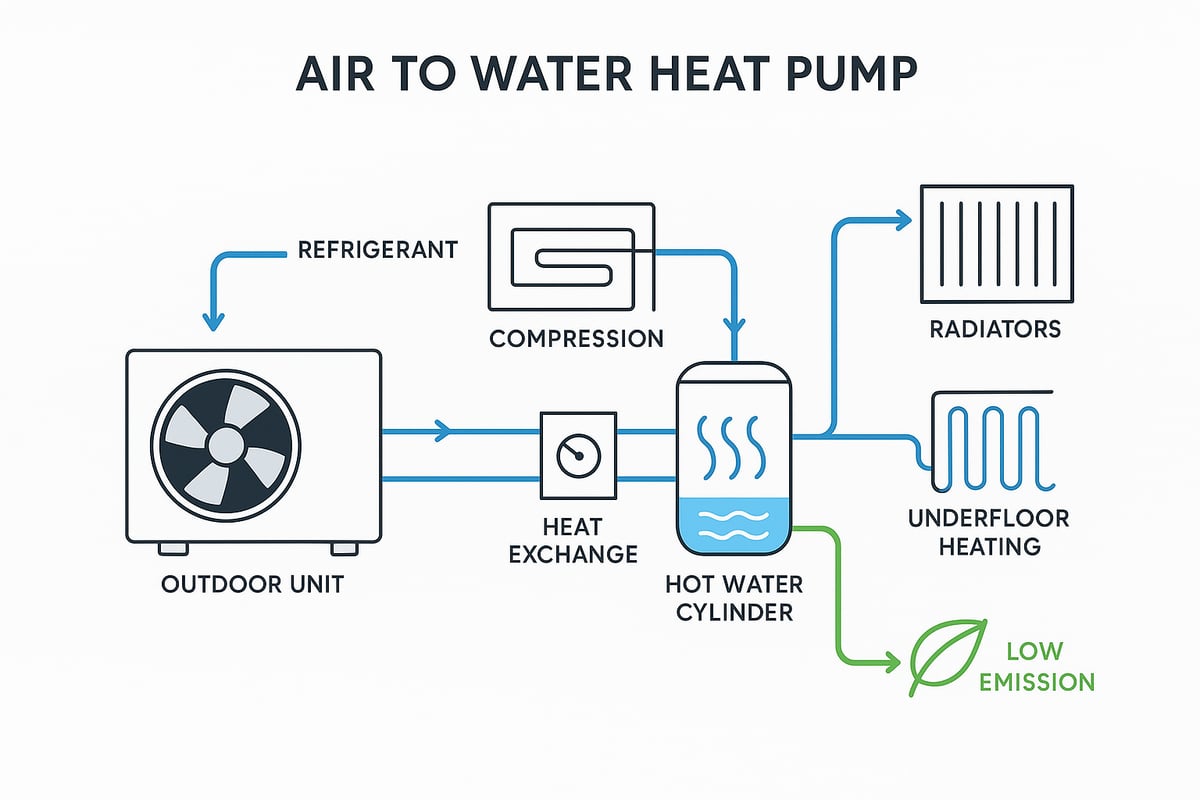
The core function of the air to water heat pump revolves around a four-stage process:
This process allows the air to water heat pump to operate with remarkable efficiency. For every unit of electricity consumed, up to three units of heat can be delivered, resulting in a Coefficient of Performance (COP) of 3, or 300%. By comparison, modern gas boilers typically reach only 90% efficiency.
To illustrate the differences, consider the following comparison:
| System Type | Typical Efficiency | Upfront Cost (UK avg.) | Annual CO2 Emissions | Installation Complexity |
|---|---|---|---|---|
| Air to water heat pump | Up to 300% (COP 3) | £8,000 | Low (cuts 2-3 tonnes) | Moderate |
| Ground source heat pump | Up to 400% (COP 4) | £20,000 | Very Low | High |
| Gas boiler | 90% | £3,000 | High | Low |
The air to water heat pump is compatible with a wide range of existing home systems. It can work efficiently with radiators, underfloor heating, and modern hot water cylinders. Some homes may need minor adjustments, such as upgrading older radiators or fitting a high-efficiency cylinder, to maximise performance. This flexibility makes the air to water heat pump suitable for both new builds and retrofits.
A significant advantage of the air to water heat pump is its environmental impact. Unlike fossil fuel boilers, there is no combustion and therefore no direct on-site emissions. This supports the UK’s net zero targets by reducing household carbon footprints. In fact, an average UK home using an air to water heat pump can cut carbon emissions by 2-3 tonnes each year, a substantial contribution to national climate goals.
Some common misconceptions exist around the air to water heat pump, especially regarding performance in cold weather and noise levels. Modern systems are engineered to operate efficiently even during UK winters, maintaining high output at low temperatures. Additionally, many leading models have achieved Quiet Mark certification, ensuring minimal disturbance. For a deeper understanding of how these systems deliver both heating and hot water, visit the Heat Pump and Hot Water Guide for a comprehensive explanation.
With its combination of energy efficiency, compatibility, and sustainability, the air to water heat pump is fast becoming the cornerstone of future-proof home heating in the UK.
Choosing an air to water heat pump for your home delivers a range of outstanding advantages. From impressive energy efficiency and reduced bills to environmental gains and year-round comfort, these systems are transforming how the UK heats its homes. Let’s explore the core benefits in detail.
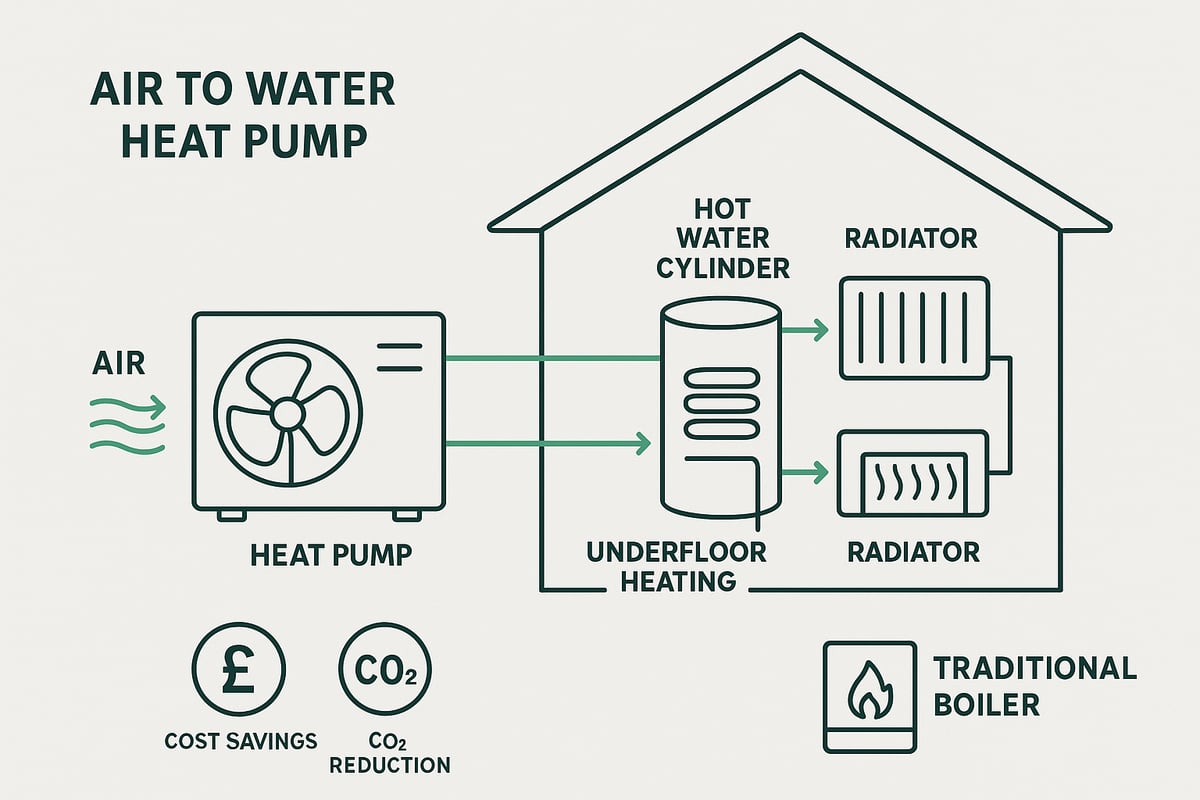
An air to water heat pump is renowned for its exceptional energy efficiency. For every 1kWh of electricity consumed, it can generate up to 3kWh of heat for your home. This high coefficient of performance (COP) means you are getting triple the output for your energy input.
If you are switching from an oil or LPG system, the savings are immediate and substantial. The average UK household can reduce heating bills by as much as 50 percent. Over a typical year, this could translate to hundreds of pounds saved, making the air to water heat pump a smart investment for both new builds and existing properties.
| System Type | Efficiency | Typical Annual Savings |
|---|---|---|
| Gas Boiler | 90% | £0 (baseline) |
| Oil/LPG Boiler | 85% | £400–£800 |
| Air to Water Heat Pump | 300% | £700–£1,200 |
With an air to water heat pump, you eliminate on-site combustion and dramatically lower your carbon footprint. These systems operate without burning fossil fuels, so there are no direct emissions from your property.
Switching to an air to water heat pump supports the UK’s net zero ambitions. By reducing household CO2 emissions by 2–3 tonnes each year, you contribute directly to cleaner air and a healthier climate. As the electricity grid becomes greener, the environmental benefits of heat pumps will only increase.
A major advantage of the air to water heat pump is its ability to deliver a consistent supply of hot water, regardless of the season. Whether you need a relaxing bath or a quick shower, the system ensures you have hot water on demand.
Unlike older systems that may struggle in colder months, a modern air to water heat pump is engineered to maintain performance even as outdoor temperatures drop. This reliability means comfort and convenience for every member of the household, all year round.
The air to water heat pump is suitable for a wide variety of homes, from contemporary new builds to traditional properties undergoing retrofit. It works seamlessly with underfloor heating, standard or upgraded radiators, and existing hot water cylinders.
Comfort is another key benefit. Instead of the sharp temperature fluctuations common with some boilers, an air to water heat pump delivers gentle, consistent warmth throughout the house. This makes it ideal for families seeking a more stable and pleasant indoor environment.
Compared to traditional boilers, an air to water heat pump requires less frequent servicing. Annual checks are typically sufficient, reducing ongoing maintenance hassle and cost.
Homeowners are also eligible for generous government incentives. Through the Air Source Heat Pump Grants, you could access up to £7,500 towards installation costs, making the transition to low-carbon heating even more affordable.
With minimal upkeep, robust support, and significant financial assistance available, the air to water heat pump offers a compelling package for any UK household considering a heating upgrade.
Upgrading to an air to water heat pump is a structured process, ensuring your home enjoys efficient, eco-friendly heating. Each step, from initial assessment to post-installation support, is crucial for optimal performance and long-term savings. Here, we outline the full journey, making it easy to understand what to expect.
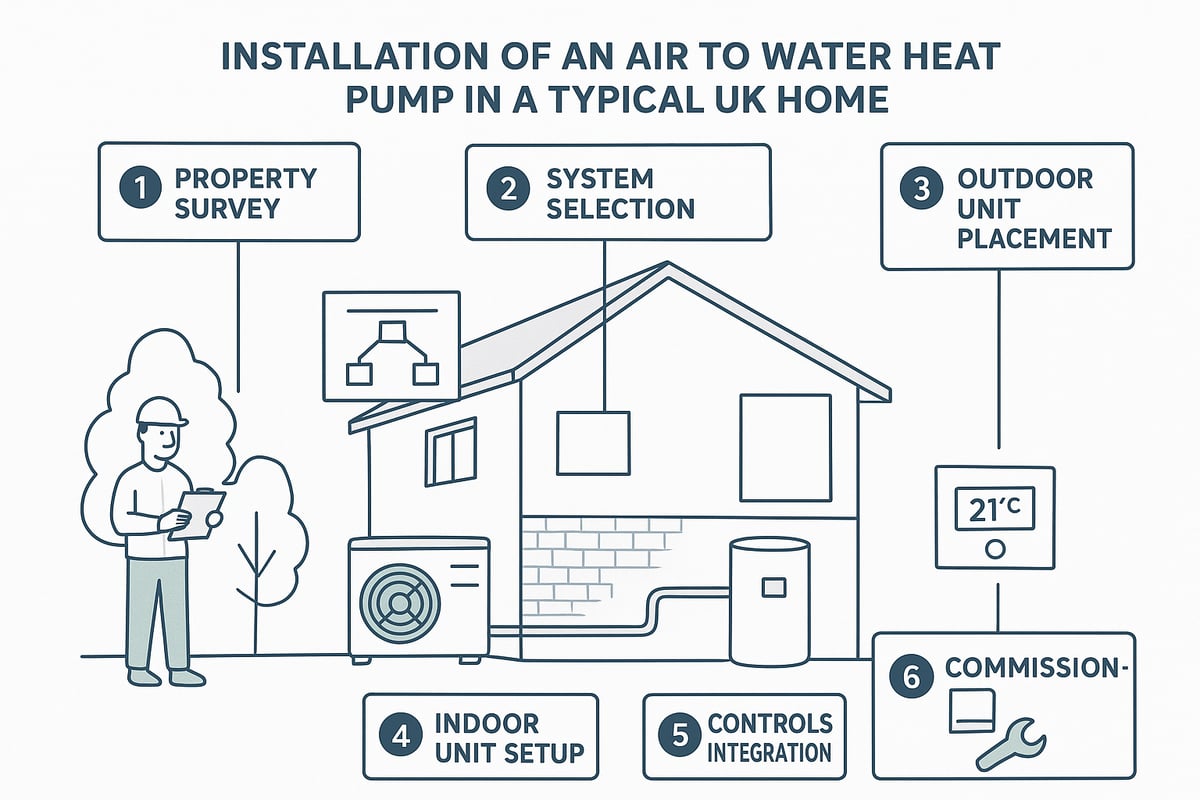
The first step in any air to water heat pump installation is a thorough survey of your property. Installers will evaluate insulation levels, property size, and your current heating system.
They will check if your existing radiators or underfloor heating are compatible. Sometimes, a hot water cylinder upgrade is needed for optimal efficiency. The location of the outdoor unit is also considered, requiring a small, well-ventilated space.
For most UK homes, only a modest outdoor area is necessary. This ensures the air to water heat pump can operate effectively, even in densely populated areas.
Selecting the best air to water heat pump system depends on your home’s needs and preferences. You will typically choose between monobloc and split systems. Monoblocs are compact and all-in-one, while split systems have separate indoor and outdoor components.
Consider leading brands that offer Quiet Mark certification for low noise, and those using R290 refrigerant for improved efficiency. Smart controls and integration with solar PV or battery storage can enhance performance and savings.
Warranty length, aftercare services, and manufacturer support also influence the decision. Your installer will help match the air to water heat pump to your property’s requirements.
Once the system is chosen, professional installation begins. The process normally takes between two and five days, depending on your home’s complexity and any required upgrades.
The outdoor unit is placed on the ground or wall-mounted, while the indoor components are installed close to the hot water cylinder. Existing pipework and controls are used where possible, reducing disruption.
It is vital to use MCS certified installers for compliance and grant eligibility. For a detailed breakdown of what to expect during installation, visit Air Source Heat Pump Installation for expert guidance.
After installation, the air to water heat pump system is thoroughly tested. Engineers check for correct operation, efficiency, and ensure noise levels meet expectations.
Homeowners receive training on using the controls, smart thermostats, and learn basic maintenance routines. All essential documentation is provided, including warranty details, MCS certification, and any grant paperwork.
This handover phase ensures you are confident operating your new heating system and can maximise its benefits from day one.
Ongoing support is a key part of air to water heat pump ownership. Routine maintenance checks are scheduled to keep the system running smoothly.
Homeowners have access to emergency repairs and troubleshooting advice if needed. Many installers offer efficiency monitoring, upgrades, and continuous customer service.
With professional support, your air to water heat pump delivers reliable, low-carbon heating for years, ensuring peace of mind and maximum savings.
Understanding the costs and potential savings of an air to water heat pump is crucial for UK homeowners planning for 2025. This section breaks down upfront investment, running costs, available government grants, finance options, and real-world value, so you can make an informed decision.
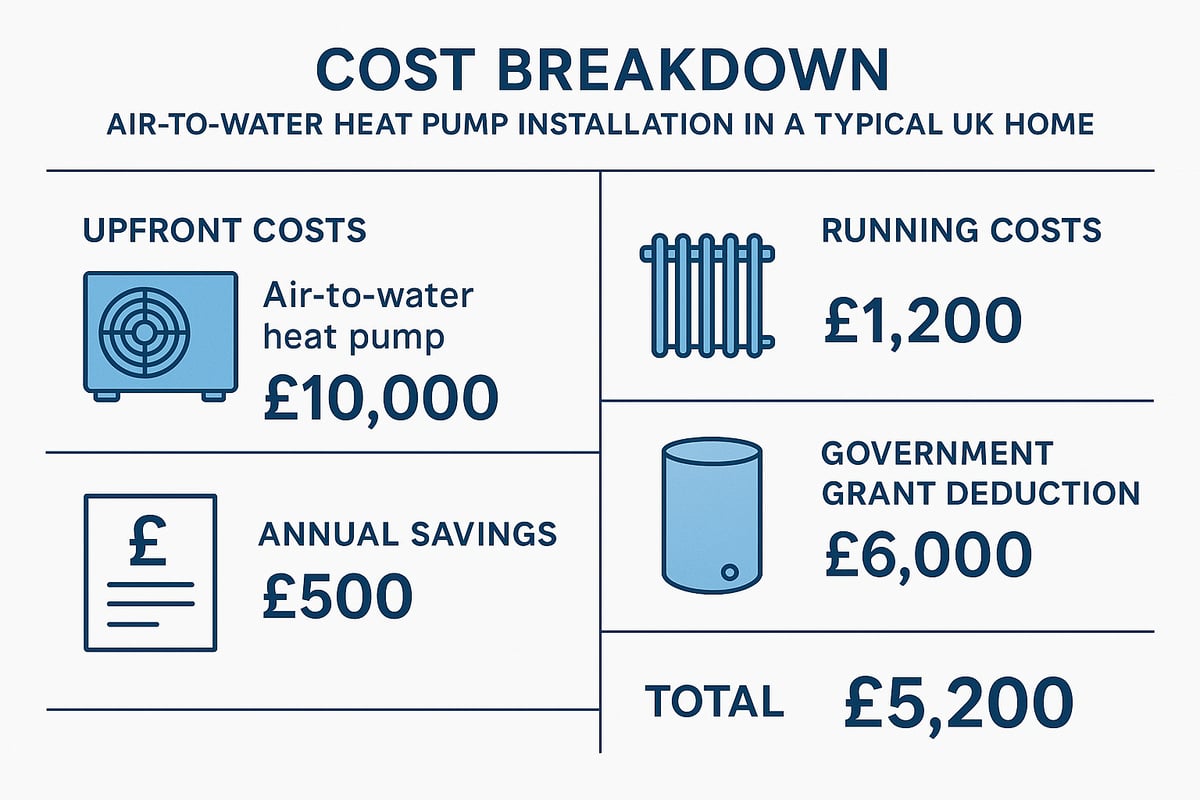
When considering an air to water heat pump, the initial outlay is a common concern. For most UK homes, installation costs average around £8,000, making it more affordable than a ground source system, which can exceed £20,000. This includes the heat pump itself, labour, and any necessary upgrades, such as new radiators or a compatible hot water cylinder.
Below is a simplified comparison:
| System Type | Typical Upfront Cost | Components Included |
|---|---|---|
| Air to water heat pump | £8,000 | Unit, labour, upgrades |
| Ground source | £20,000 | Unit, boreholes, labour |
| Gas boiler | £3,000 | Unit, installation |
Many factors influence the final price, including property size and insulation. For a detailed breakdown, see the Air Source Heat Pump Costs UK page.
The air to water heat pump stands out for its impressive energy efficiency. For every 1kWh of electricity consumed, it can generate up to 3kWh of heat, leading to substantial savings over time. On average, running costs are up to 50% lower than oil or LPG boilers.
A typical UK household can expect to save between £700 and £1,200 per year on heating bills. By integrating the air to water heat pump with solar PV or battery storage, these savings can be even greater. Over a decade, many homeowners see a significant reduction in total energy expenditure.
To make the air to water heat pump more accessible, the UK government offers generous grants. The Boiler Upgrade Scheme provides up to £7,500 towards installation, dramatically reducing upfront costs for eligible properties.
Eligibility usually requires replacing an existing fossil fuel system and using an MCS-certified installer. Other incentives may include VAT reductions or local authority schemes, further lowering the investment required. Applying for these grants is straightforward and can make a real difference to your budget.
Affordability is a key factor when choosing an air to water heat pump. Many suppliers offer flexible finance plans, starting from as little as £20 per week. This approach allows homeowners to spread the cost, similar to traditional heating systems, but with the added benefit of lower running expenses.
Financing options can shorten the payback period, as savings on energy bills offset monthly payments. With careful planning, most households find the switch to be both manageable and rewarding in the long run.
Real-world data shows that an air to water heat pump delivers strong value for money. Homeowners frequently report payback periods of 5 to 8 years, thanks to energy savings and grants. Compared to fossil fuel systems, the lifetime cost is much lower, especially as energy prices rise.
Customer satisfaction is high, with many noting improved comfort and increased property value. In competitive housing markets, homes with modern, efficient heating systems often attract a premium, making the investment in an air to water heat pump a smart choice.
Proper maintenance is essential to keep your air to water heat pump running efficiently and reliably. Regular care not only extends lifespan, but also preserves energy savings and keeps your heating system performing at its best. As more UK homes invest in these systems, understanding routine maintenance becomes increasingly important for homeowners.
Every air to water heat pump requires regular attention to ensure optimal operation. Annual system checks are recommended, focusing on cleaning filters, inspecting refrigerant levels, and confirming all electrical connections are secure. Compared to traditional boilers, an air to water heat pump generally needs less frequent servicing, yet scheduled inspections are crucial for safety and efficiency.
| Task | Frequency (Heat Pump) | Frequency (Boiler) |
|---|---|---|
| Filter Cleaning | Every 6-12 months | Not required |
| Refrigerant Check | Annually | N/A |
| Full Service | Every 2-3 years | Annually |
Regular professional servicing ensures your air to water heat pump operates at peak performance throughout the year.
While air to water heat pump systems are reliable, occasional issues can arise. Homeowners may notice:
Most problems are minor and can be resolved by cleaning filters, resetting the system, or consulting the user manual. Persistent issues, such as refrigerant leaks or electrical faults, require a certified engineer. The growing UK market has led to increased focus on maintenance standards, as highlighted in the UK heat pump market report 2025.
Air to water heat pump warranties typically span 5 to 7 years, covering key components like compressors and heat exchangers. To maintain warranty validity, always use MCS certified engineers for servicing and repairs. These professionals are trained to handle refrigerants safely and can spot early signs of wear or malfunction.
Certified support also means that grant eligibility is protected and that your system meets the highest industry standards for safety and efficiency. Keep all maintenance records in case of future warranty claims or property resale.
Homeowners can handle basic tasks such as filter cleaning and checking for obvious blockages around the outdoor unit. However, technical work, including refrigerant handling and electrical diagnostics, should always be left to professionals.
Frequently Asked Questions:
For peace of mind, choose a Quiet Mark certified air to water heat pump and schedule annual check-ups to keep your home comfortable all year round.
The world of home heating is changing quickly. For UK homeowners, staying ahead of the curve means understanding both the technology and policy shaping the next generation of systems. The air to water heat pump sits at the heart of this transformation, driving innovation, sustainability, and comfort in equal measure.
One of the most important innovations is the shift to advanced refrigerants like R290. These low global warming potential (GWP) options help air to water heat pump systems achieve higher efficiency and reduce their environmental impact. R290 is particularly valued for its low emissions and excellent heat transfer properties.
Manufacturers are now designing units specifically to use these refrigerants, which supports the UK's net zero ambitions. As a result, homeowners benefit from cleaner technology that contributes to a smaller carbon footprint.
Integration with smart home technology is rapidly enhancing the usability of the air to water heat pump. Modern systems are now compatible with smart thermostats and home energy management platforms, allowing users to optimise heating schedules remotely.
AI-driven optimisation means the system can learn household routines, adjusting output for comfort and efficiency. These features enable homeowners to monitor performance, track savings, and maintain comfort levels with minimal manual intervention.
Hybrid systems represent another exciting trend. By combining an air to water heat pump with solar PV panels, battery storage, or even a traditional boiler, homeowners can create a truly resilient and efficient energy ecosystem.
This whole-house approach ensures that heating, hot water, and electricity needs are met in a balanced way. It also allows for energy storage and use during peak times, further lowering costs and environmental impact.
Government policy is accelerating the adoption of the air to water heat pump. The UK has committed to phasing out fossil fuel boilers and increasing grant funding for heat pump installations. Recent energy efficiency upgrades investment of £1.8 billion reflects this focus, helping more households access green heating.
Market adoption is on the rise, with over 200,000 heat pumps installed in the UK by 2024, according to UK heat pump adoption statistics. New builds increasingly include air to water heat pump systems as standard, supporting national sustainability targets. As consumer awareness grows, these trends will continue to shape a cleaner, more efficient future for home heating.