No products in the basket.
As the UK accelerates its journey to net zero by 2050, more homeowners are searching for energy-efficient ways to heat their homes and water. The heat pump and hot water solution stands out for its ability to reduce energy bills while cutting carbon emissions.
In this guide, you will discover what heat pumps are, how they provide hot water, their efficiency benefits, and the steps to installation. We will also explore government incentives and the latest trends shaping the future of home heating.
If you are looking to save money, boost comfort, and futureproof your property, this guide will help you make informed decisions for 2025 and beyond.
Heat pumps are rapidly becoming a central solution for energy-conscious homeowners in the UK. As the nation aims for net zero by 2050, understanding the mechanics and benefits of a heat pump and hot water system is essential. This section explores what heat pumps are, their main types, and how they supply both heating and hot water efficiently in a modern British home.
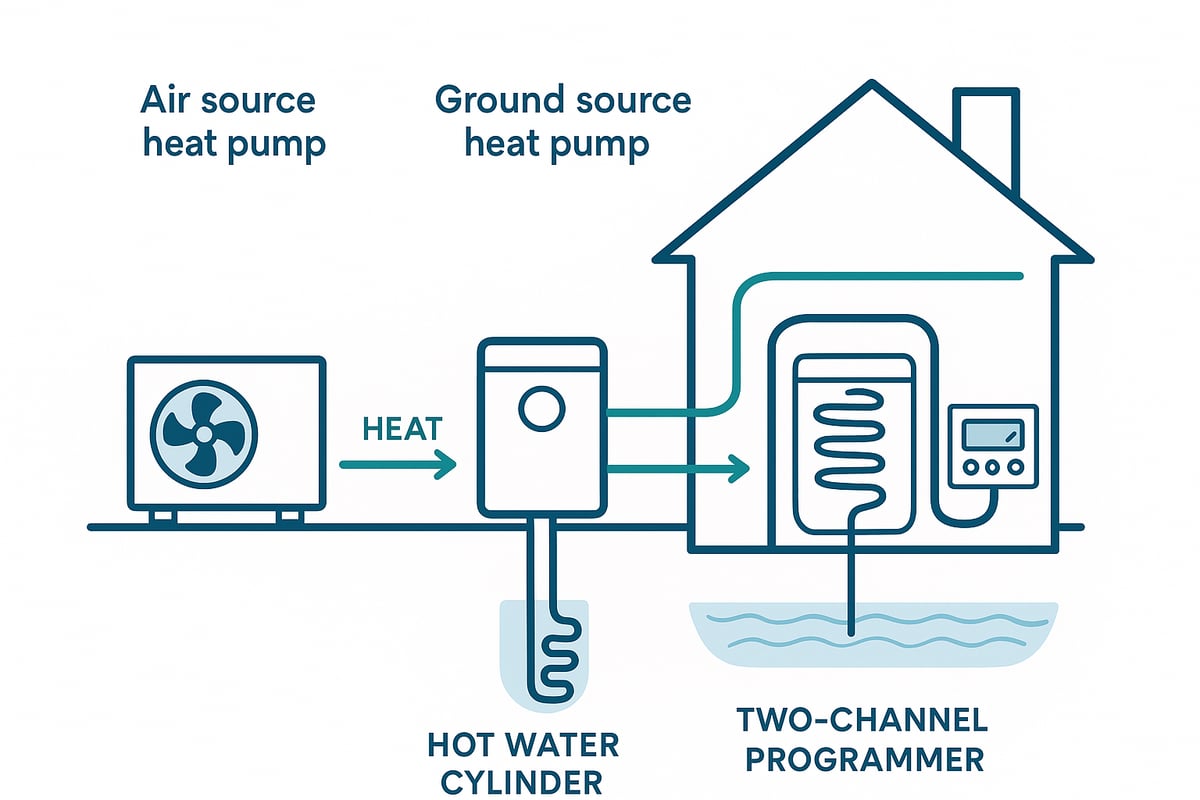
A heat pump and hot water system is a renewable technology designed to provide both heating and hot water for homes. Unlike conventional boilers that burn gas or oil to generate heat, a heat pump transfers existing heat from outside sources—air, ground, or water—into your home. This process works even in cold weather, making it ideal for the UK climate.
The main difference between a heat pump and traditional boilers lies in efficiency and sustainability. Heat pumps use electricity to move heat, not create it, which results in lower running costs and reduced carbon emissions. As the UK transitions away from fossil fuels, adopting a heat pump and hot water system aligns perfectly with national energy goals.
There are three primary types of heat pump and hot water systems suitable for UK homes: air source, ground source, and water source.
Air source heat pumps extract warmth from the outside air, even when temperatures are low. They are the most popular option in the UK due to their straightforward installation and good performance in mild climates.
Ground source heat pumps use loops buried underground to draw heat from the earth. They are highly efficient, especially for properties with suitable outdoor space, and can provide steady heating and hot water throughout the year.
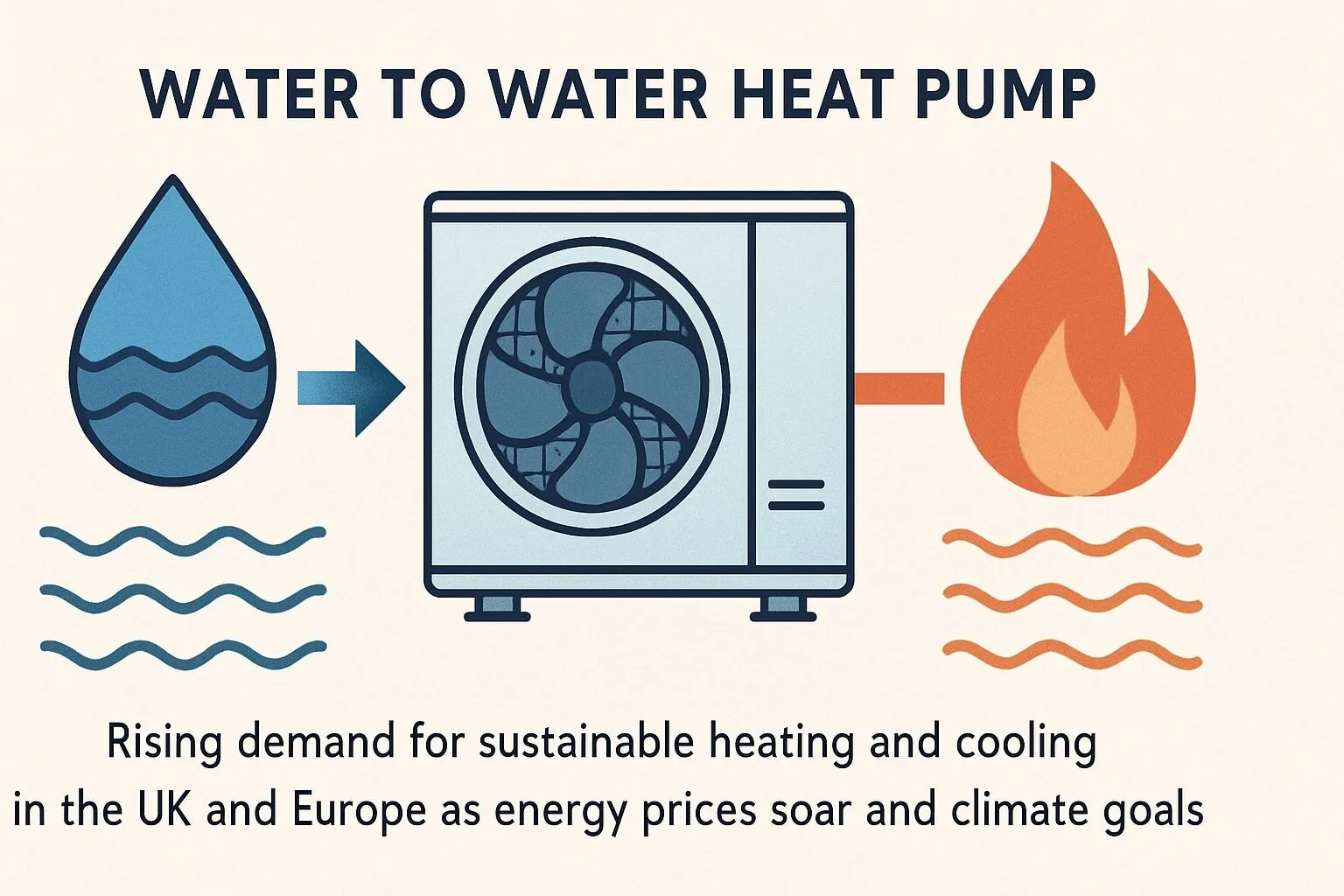
Water source heat pumps are less common, drawing heat from nearby rivers, lakes, or ponds. While they deliver excellent efficiency, they require access to a suitable water body.
Here is a quick comparison:
| Type | Source | Efficiency (COP) | Suitability |
|---|---|---|---|
| Air Source | Outside air | 3–4 | Most UK homes |
| Ground Source | Underground | 4–5 | Homes with gardens |
| Water Source | Water bodies | 4–5 | Homes near water |
Choosing the right heat pump and hot water solution depends on property type, available space, and specific heating needs.
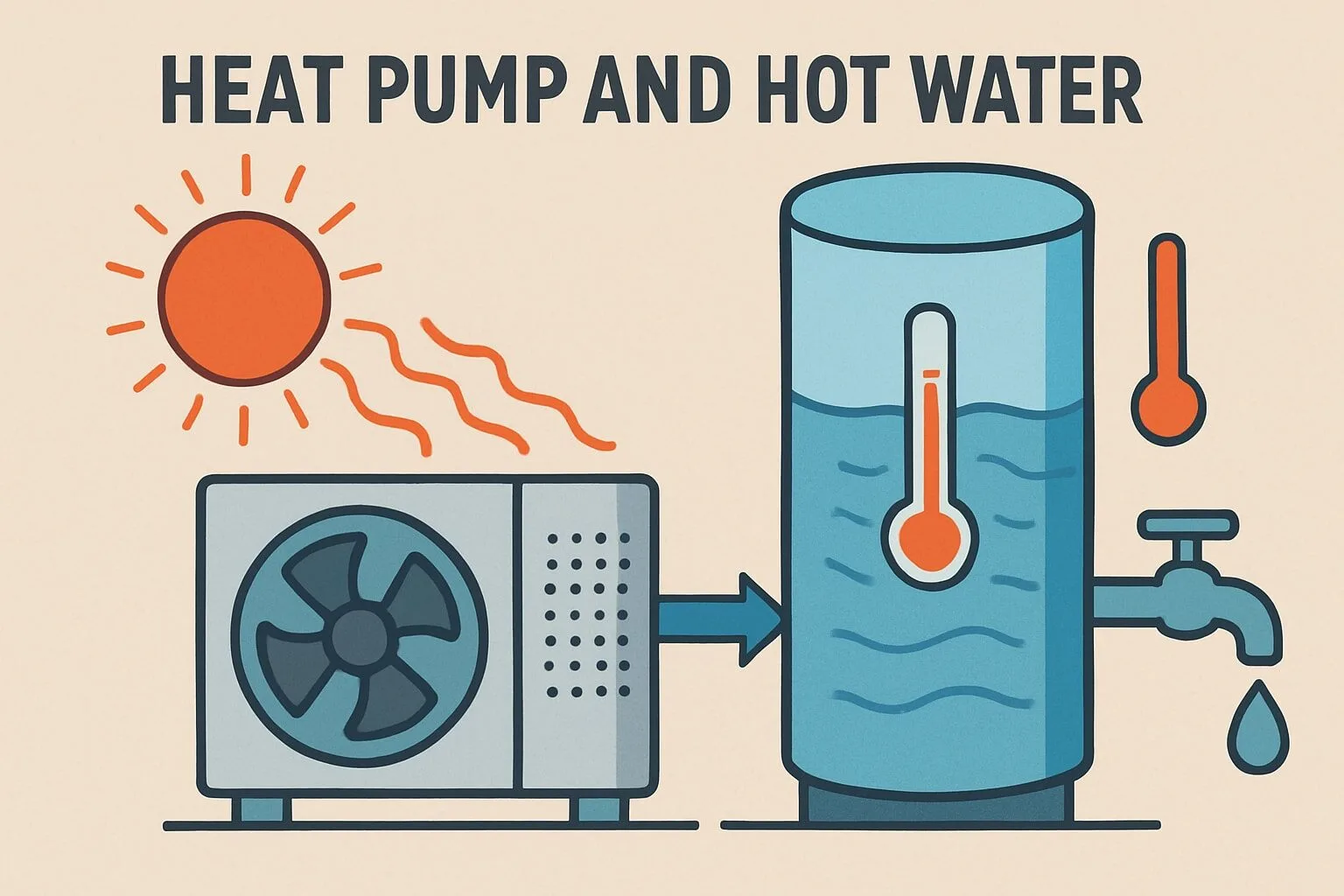
A heat pump and hot water system serves dual functions: it delivers both space heating and domestic hot water. The process starts with the heat pump collecting energy from its source and transferring it into your home’s heating circuit and hot water cylinder.
Typically, the system alternates between heating and hot water modes because simultaneous operation is uncommon in most UK installations. Two-channel programmers and smart heating controls help manage this switch, ensuring that comfort is never compromised. For example, during a winter morning, the heat pump may prioritise heating the home, then switch to replenishing hot water once demand for space heating drops.
Efficiency is a key advantage. Air source heat pumps routinely achieve 300–400% efficiency, meaning they can provide three to four units of heat for every unit of electricity used. This high performance translates into significant cost savings for homeowners. For a detailed breakdown of actual running costs and potential savings, you can refer to Heat pump hot water costs.
Modern heat pump and hot water systems are designed for seamless operation. With correctly configured controls and cylinders, you can enjoy reliable comfort without worrying about running out of hot water or losing heat at critical times. This flexibility is making heat pump and hot water solutions an increasingly popular choice in UK homes.
The advantages of choosing a heat pump and hot water system are substantial, ranging from impressive energy savings to improved safety, comfort, and reliability for UK homes. Let’s explore these benefits in detail.
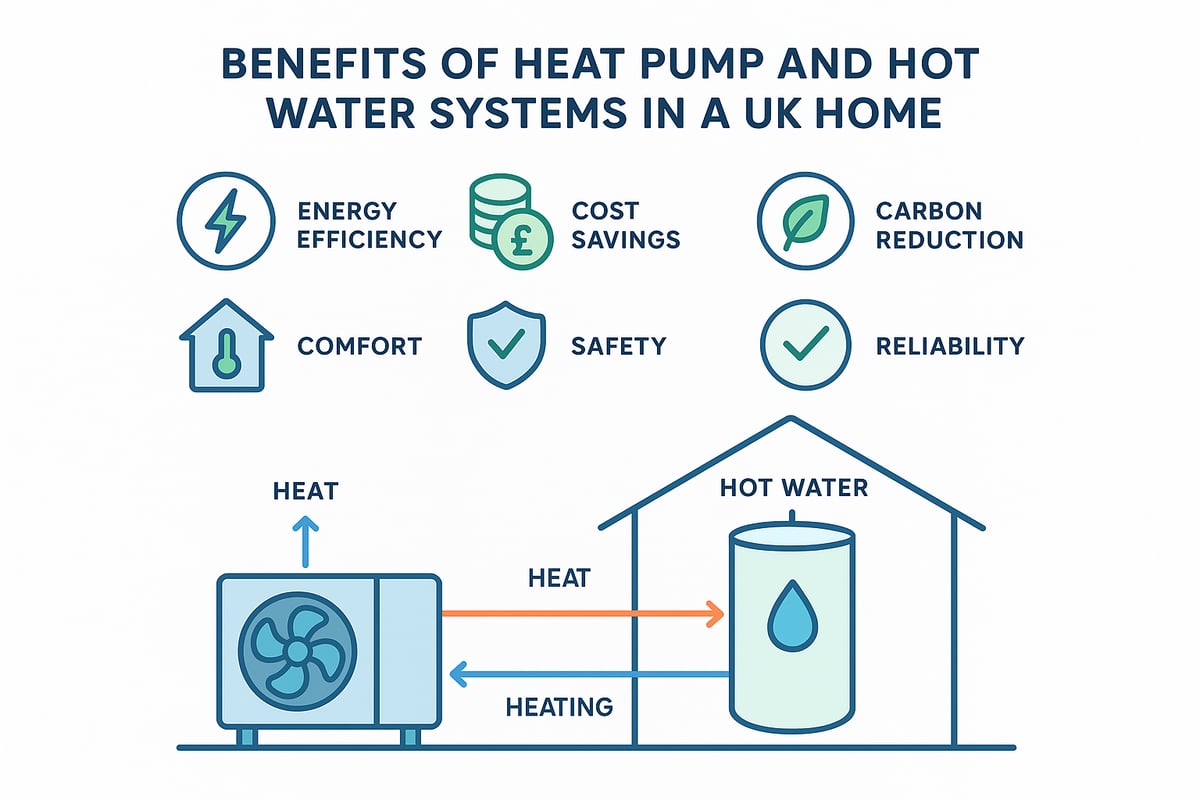
A heat pump and hot water system is significantly more efficient than traditional gas or oil boilers. While a typical boiler operates at around 90% efficiency, modern air source heat pumps can achieve 300–400% efficiency, meaning they produce three to four units of heat for every unit of electricity consumed.
This translates into lower running costs. For a standard three-bedroom house, switching to a heat pump and hot water solution can reduce annual heating bills by up to 50%. Hot water heating costs alone may drop by around 60% compared to conventional systems.
| System Type | Typical Efficiency | Potential Annual Savings |
|---|---|---|
| Gas Boiler | ~90% | – |
| Heat Pump and Hot Water | 300–400% | Up to £1,200 |
For more detail on calculating and comparing costs in your own home, see the comprehensive breakdown of air source heat pump running costs.
Adopting a heat pump and hot water system helps reduce your household’s carbon emissions. Unlike fossil fuel boilers, heat pumps use renewable energy from the air, ground, or water, supporting the UK’s net zero ambitions for 2050.
By switching to heat pump and hot water solutions, an average home can cut its carbon footprint by several tonnes of CO2 annually, making a measurable difference towards climate targets.
A modern heat pump and hot water system ensures consistent indoor temperatures and reliable hot water, even during the coldest months. These systems are designed for quiet operation and require very little day-to-day attention.
Key benefits include:
With a heat pump and hot water setup, daily comfort is effortless and dependable.
Choosing a heat pump and hot water system reduces the risk of carbon monoxide leaks, since no combustion occurs. Improved indoor air quality is another advantage, as there is no flue or emissions inside your property.
Modern heat pump and hot water systems are built for longevity, with expected lifespans of 15–20 years when properly maintained. Many units come with extended warranties and require only annual servicing.
For example, a UK household that installed a heat pump and hot water solution over a decade ago continues to enjoy reliable performance, low bills, and minimal maintenance needs. This long-term dependability makes heat pumps a wise investment for the future.
Installing a heat pump and hot water system in your home is a significant step towards energy efficiency and future-proofing your property. This guide walks you through each stage, from initial assessment to ongoing support, ensuring a smooth transition to renewable heating.
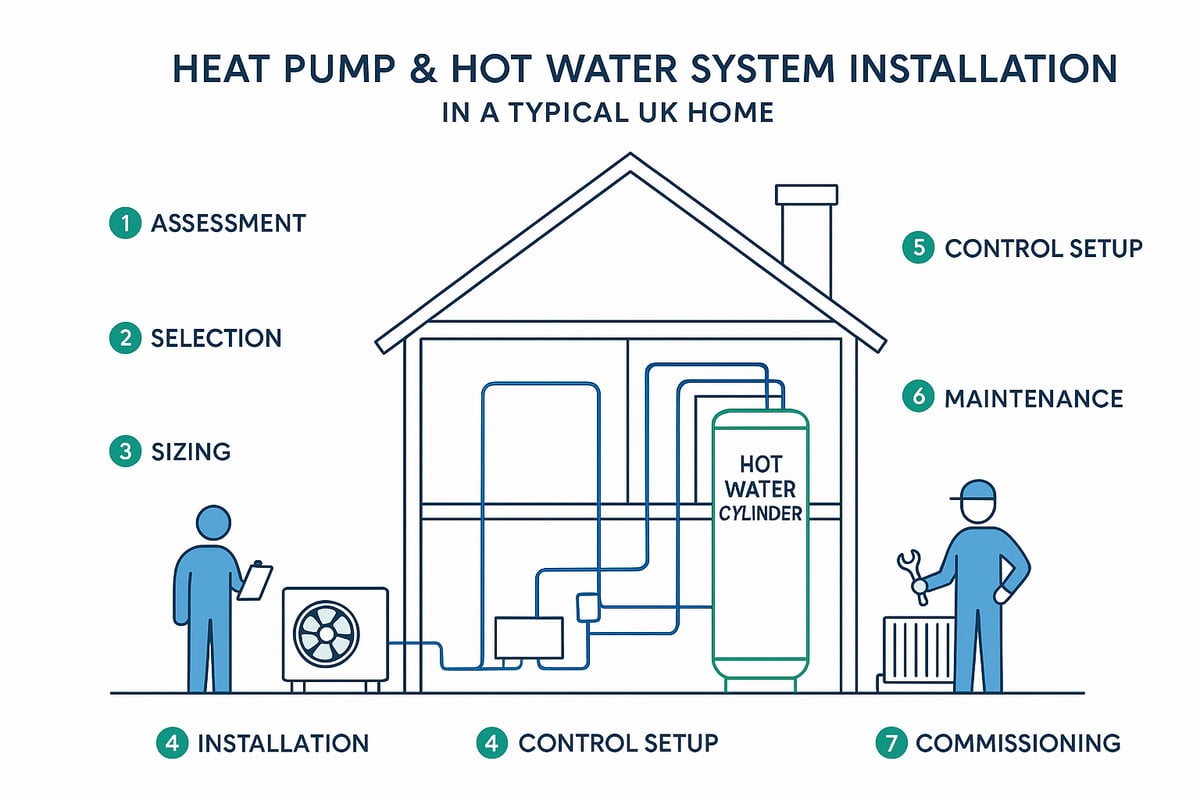
The first step in installing a heat pump and hot water system is to determine if your property is suitable. Start by reviewing your home's insulation levels, as well-insulated homes retain heat more effectively, maximising system efficiency.
Consider the size and layout of your property. Larger homes may require more powerful systems or additional hot water storage. A professional assessment will also review your current heating and hot water setup, checking radiators, pipework, and electrical supply.
During this process, a qualified installer will evaluate your home's energy rating and recommend any necessary upgrades. This ensures your heat pump and hot water solution operates at peak efficiency for your unique needs.
Choosing the best heat pump for your home involves weighing several factors. Air source heat pumps are common in the UK and are suitable for most properties, while ground source models require more outdoor space but offer higher long-term efficiency.
Your hot water demand and heating requirements will also shape your decision. For instance, larger families with high hot water usage might benefit from a system with a bigger storage cylinder.
Professional advice is invaluable at this stage. An expert can explain available options, including eligibility for air source heat pump grants, which can significantly reduce upfront costs for your heat pump and hot water installation.
Proper sizing is essential for any heat pump and hot water system. Installers calculate the heating load based on your home's dimensions, insulation, and number of occupants. This ensures the system provides adequate warmth and hot water throughout the year.
Cylinder sizing is equally important. A cylinder that's too small may run out of hot water during peak times, while an oversized one can waste energy. Professionals use industry standards and your household's habits to recommend the right capacity.
Avoiding common mistakes, like underestimating hot water demand, ensures your heat pump and hot water system delivers reliable comfort and efficiency from day one.
The installation of a heat pump and hot water system typically takes two to five days. It starts with placing the outdoor heat pump unit in a well-ventilated area, away from obstructions. The indoor cylinder is installed in a utility room or airing cupboard, connected to your existing pipework.
Next, the team fits the control systems, such as thermostats and programmers, allowing you to manage both heating and hot water schedules with ease. Electrical work and final plumbing connections follow, ensuring everything meets current safety standards.
During installation, expect some disruption, such as temporary loss of heating or water, and minor construction noise. However, professional installers take steps to minimise inconvenience. For example, in a semi-detached UK home, the process is carefully staged to maintain comfort as much as possible.
Once complete, the installer will commission the heat pump and hot water system, checking all functions and safety features. This step is crucial for system longevity and performance, and it is where you will see the value of a professionally managed installation.
After installation, setting up your controls is key to making the most of your heat pump and hot water system. Two-channel programmers allow you to schedule space heating and hot water independently, optimising energy use.
Hot water priority settings ensure the system heats water efficiently before switching back to space heating, reducing overall energy consumption. Smart thermostats and remote monitoring apps provide even greater control, letting you adjust settings from your phone or tablet.
With a well-configured control system, your heat pump and hot water setup will deliver consistent comfort and lower bills, tailored to your daily routine.
Commissioning involves thorough testing of your new heat pump and hot water installation. The installer checks system pressures, verifies controls, and ensures both heating and hot water operate correctly.
You will receive user training, covering basic operation and key maintenance points. This handover ensures you feel confident managing your heat pump and hot water system and know when to call for professional support.
Ongoing support is essential for keeping your heat pump and hot water system running smoothly. Schedule annual servicing with a qualified technician, who will inspect filters, refrigerant levels, and system controls.
If you notice issues, such as the system not switching between heating and hot water, consult your installer promptly. Many systems include warranties and remote monitoring, offering peace of mind and quick troubleshooting.
Regular maintenance and prompt support ensure your heat pump and hot water solution delivers reliable, efficient performance for years to come.
Maximising efficiency with your heat pump and hot water system is crucial for comfort, savings, and sustainability. By focusing on the right components and habits, you can make the most of your investment while enjoying reliable heating and hot water year-round.
Selecting the right cylinder is essential for any heat pump and hot water setup. Efficient cylinders minimise heat loss, keeping water hotter for longer and reducing energy waste. Look for models with thick insulation and fast recovery times.
High-efficiency cylinders can lower heat loss by up to 80 percent compared to older tanks. This translates to annual savings of up to £400 for a typical household. For an in-depth guide, see Choosing the right water cylinder.
When planning your system, make sure your cylinder is sized correctly for your home’s hot water demand. This ensures your heat pump and hot water supply remain consistent, even during peak use.
Modern programmers and thermostats are at the heart of a well-managed heat pump and hot water system. With precise control, you can schedule heating and hot water production to match your daily routine.
Set your programmers to prioritise hot water at times of high demand, such as mornings and evenings. Many systems offer hot water priority mode, ensuring your cylinder reheats efficiently when needed.
Smart thermostats allow for remote adjustments, helping to keep your heat pump and hot water system operating at peak performance. Regularly review your settings to maximise comfort and efficiency.
To get the best from your heat pump and hot water system, consider when and how you use hot water. Schedule cylinder reheat cycles during off-peak electricity times if possible. This saves money and eases demand on the grid.
Avoid running several hot water appliances at the same time, as this can cause brief temperature drops. A family of four, for instance, might stagger showers and washing up to keep hot water flowing smoothly.
Monitor your system’s performance and tweak schedules as your household’s needs change. This proactive approach keeps your heat pump and hot water delivery reliable throughout the year.
Routine maintenance is key to sustaining a high-performing heat pump and hot water system. Clean filters and check refrigerant levels regularly to keep everything running efficiently.
Schedule annual professional servicing to inspect your heat pump and hot water cylinder. This helps identify issues early and extends equipment lifespan. Listen for unusual noises or changes in performance that may signal a problem.
By staying on top of maintenance, you protect your investment and ensure your heat pump and hot water supply remains dependable, no matter the season.
One common question is why a heat pump and hot water system cannot heat both space and water simultaneously. This is usually due to system design, as most setups prioritise one function at a time to maximise efficiency.
If you notice inconsistent heating or hot water, check your control settings first. Make sure programmers and thermostats are set correctly. For persistent issues, contact a qualified engineer to review your heat pump and hot water system.
Timely troubleshooting and professional support help keep your heat pump and hot water running efficiently and safely for years to come.
Government support for heat pump and hot water installations is set to expand in 2025, helping homeowners make the switch to low carbon heating. Several schemes and new regulations are designed to make the transition more affordable and straightforward.
The Boiler Upgrade Scheme remains the main financial incentive for heat pump and hot water systems in England and Wales. Homeowners can access up to £7,500 to help cover the cost of an air source heat pump. To qualify, properties must meet certain insulation and energy efficiency standards.
The application process is straightforward when working with an accredited installer. For example, a homeowner in Yorkshire received the full grant after a home survey, reducing the upfront investment. This makes heat pump and hot water solutions more accessible for UK households.
From 2025, all new homes and many retrofits must comply with stricter energy efficiency rules. The Future Homes Standard will require low carbon heating, making heat pump and hot water systems the default choice for many. Homeowners will need to meet minimum insulation and system efficiency levels.
A key policy change is the Clean heat market mechanism, set to start in April 2025. This aims to boost heat pump adoption and support the transition from gas boilers, ensuring compliance and supporting the UK's climate targets.
Installing a heat pump and hot water system does require an initial investment, but government grants can reduce this significantly. Typical installation costs for air source heat pumps range from £7,000 to £14,000. With the Boiler Upgrade Scheme grant, the net cost can be reduced to as little as £500.
Payback periods are now much shorter, usually between 7 and 12 years, depending on energy usage and property type. Compared to replacing a gas boiler, the savings on energy bills and lower maintenance costs make heat pump and hot water upgrades a wise financial decision.
Using a government-approved, MCS-certified installer is essential for accessing grants and meeting regulations. Certified professionals ensure your heat pump and hot water system is fitted safely, meets standards, and performs efficiently.
Certification also protects your warranty and guarantees eligibility for financial support. Homeowners can find approved installers through the MCS register or by seeking recommendations from trusted suppliers, ensuring quality and peace of mind.
For those considering a heat pump and hot water system, U&I Renewables offers a complete service from start to finish. With over 17 years’ experience, they are a government-approved, MCS-certified installer specialising in renewable heating.

U&I Renewables supports clients through every stage, from home assessment and grant application to installation and aftercare. Homeowners can access up to £7,500 in grants, enjoy expert advice, and benefit from flexible finance options. Serving Yorkshire and nationwide, U&I Renewables helps you achieve energy savings, comfort, and compliance for 2025.
As the UK accelerates towards net zero, innovation is rapidly transforming the heat pump and hot water sector. Homeowners can expect significant changes in efficiency, integration, and smart technology over the coming years. Staying informed about these trends will help you futureproof your property and maximise comfort and savings.
Recent years have seen major leaps in heat pump and hot water technology, especially regarding efficiency. New refrigerants such as R290 are being introduced, offering improved performance even in colder weather. These advancements mean higher Coefficient of Performance (COP) ratings, with some systems now exceeding COP 4, delivering more heat for every unit of electricity used.
Smart integration is another breakthrough, allowing your heat pump and hot water system to work seamlessly with your home's energy management tools. This ensures optimal operation and further reduces running costs.
One of the most exciting trends is the integration of heat pump and hot water systems with solar PV panels and battery storage. By using solar-generated electricity to power your heat pump, you can significantly reduce reliance on the grid. This combination allows homeowners to achieve up to 90 percent energy independence, particularly when paired with efficient hot water storage cylinders.
For example, a family in the Midlands paired their heat pump and hot water setup with solar PV and a battery, dramatically lowering their bills and boosting sustainability.
Modern heat pump and hot water systems are increasingly compatible with smart home technologies. Voice-activated assistants and app-based controls make it easy to adjust heating and hot water schedules from anywhere. Artificial intelligence can now analyse your household routines, fine-tuning settings for maximum energy savings.
Remote diagnostics and maintenance alerts help identify issues early, keeping your system running smoothly and reducing the risk of unexpected breakdowns.
The UK government has ambitious targets for heat pump and hot water adoption, aiming for 600,000 installations per year by 2028. Evolving standards and incentives are expected to drive further growth, with increased focus on energy efficiency and property value.
According to the Heat pump deployment statistics: March 2025, installation rates are climbing steadily, reflecting strong public interest and the effectiveness of government grants. These trends suggest that investing in a modern heat pump and hot water system will be increasingly attractive for homeowners.
To stay ahead, consider upgrading to a heat pump and hot water solution that supports smart controls and solar integration. Early adoption can help you benefit from incentives and futureproof your property against changing regulations.
Always seek professional guidance to ensure the best system design for your home. With the right choices, you can enjoy lower bills, greater comfort, and a positive environmental impact well beyond 2025.