
No products in the basket.

Struggling to keep your home warm while facing rising bills each winter? You are not alone in this challenge, especially as 2026 brings new pressures on UK households.
This guide is designed to help you save heating costs with proven, expert-backed strategies. Our approach ensures you maintain comfort and safety, without unnecessary expense.
Inside, you will discover energy-saving habits, the latest efficient technologies, tips for optimising your heating system, insulation upgrades, and guidance on government support. Ready to take control? Start your journey to lower bills and a warmer home today.
Understanding your home’s heating system is the essential first step if you want to save heating costs year after year. The type of system you use, how it’s controlled, and how well it’s maintained all play a crucial role in your energy bills. Let’s explore how choosing and managing your system sets the foundation for long-term savings.
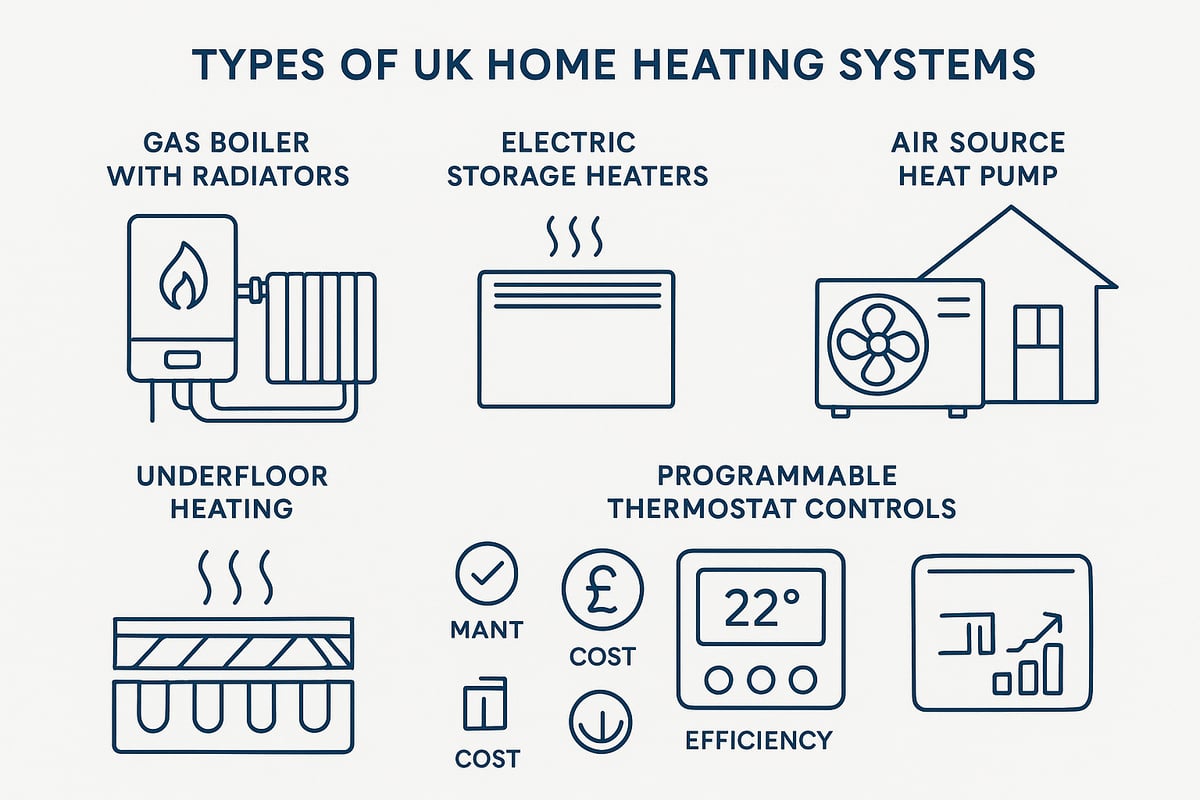
UK households rely on several main types of heating systems, each with its own benefits and drawbacks for those aiming to save heating. The most common is the gas boiler, used in the majority of homes as of 2024. Gas boilers are known for reliability and relatively low running costs, but older models can be up to 30 percent less efficient than modern condensing versions.
Electric heaters, including panel and storage types, offer flexible installation but can lead to higher running costs. If you’re comparing options, the electric heating cost comparison provides a detailed breakdown of operating expenses, helping you make informed choices that support your save heating goals.
Heat pumps, both air and ground source, are gaining popularity due to their high efficiency and lower carbon footprint. Storage heaters use cheaper off-peak electricity but may not always deliver heat when you need it most. Underfloor heating provides even warmth and works well with low-temperature sources like heat pumps, but upfront installation can be significant.
| System | Efficiency | Typical Cost | Maintenance |
|---|---|---|---|
| Gas Boiler | Moderate-High | ££ | Annual service |
| Electric Heaters | Moderate | £££ | Minimal |
| Heat Pumps | Very High | ££ | Annual check |
| Storage Heaters | Moderate | £££ | Minimal |
| Underfloor Heating | High | £££ | System flush |
Remember, the age and condition of your system matter. A well-maintained condensing boiler can be up to 30 percent more efficient than an older model, making a significant difference as you strive to save heating over winter.
Heating controls are the secret weapon in your effort to save heating and cut energy costs. From basic manual thermostats to advanced smart controls, how you use these tools directly affects your bills. Programmers allow you to set heating schedules, while thermostatic radiator valves (TRVs) let you control temperatures in individual rooms.
Using controls correctly can reduce energy use by up to 10 percent, according to Citizens Advice. For instance, lowering your room thermostat by just 1°C can save you over £100 per year. Here’s a step-by-step approach for better efficiency:
Smart controls take save heating to the next level by adapting to your habits and allowing remote adjustments. Placement is critical: keep thermostats away from direct sunlight, draughts, or heat sources for best results. Regular calibration ensures your system is not working harder than necessary, supporting your save heating ambitions.
Many households struggle to save heating because of avoidable mistakes. Overheating rooms or running your system longer than needed is a common pitfall. Blocking radiators with furniture or thick curtains reduces heat output and efficiency.
Neglecting maintenance, such as not bleeding radiators or ignoring cold spots, leads to wasted energy. Portable heaters may seem convenient but using them as a main source is usually inefficient and costly. Failing to update controls for seasonal changes also undermines efforts to save heating.
To avoid these issues:
By understanding your system and sidestepping these mistakes, you create a solid foundation to save heating and lower your bills all year round.
Optimising your heating controls is one of the most effective ways to save heating costs and keep your home comfortable. By understanding your current system, making thoughtful upgrades, and following proven strategies, you can reduce energy waste and cut bills without sacrificing warmth.
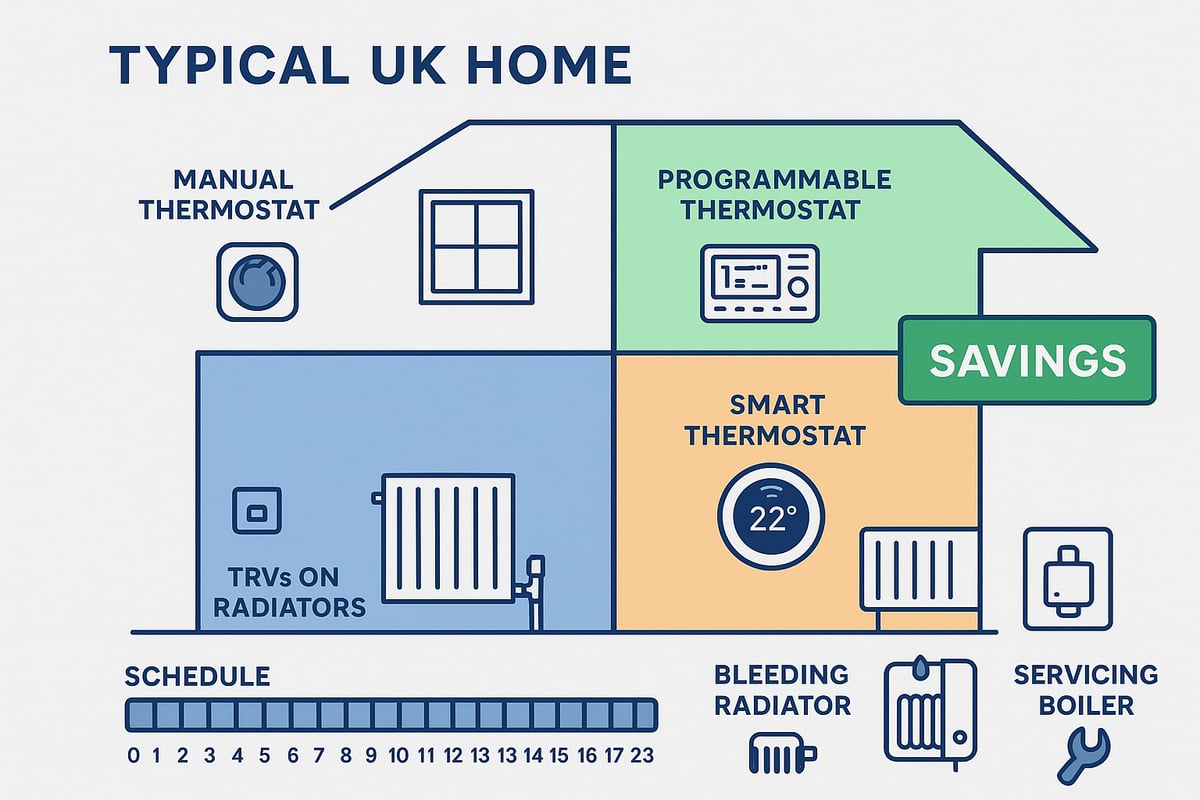
Start by identifying what type of heating controls you have. Are they manual, programmable, or smart? Manual controls are the most basic, offering limited flexibility. Programmable thermostats allow you to set daily or weekly schedules, while smart thermostats offer remote access, learning features, and integration with other systems.
Upgrading to programmable or smart controls can make a substantial difference. For example, smart controls can reduce energy use by up to 12%, according to the Energy Saving Trust. These systems enable zoning, learning your preferences, and optimising run times.
Consider the costs and savings. While smart thermostats require an upfront investment, the return is often realised within a couple of years through lower bills. If you use efficient systems like air source heat pumps, understanding air source heating running costs can help you see the additional savings possible with advanced controls.
Finding the right balance between comfort and efficiency is crucial to save heating costs. The recommended range for most UK homes is 18–21°C. Setting your thermostat just 1°C lower can save over £100 annually, with no noticeable drop in comfort for most people.
Always keep the temperature at or above 16°C to prevent damp and protect health, especially for vulnerable groups such as the elderly or those with certain medical conditions. Experiment by lowering the thermostat gradually to find your lowest comfortable setting. Encourage all household members to dress appropriately for the season, rather than relying solely on higher thermostat settings.
Efficient scheduling is another key way to save heating. Set your system to turn on about 30 minutes before you wake up or return home, and off 30 minutes before you leave or go to sleep. This ensures warmth when needed, without wasting energy.
Adjust schedules for weekends, holidays, or changes in occupancy. For example, working families may only need heat in the mornings and evenings, while retirees might benefit from a longer, gentler heating period. Use a table like this to plan:
| Household Type | Morning Schedule | Evening Schedule |
|---|---|---|
| Working Family | 06:00–08:00 | 17:00–22:00 |
| Retiree | 07:30–21:30 | N/A |
Review and update your schedules at the start of each season to maintain efficiency.
Zoning your heating system helps you save heating by only warming the rooms you use. Thermostatic radiator valves (TRVs) or smart radiator controls let you set different temperatures in separate areas. Focus on heating living spaces during the day and bedrooms at night.
Do not turn radiators off completely in unused rooms, as this can lead to damp or frozen pipes. Instead, set them to a low, safe temperature. Regularly check and adjust TRVs as your household’s needs change, ensuring you do not waste energy on empty rooms.
Consistent maintenance is essential to save heating over the long term. Book an annual boiler service and safety check. Bleed radiators to remove trapped air and eliminate cold spots. Inspect filters and pipe insulation to ensure the whole system runs smoothly.
These simple checks help your heating system operate at peak efficiency, prevent breakdowns, and extend equipment lifespan. A well-maintained system uses less energy, keeping your costs down and your home reliably warm.
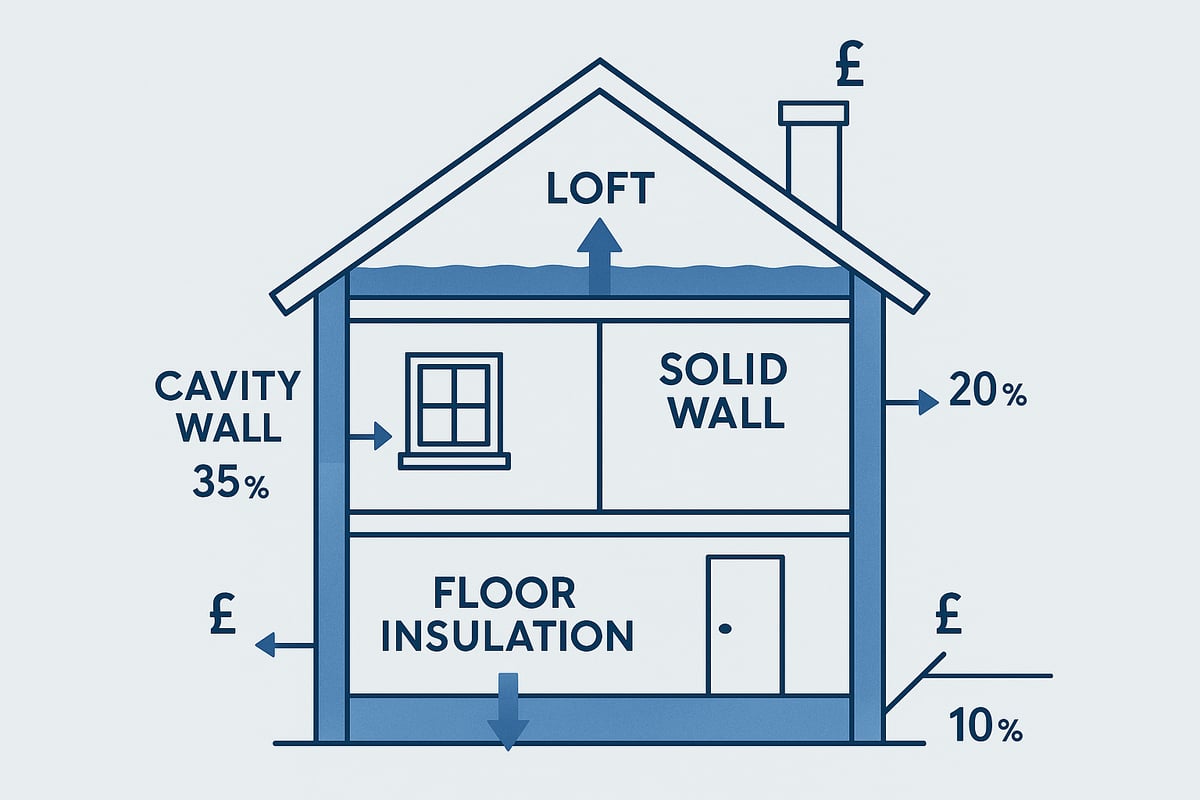
Proper insulation is the single most effective way to save heating in your home. Without it, up to 35 percent of your heat can escape through walls and 25 percent through the roof. This means even the most efficient heating system will struggle to keep you warm and your bills low.
Insulation comes in several forms, each targeting a different part of your property. Loft insulation is essential, preventing heat rising and escaping through the roof. Cavity wall insulation fills the space between outer and inner walls, while solid wall insulation is vital for older homes without cavities. Floor insulation can tackle draughts from below, especially in period properties.
Investing in insulation offers an impressive return. Most UK homes see payback within three to five years, thanks to reduced energy bills. For example, adding loft insulation can save heating costs by up to £285 annually. Modern materials and professional installation ensure these savings are both immediate and long-lasting.
| Type of Insulation | Typical Heat Loss Prevented | Annual Savings (£) |
|---|---|---|
| Loft | Up to 25% | £285 |
| Cavity Wall | Up to 35% | £300 |
| Solid Wall | Up to 45% | £375 |
| Floor | Up to 15% | £75 |
With the right insulation in place, your efforts to save heating will be far more effective and noticeable.
Draughts are a hidden enemy when you want to save heating. They let warm air escape and cold air creep in, making your boiler work harder and increasing your bills.
To tackle draughts, start by identifying common sources. Check around windows, doors, floorboards, chimneys, and letterboxes. Run your hand along edges on a cold day to feel for chilly air movement.
Simple DIY fixes can make a big difference. Use self-adhesive seals for windows and doors, fit draught excluders along the bottom, and add secondary glazing film to single-glazed panes. For floorboards, flexible sealant or quarter-round beading can block gaps. Chimney balloons are effective for unused fireplaces.
Older or larger gaps may require professional attention. Sash window specialists, joiners, or insulation installers can deliver tailored solutions. By sealing these leaks, you can save heating and create a cosier, more efficient environment.
Windows and doors are often overlooked when aiming to save heating, but they play a crucial role in energy efficiency. Old single-glazed units leak warmth, while modern double or triple glazing retains heat and reduces draughts.
Double glazing typically consists of two panes with a gap filled by inert gas, reducing heat transfer. Triple glazing offers even greater insulation, ideal for exposed locations. For those on a budget, secondary glazing is a practical alternative, adding an extra layer to existing windows.
Consider this case study: An average semi-detached UK home upgraded to double glazing can save heating bills by around £195 each year. Over a decade, these savings quickly offset the initial investment, especially as energy prices rise.
If replacing doors, choose models with insulated cores and quality seals. Remember to check for gaps around frames and thresholds, as these are common sources of heat loss.
Upgrading your insulation is one of the fastest ways to save heating costs, yet the upfront price can be daunting. Fortunately, the UK government offers a range of grants and support schemes to help you improve your home’s efficiency.
The ECO4 scheme and the Great British Insulation Scheme are the main programmes, providing funding for loft, wall, and floor insulation. Eligibility often depends on your income, benefits status, or property type. Applying is straightforward: contact an accredited installer, arrange a survey, and submit the required paperwork.
You can often combine grants for insulation with support for other upgrades, like new heating systems or renewable technologies. For a comprehensive overview of available support and how to apply, see the insulation grants and support schemes page.
By taking advantage of these schemes, you can save heating for years to come, enjoy a warmer home, and reduce your carbon footprint.
Small changes in your daily routine can make a significant difference when you want to save heating at home. Adopting smart habits, managing hot water, and involving everyone in the household can lower your bills without sacrificing comfort. Here are practical actions you can start today.
Simple habits often deliver the biggest impact when your goal is to save heating. Start by wearing warm layers and using blankets to reduce reliance on your central heating. Close curtains at dusk to keep warmth in, and open them during the day for free solar gain.
Keep doors closed between rooms to prevent heat loss. According to Household Energy Efficiency Statistics 2024, homes that consistently apply these habits see measurable reductions in heating costs. Every small step helps, especially when combined over the winter months.
Hot water accounts for a notable share of your energy bill, so managing it wisely can help save heating costs. Take shorter showers and lower your hot water cylinder temperature to 60°C. Fix dripping taps promptly, as even small leaks waste heated water.
Insulate your hot water tank and pipes to keep water warmer for longer. These adjustments not only save heating but also extend the life of your system. Remember, efficient hot water use is just as important as managing your radiators.
It’s easy to fall for heating myths, but the wrong advice can cost you. Don’t turn your heating off completely in winter, as this can lead to damp and frozen pipes. Setting your thermostat higher does not heat your home faster and only wastes energy.
Avoid using portable heaters as your main source, as they are less efficient and can be unsafe if left unattended. The right approach to save heating is to use your main system efficiently and avoid risky shortcuts.
Modern technology offers powerful tools to help you save heating. Install a smart meter to track your usage in real time. Use energy tracking apps to set alerts and compare your current use with previous periods.
These insights help you spot patterns and adjust habits quickly. Households using smart meters are 10% more likely to reduce their energy consumption, which directly supports your save heating goals.
Success is easier when everyone is on board. Involve all family members in efforts to save heating by explaining thermostat settings and energy-saving routines. Create a simple “heating checklist” for daily use: check window and door seals, close curtains, and confirm schedules.
Encourage children to participate, making energy-saving a shared responsibility. With everyone engaged, your save heating strategy becomes part of everyday life and delivers lasting results.
Upgrading your heating system is a major decision for any homeowner. The right choices will help you save heating costs year after year, boost comfort, and future-proof your property as energy standards evolve. Let’s explore when and why to upgrade, the most efficient options, and how to ensure your investment pays off.
Recognising when it’s time for an upgrade is the first step to save heating costs. Frequent breakdowns, noisy operation, or rising energy bills are all warning signs. If your boiler is over 15 years old or your electric heaters exceed a decade, efficiency has likely diminished.
Older systems struggle to meet modern standards. Even with regular servicing, outdated units require more fuel to deliver the same comfort. If you notice cold spots, inconsistent heat, or repeated repairs, an upgrade can help you save heating and improve reliability.
Modern technology offers several high-efficiency options to save heating. Air source and ground source heat pumps extract ambient heat from the air or ground, cutting energy use by up to 50 percent compared to old systems. Condensing gas boilers now achieve over 90 percent efficiency.
Hybrid systems, combining heat pumps with gas boilers, are ideal for homes not ready for full electrification. These alternatives reduce carbon emissions and help you save heating without sacrificing comfort. Choosing the right system depends on your property, budget, and future energy plans.
Integrating renewables is a powerful way to save heating over the long term. Solar thermal panels can provide up to 60 percent of annual hot water needs, while solar PV with battery storage powers electric heating and appliances. Combining heat pumps and solar panels delivers year-round savings and resilience.
For a comprehensive look at how you can maximise savings by pairing these technologies, see this Heat pump and solar panels savings guide. Renewable integration also protects you from rising fuel prices and supports net zero goals.
The initial investment for high-efficiency systems can seem daunting, but the long-term benefits help you save heating over time. Heat pumps, for example, cost more upfront than a standard boiler, but government grants like the Boiler Upgrade Scheme can offset up to £7,500.
Payback periods vary: heat pumps typically pay for themselves within 7–12 years, while solar PV and thermal panels may offer returns in 8–15 years. Always factor in running cost reductions, maintenance, and available grants when planning your upgrade to save heating.
Selecting a qualified installer is crucial for long-term save heating success. Look for MCS or Gas Safe certification, and always obtain multiple quotes. Check references and ensure the company offers warranties and ongoing support.
A reputable installer will assess your home’s needs, recommend the best system, and handle grant paperwork. Quality installation ensures your new system operates efficiently, helping you save heating and avoid costly issues later.
U&I Renewables provides expert installation of air source heat pumps, solar PV, solar thermal, and battery storage systems. Homeowners can access up to £7,500 in government grants for heat pump installations, and U&I manages all paperwork for a seamless process.
With over 17 years of experience, their fully certified engineers deliver whole-house solutions for maximum efficiency. Flexible finance options start from £10 per week for boilers, £15 for solar, and £20 for heat pumps. Directly employed engineers ensure quality workmanship, and 24/7 emergency support is available with fixed-price callouts. U&I serves Yorkshire and the wider UK, offering free, no-obligation quotes.
Government support can make a huge difference when you want to save heating costs and upgrade your home. With rising energy prices and tighter efficiency standards, knowing which grants and schemes are available is vital. This section guides you through the landscape of financial help, eligibility, application steps, and extra support for those most in need.
There are several key initiatives designed to help households save heating costs while improving efficiency. The Boiler Upgrade Scheme provides grants for replacing old boilers with cleaner options, like heat pumps. The Great British Insulation Scheme focuses on funding insulation for walls, roofs, and floors. Many local authorities also offer targeted support for vulnerable residents.
| Scheme | Coverage | Who Can Apply |
|---|---|---|
| Boiler Upgrade Scheme | Boiler/heat pump grants | Homeowners, private landlords |
| Great British Insulation Scheme | Insulation installation | Varies by region and need |
| Local Authority Schemes | Varies (heating, insulation) | Vulnerable/low-income groups |
Each scheme is designed to make it easier to save heating energy and reduce your bills. Stay updated as schemes may change or expand over time.
Eligibility depends on several factors, including income, property type, and your home’s Energy Performance Certificate (EPC) rating. For most major schemes, you’ll need to demonstrate ownership or tenancy, a suitable EPC score, and sometimes proof of income or benefits.
To apply, follow these steps:
Meeting these criteria helps you save heating energy and access the right funding. Always keep an eye on announcement deadlines to maximise your chances.
Layering grants and finance options is the key to maximising your save heating potential. Many households combine the ECO4 insulation grant with the Boiler Upgrade Scheme for greater impact. Interest-free loans and staged payment plans can help cover any costs not met by grants.
For example, you might use a local insulation grant to fund wall upgrades, then apply for the Boiler Upgrade Scheme for a new heat pump. By doing so, you can save heating costs across multiple aspects of your home. Always review the terms and stack benefits where possible for the best outcome.
Choosing the right installer is crucial when you want to save heating costs and qualify for government support. Always use government-approved contractors with the proper certifications. Look for MCS (Microgeneration Certification Scheme), Gas Safe, or TrustMark credentials before agreeing to any work.
Watch out for these warning signs:
Protecting yourself ensures your save heating investment delivers real value and peace of mind. Double-check credentials and seek multiple quotes for every project.
Extra help is available for those who need it most to save heating costs. Programmes like the Winter Fuel Payment and Cold Weather Payment provide direct financial support during colder months. The Warm Home Discount Scheme is expanding to help an additional 2.7 million households with energy bill rebates—details are available in the Warm Home Discount Scheme Expansion 2025–2026.
You can also seek advice from Citizens Advice, the Energy Saving Trust, and your local council. These organisations can help you navigate the application process, understand your rights, and ensure you receive all available support to save heating energy.
The landscape of home heating in the UK is shifting rapidly. With energy prices and regulations evolving, future-proofing your property is now essential if you want to save heating costs in the years ahead. By understanding upcoming changes and embracing the right strategies, you can ensure your home stays comfortable and affordable.
Experts predict energy prices will remain volatile throughout 2026 and beyond. As global demand shifts, the UK’s reliance on imported gas may further impact household bills. Policies targeting net zero mean traditional heating methods could face higher costs or new restrictions. To save heating expenses, planning ahead and investing in efficiency can shield you from unpredictable price hikes.
Government support for low-carbon heating is accelerating. The UK’s ambitious targets for heat pump installations are changing the market, with over 180,000 supported by subsidies as of late 2025, according to UK Government Backs Over 180,000 Heat Pump Installations. Heat pumps, solar thermal, and hybrid systems are increasingly mainstream and can help you save heating costs long-term. Early adoption often brings access to grants and lower running costs, making the transition more affordable.
Smart home technology is revolutionising how we save heating energy. Automated thermostats, zoning, and room-by-room controls mean you only heat what you need, when you need it. Pairing these tools with battery storage allows you to shift energy use to cheaper periods and maximise self-generated power from solar panels. This flexibility is key to adapting as tariffs and weather patterns become more unpredictable.
By integrating these technologies, you can keep your home warm and efficient while reducing reliance on the grid.
The path to save heating costs is not static. Keep up with the latest grants, regulations, and innovations to make the most of available support. Review resources like the Energy Efficiency of Housing in England and Wales 2025 report to understand how your home compares and where improvements are possible. Regularly check your energy tariffs, and explore new offers or supplier options to keep costs down.
Investing in efficient heating upgrades now delivers real value. Homes that acted early on insulation, controls, and renewable heating are already seeing 20 percent or more savings compared to neighbours. Taking steps to save heating costs before demand rises puts you ahead of future policy changes and price increases. Proactive action will secure your comfort, protect your finances, and ensure your home is ready for the future.