
No products in the basket.

As energy bills soar across the UK, many households are urgently seeking sustainable ways to keep warm in 2026. The need for affordable, eco-friendly solutions has never been greater. That is where heating with solar panels steps in, offering a smart path to lower costs and reduced carbon emissions.
This guide explores how heating with solar panels can transform home comfort and efficiency. You will discover the fundamentals, system types, integration with smart tech, key benefits, installation steps, and the latest innovations. Ready to unlock energy savings and a greener future? Let us get started.
Understanding the fundamentals of heating with solar panels is key to unlocking cleaner, cost-effective warmth for your home. As energy prices continue to rise, many UK households are exploring this renewable solution to cut bills and carbon emissions.
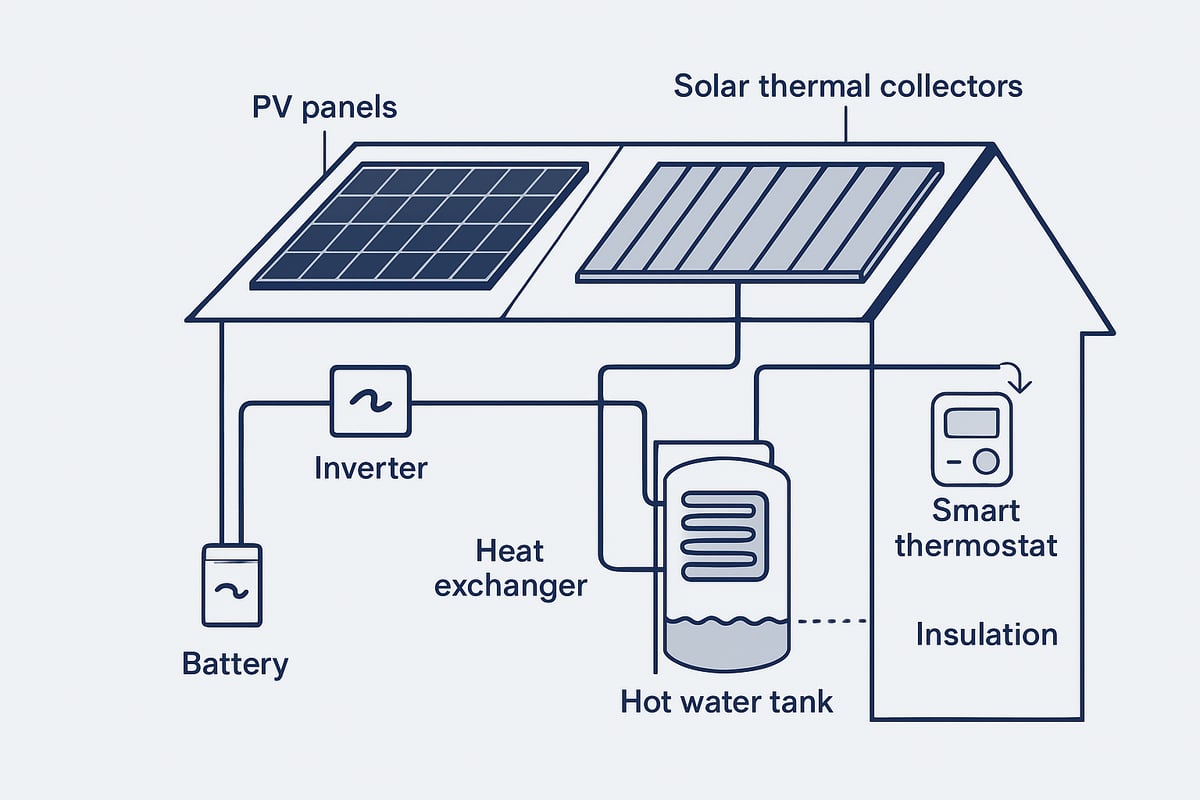
Heating with solar panels uses two core technologies: photovoltaic (PV) and solar thermal. PV panels convert sunlight into electricity, powering electric heaters or heat pumps. In contrast, solar thermal panels directly heat a fluid, providing hot water or space heating.
PV systems are common for electricity generation. For example, a standard 4kW PV system in the UK can deliver significant annual output, helping to offset electric heating costs. Solar thermal panels achieve higher conversion efficiency for direct heating, making them ideal for hot water and radiators.
A recent BEAMA study found that heating with solar panels can reduce yearly energy bills by up to 30 percent. This efficiency is influenced by panel type, system size, and sunlight availability.
There are several ways to approach heating with solar panels. The two main options are PV-powered electric heating and solar thermal systems. PV electricity can run electric boilers, storage heaters, or underfloor heating, while solar thermal panels heat water that circulates through radiators or underfloor loops.
Wet systems use heated water, perfect for radiators and underfloor heating. Dry systems rely on electric elements, suitable for small spaces. Hybrid solutions combine solar with existing boilers, such as pre-heating water before it enters a gas boiler. For a deeper dive into how these systems operate, see the Solar thermal heating system basics.
Many homeowners worry that cloudy UK weather limits the effectiveness of heating with solar panels. However, modern panels perform well even on overcast days. Key factors like roof orientation, shading, and angle play a bigger role in overall efficiency.
Homes with south-facing roofs receive optimal sunlight, but east or west orientations can also work. A professional site assessment evaluates your roof, shading, and available space to ensure the best possible outcome. The right system size and careful planning make heating with solar panels viable across much of the UK.
Successful heating with solar panels depends on the right components and smart design. Key elements include solar panels (PV or thermal), inverters, heat exchangers, and smart thermostats for control. Sizing the system to your heating demand is crucial for year-round comfort.
Good insulation and thermal stores help retain heat, making the most of every kilowatt generated. For example, a well-insulated home with a thermal store can maximise solar use, reducing reliance on backup heating. Regular maintenance, such as cleaning panels and checking controls, extends system lifespan and ensures reliable performance.
As UK homes move towards sustainability, integrating heating with solar panels has become a practical and future-proof solution. Modern systems allow solar energy to work seamlessly with electric, gas, and hybrid heating setups, while smart controls and battery storage further enhance efficiency and comfort.
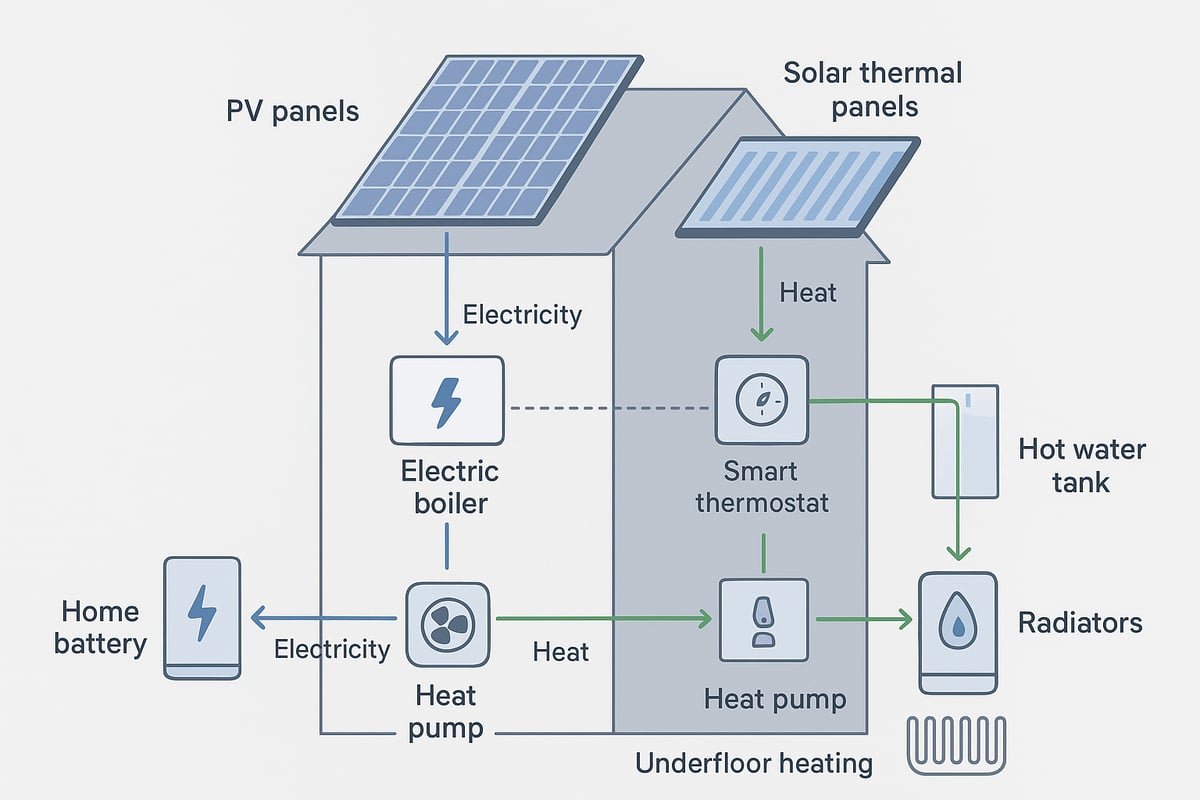
Electric heating integration is a leading approach for heating with solar panels. Photovoltaic (PV) systems generate electricity that can directly power electric boilers, heat pumps, and underfloor heating. During daylight hours, homes benefit from real-time use of solar energy, reducing the demand for grid electricity.
For example, electric underfloor heating paired with solar PV can provide steady warmth throughout the day. By matching solar production to heating schedules, homeowners maximise self-consumption. This approach not only improves comfort but also supports the transition to low-carbon living through efficient heating with solar panels.
Many UK homes still rely on gas boilers, yet heating with solar panels is highly compatible with these systems. Solar thermal panels can pre-heat water before it enters a gas boiler, reducing gas use and emissions. Hybrid systems combine the strengths of both solar and conventional heating, adapting to changing weather and energy needs.
In semi-detached houses, hybrid setups often use solar thermal for daily hot water, while the gas boiler provides backup during high demand. This integration lowers overall gas consumption, making heating with solar panels an accessible step towards decarbonisation for households not ready for full electrification.
Smart controls are revolutionising heating with solar panels. Smart thermostats, zoning systems, and automation apps enable homeowners to optimise heating schedules based on real-time solar generation. For instance, the Wiser Home app can adjust heating output according to available solar power, ensuring energy is used efficiently.
Remote access and scheduling allow users to match heating patterns with occupancy and weather forecasts. By smart heating integration with solar panels, households gain greater comfort, control, and savings. Automation ensures that solar energy is prioritised, making heating with solar panels smarter and more responsive.
Adding battery storage takes heating with solar panels to the next level. Batteries store excess solar energy generated during the day, making it available for heating after sunset or on cloudy days. This setup maximises self-consumption, reduces reliance on the grid, and helps households maintain comfort even during periods of low solar output.
A typical battery for a three-bedroom UK home can support several hours of heating, especially when paired with efficient electric systems. Integrated energy management systems monitor production, usage, and storage, allowing homeowners to fine-tune their heating with solar panels for optimal performance and resilience.
While heating with solar panels offers clear benefits, some challenges remain. Legacy heating systems may not be fully compatible with solar technologies, and variable solar output can be difficult to manage. Hybrid setups, backup systems, and advanced smart controls provide practical solutions.
Professional installation and tailored system design are essential for overcoming these barriers. Future-proofing, such as wiring for battery storage or allowing for smart upgrades, ensures that heating with solar panels remains adaptable as technologies evolve. By addressing integration challenges, homeowners can confidently invest in a sustainable, efficient heating future.
Heating with solar panels delivers both immediate and long-term advantages for homeowners and the environment. Let's examine how this technology creates tangible benefits, from carbon savings to increased property value and energy resilience.
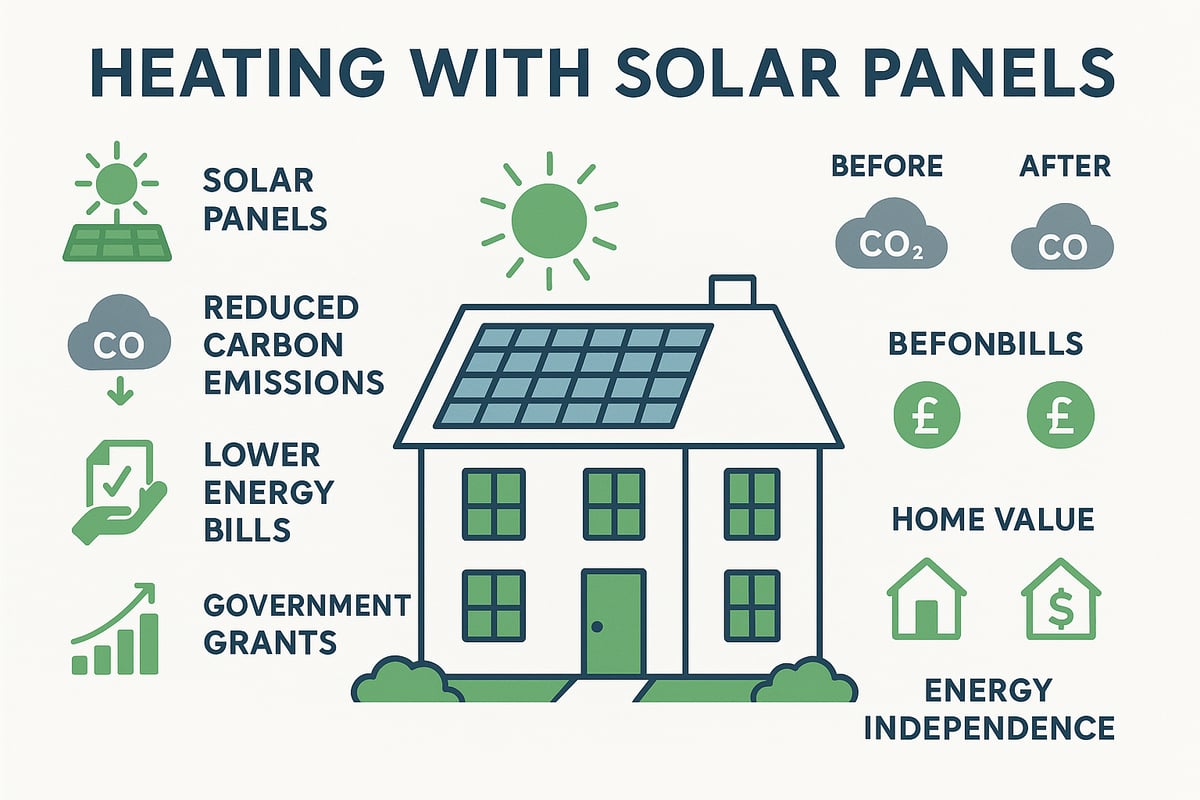
Switching to heating with solar panels significantly cuts a household’s carbon emissions. Traditional gas or oil boilers emit substantial CO2, while solar-powered heating relies on clean, renewable energy.
A typical UK home using solar panels for heating can save around 1.5 tonnes of CO2 each year. This is equivalent to taking a small car off the road or planting dozens of trees annually. The environmental impact is even more pronounced when solar systems replace older, inefficient heating methods.
By adopting heating with solar panels, homeowners directly support the UK’s Net Zero goals for 2050. This proactive choice helps reduce national reliance on fossil fuels and accelerates the transition to a low-carbon future.
Heating with solar panels offers substantial savings on annual energy bills, often reducing costs by up to 30% (BEAMA, 2021). These savings become even more valuable as energy prices continue to rise across the UK.
Payback periods for solar heating systems typically range from 7 to 12 years, depending on system size, household demand, and available sunlight. For example, a family of four using heat water with solar panels can see a notable drop in their hot water and heating expenses.
Consider this: with heating with solar panels, you lock in part of your energy costs for years, providing a buffer against market volatility. Real-world case studies consistently show that solar heating delivers dependable returns on investment.
Financial support is available to make heating with solar panels more accessible. Government grants, such as the Boiler Upgrade Scheme, offer up to £7,500 for renewable heating installations.
Eligibility typically requires using an MCS-certified installer and meeting certain property criteria. The application process is straightforward, and approved grants are paid directly to the installer, reducing your upfront costs.
These incentives significantly shorten the payback period for heating with solar panels. By taking advantage of available support, homeowners can enjoy faster returns and more affordable access to sustainable heating.
Homes equipped with heating with solar panels are increasingly attractive to eco-conscious buyers. Solar heating improves a property’s Energy Performance Certificate (EPC) rating, signalling lower running costs and environmental responsibility.
Recent data shows that houses with solar heating systems sell faster and often command higher prices compared to similar homes without renewable upgrades. This trend is expected to strengthen as buyers prioritise sustainability and long-term value.
By investing in heating with solar panels, you not only reduce your bills but also enhance your home’s market appeal and future resale potential.
Heating with solar panels boosts your household’s energy independence. By generating your own heat and hot water, you reduce reliance on the national grid and fossil fuel imports.
This self-sufficiency protects against sudden energy price spikes or supply disruptions, especially during winter or in rural areas. Solar-powered homes maintain comfort and warmth even when external factors threaten conventional energy sources.
In summary, heating with solar panels empowers homeowners with greater control, resilience, and peace of mind, all while supporting a greener energy future.
Installing heating with solar panels can be transformative for your home’s comfort and sustainability. By following a clear, structured process, you can maximise efficiency, reduce costs, and ensure a smooth transition to renewable energy. This guide walks you through each essential step, making heating with solar panels accessible and achievable.
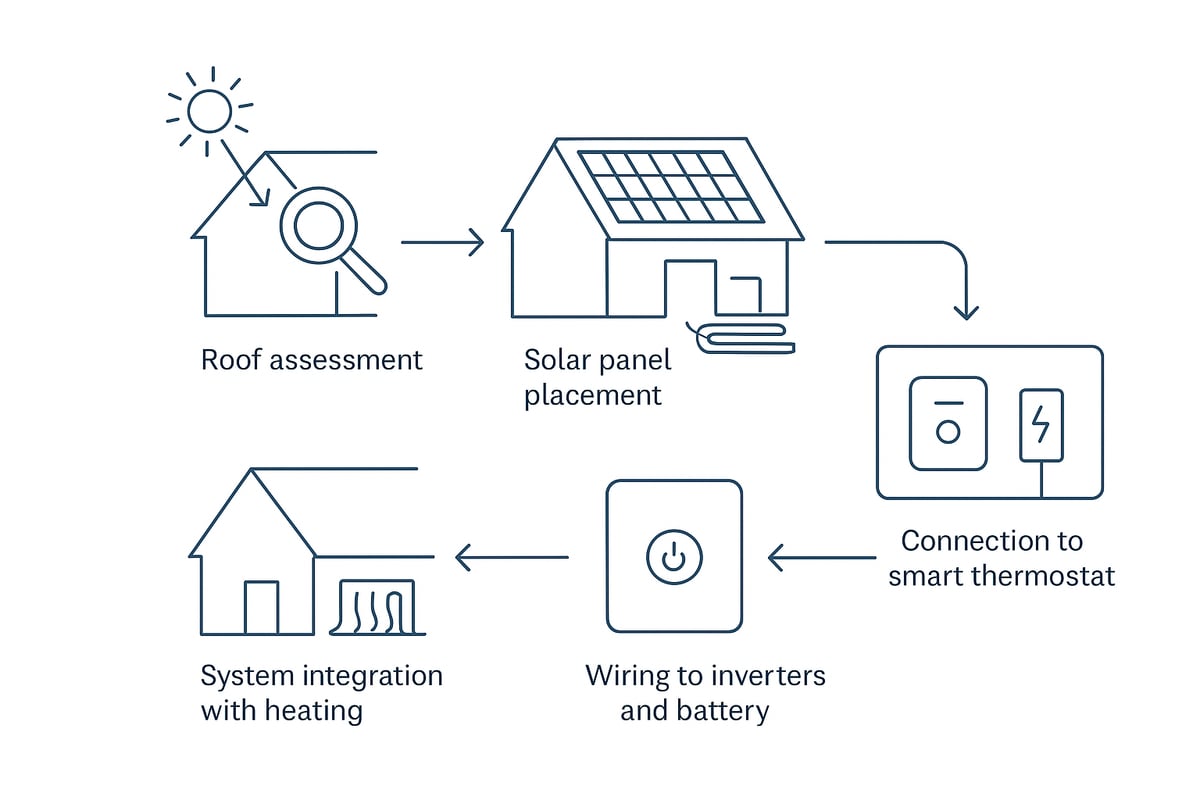
Before investing in heating with solar panels, it is vital to evaluate your property. Start with a professional solar survey, which examines roof space, angle, and any potential shading from nearby trees or buildings. South-facing roofs are ideal, yet east or west orientations can also perform well.
Check the structural integrity of your roof and confirm it can support the panel weight. Assess your home’s insulation, as good insulation ensures the heat generated is retained efficiently. Review your current heating system to see how easily it can integrate with solar technology. Accurate measurement of your energy usage over the past year helps size your system correctly for heating with solar panels.
Selecting the right system is crucial for effective heating with solar panels. Decide between photovoltaic (PV) systems, solar thermal panels, or a hybrid combination, based on your heating needs and property layout.
PV systems convert sunlight to electricity, which can power electric boilers or heat pumps. Solar thermal panels directly heat water and are ideal for hot water cylinders. Hybrid systems offer flexibility, often pairing solar with a traditional boiler for backup. Consider your household size, daily hot water use, and future expansion plans. For example, a four-person home might require a larger system to ensure reliable heating with solar panels throughout the year.
To guarantee safe and efficient heating with solar panels, choose installers who are MCS (Microgeneration Certification Scheme) certified. This certification is often required for government grants and ensures installers meet strict quality and safety standards.
When comparing installers, review their experience, previous projects, and customer feedback. Request detailed quotes that include all components, such as panels, inverters, and controls. Examine product warranties and ask for performance data. Use a checklist to confirm your chosen installer has the necessary credentials, insurance, and aftercare support for your heating with solar panels project.
Most domestic solar installations for heating with solar panels fall under permitted development rights. However, if your property is listed or in a conservation area, you may need planning permission. Always check with your local authority before proceeding.
Gather all necessary documents, such as system designs and installer certifications, to streamline the approval process. If planning permission is required, factor in extra time for review and possible adjustments. Typically, planning approval takes several weeks, but for most homes, the process is straightforward, allowing you to move forward with heating with solar panels confidently.
The installation of heating with solar panels begins with a pre-installation site visit. During this stage, the installer finalises the system design and checks all logistics. On installation day, expect scaffolding, panel mounting, and wiring to the inverter and heating controls.
The process usually takes two to four days for a typical UK home. After installation, the system is commissioned and tested to ensure optimal performance. The installer will hand over documentation, warranties, and user guides, making it easy for you to start benefitting from heating with solar panels straight away.
Maintaining heating with solar panels is straightforward, but regular care ensures long-term reliability. Schedule annual inspections to check panel cleanliness, wiring integrity, and system performance. Use smart monitoring apps to track energy production and consumption in real time.
Troubleshooting guides can help address common issues, such as reduced output or system alerts. Annual servicing keeps warranties valid and identifies potential problems early. To further enhance your system, consider batteries for home solar storage, which allow you to store excess energy for use during evenings or cloudy periods, improving the efficiency and resilience of heating with solar panels.
The pace of innovation in heating with solar panels is accelerating as the UK moves towards a low-carbon future. New technologies, smarter integration, and supportive policy are shaping the next generation of sustainable heating solutions.
Recent years have seen major breakthroughs in heating with solar panels, especially in efficiency and design. Modern PV and solar thermal panels now offer over 22% efficiency, with bifacial models capturing sunlight on both sides for increased output.
Integrated solar roofing tiles are becoming popular, combining aesthetics with functionality. These panels blend seamlessly into the roof structure, extending system lifespan and reducing maintenance.
Manufacturers are also focusing on durability, with 2026 models offering improved warranties and robust performance in the UK climate. The result is more reliable, cost-effective heating with solar panels for homeowners seeking long-term value.
Artificial intelligence is revolutionising heating with solar panels by enabling systems to learn and adapt to household routines. AI-driven controls can predict energy use based on weather forecasts and occupancy patterns, adjusting heating to maximise solar gain.
Integration with smart thermostats and home automation platforms allows real-time optimisation. For example, solar panels can prioritise heating water or running a heat pump when sunlight is abundant. The latest systems even integrate seamlessly with hybrid technologies, as shown in this integration of solar energy and heat pumps case study.
Expect future heating with solar panels to become even more intuitive, reducing manual intervention and boosting overall efficiency.
Community-led heating with solar panels is gaining traction, offering collective benefits for flats, terraces, and homes with limited roof space. District heating networks and microgrids allow multiple households to access solar energy from shared installations.
These schemes often include large-scale solar thermal arrays or PV panels connected to central heat stores, distributing warmth efficiently. Local authorities are investing in pilot projects across UK cities, making sustainable heating accessible to more residents.
Shared systems can reduce costs, simplify maintenance, and support neighbourhood resilience, expanding the reach of heating with solar panels beyond individual properties.
Government incentives and policy reforms remain crucial for scaling up heating with solar panels. Net metering, streamlined planning, and new grants are making installations more attractive for homeowners.
Grid decarbonisation is further increasing the value of solar-generated heat. As the market grows, 2025 saw record numbers of solar panel and battery installations, highlighting a significant shift towards renewables. According to record installations of solar panels in UK, adoption is expected to continue rising into 2026.
Looking ahead, these trends signal a robust future for heating with solar panels, combining technology, policy, and community action to achieve sustainable comfort.
Maximising the benefits of heating with solar panels requires more than just installation. With the right strategies, you can ensure your system performs optimally throughout the year, saves money, and supports your sustainability goals. Below, we guide you through proven best practices to make the most of your investment.
Heating with solar panels delivers the best results when you adapt your usage to seasonal changes. In winter, maximise energy capture by ensuring panels are clean and free from obstructions. Adjust your thermostat schedules to match daylight hours, so you use more solar-generated power during the day.
Summer brings longer sunlight hours, so take advantage by running appliances and heating water when solar output peaks. Use programmable thermostats to align system operation with solar generation. Regularly review your system for shading or debris, as even minor blockages can reduce efficiency.
Simple seasonal adjustments can significantly boost the effectiveness of heating with solar panels and reduce reliance on grid energy.
Pairing heating with solar panels and other renewables, such as heat pumps, can transform your home's efficiency. A hybrid approach allows solar panels to power an air source heat pump, delivering both space and water heating with minimal grid input.
This synergy optimises your energy use, especially during periods of lower solar gain. For those interested in advanced integration, explore Combining heat pumps and solar panels to see how a combined system works in practice.
Benefits of hybrid systems include:
Combining technologies is a forward-thinking way to maximise the returns from heating with solar panels, making your home more resilient and eco-friendly.
To truly understand the impact of heating with solar panels, you need to track your energy consumption and generation. Smart meters, solar monitoring apps, and online dashboards provide real-time data on system performance and savings.
Use these tools to set monthly or seasonal targets for solar usage. Compare your consumption against past periods to identify trends and opportunities for improvement.
| Tool | Function | Benefit |
|---|---|---|
| Smart meter | Tracks overall energy use | Accurate billing |
| Solar app | Monitors panel output | Real-time insights |
| Online dashboard | Analyses trends | Performance reports |
Regular monitoring empowers you to make informed adjustments, ensuring your heating with solar panels system operates at peak efficiency.
While heating with solar panels offers numerous advantages, avoid common pitfalls to protect your investment. Oversizing or undersizing the system can lead to poor returns or insufficient heating. Always consult a professional to match system size to your household's actual needs.
Choosing an uncertified installer may compromise safety and system lifespan. Regular maintenance is crucial; neglecting it can reduce efficiency or cause breakdowns. Use reputable installers, follow maintenance schedules, and review warranties annually.
Learning from others' mistakes helps you enjoy the full potential of heating with solar panels—delivering comfort, savings, and sustainability for years to come.