No products in the basket.
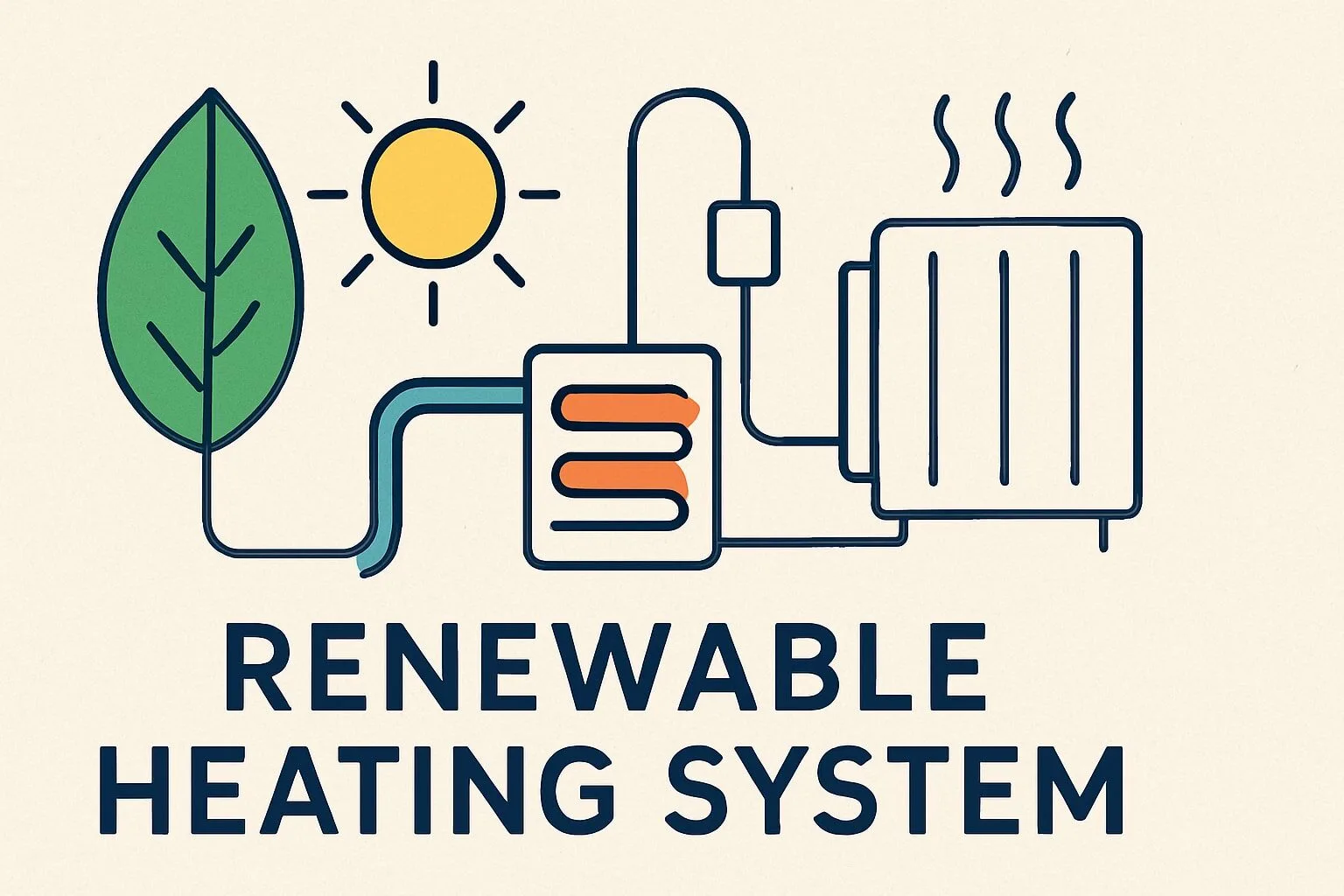
Soaring energy bills and environmental concerns are transforming how we heat our homes in the UK. With the government committed to achieving net zero emissions by 2050, the need for a reliable renewable heating system has never been greater.
This essential guide gives you a clear overview of the latest options for 2025. You will explore key technologies like heat pumps, solar, and biomass, compare costs and benefits, and learn about installation and available grants.
Ready to make your home more comfortable, efficient, and future-proof? Use this guide to discover your options and take the first step towards a greener, smarter way to heat your home.
Heating accounts for nearly 80 percent of domestic energy use in the UK, making it a major focus for decarbonisation. A renewable heating system helps cut carbon emissions, supporting the UK’s legally binding climate targets. The 2023 Environmental Improvement Plan and related government policies now encourage homeowners to upgrade to low-carbon solutions.
It’s important to note that only sustainably sourced biomass or systems powered by green electricity truly qualify as renewable. For more detailed insights into the nation’s progress, see the Progress in reducing emissions 2025 report. Choosing a renewable heating system is a direct way for households to contribute to national and global climate goals.
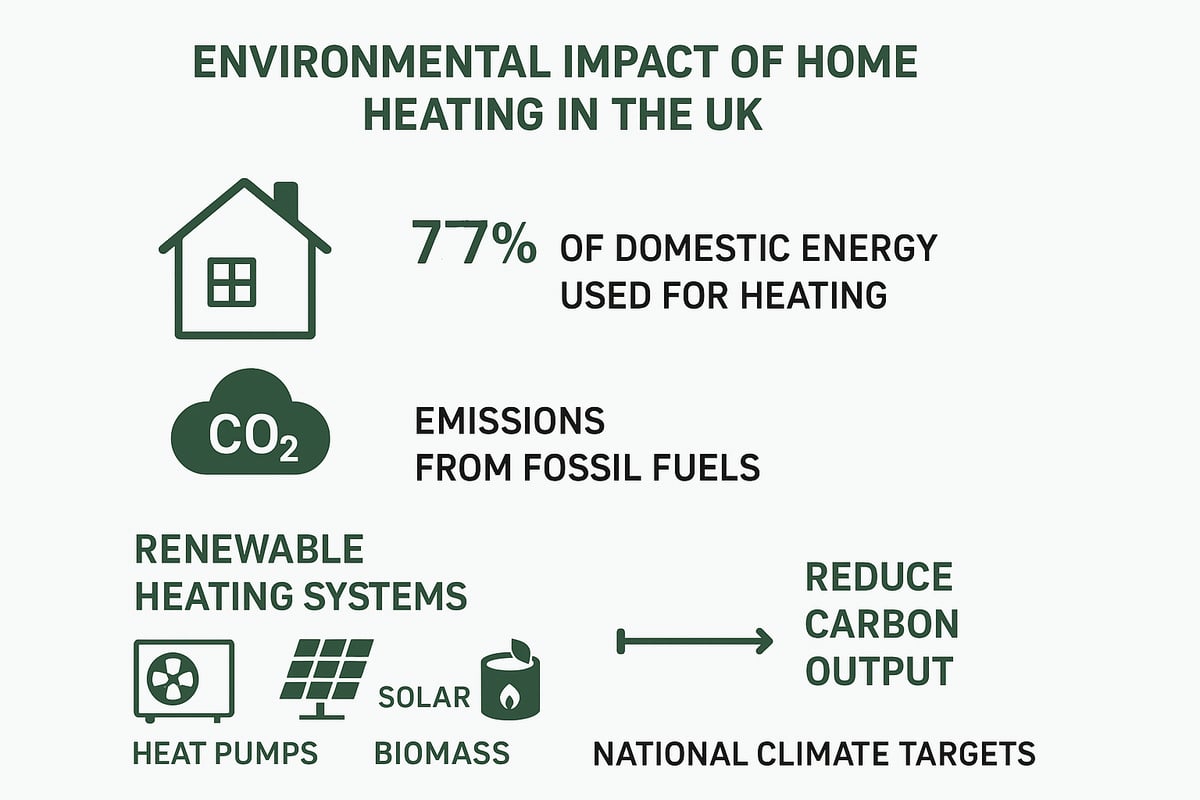
Gas and oil prices continue to fluctuate, leaving many households facing unpredictable bills. In contrast, a renewable heating system can reduce costs by up to 50 percent, especially when combined with government incentives. The 2023 energy price cap placed electricity at 27p per kWh, but efficient technologies like heat pumps and solar can offer significant savings.
Financial support is now available, with grants reaching up to £7,500 for eligible installations. This makes investing in a renewable heating system more accessible for many families. Savings are further enhanced when systems are paired with self-generated electricity.
New building regulations increasingly require low-carbon heating, and retrofitting a renewable heating system boosts property value and market appeal. Buyers are seeking homes that are ready for a future where fossil fuels become less viable.
Smart controls and energy storage can be integrated with a renewable heating system to maximise efficiency. These features ensure your home remains comfortable, efficient, and compliant with upcoming standards.
Switching to a renewable heating system improves air quality both indoors and outdoors. Unlike traditional fossil fuel systems, renewables produce fewer pollutants, reducing respiratory risks and benefiting the wider community.
Efficient, self-sustaining systems help lower the risk of fuel poverty by providing stable, controllable heat. Occupants experience greater comfort with consistent temperatures and improved living conditions.
One common concern is the higher upfront cost of a renewable heating system. While installation can be more expensive initially, significant long-term savings and available grants offset this challenge.
Many myths remain about reliability or suitability for older homes, but modern systems are now robust and adaptable. With proper assessment and installation, a renewable heating system can suit a wide range of property types.
Consider rural homes that have switched from oil to heat pumps, saving over £500 per year on energy bills. In urban settings, combining solar panels with battery storage can deliver up to 90 percent self-sufficiency for electricity needs.
| Scenario | Technology Used | Annual Savings | Self-Sufficiency |
|---|---|---|---|
| Rural oil switch | Heat pump | £500+ | 60-70% |
| Urban solar combo | Solar + battery | £1,200 | Up to 90% |
Real-world results demonstrate that the right renewable heating system delivers both environmental and financial benefits.
Choosing the right renewable heating system for your home means understanding the main technologies available. Each approach offers unique advantages and suits different property types and lifestyles. Below, we break down the leading options, helping you compare features, efficiency, costs, and real-world suitability.
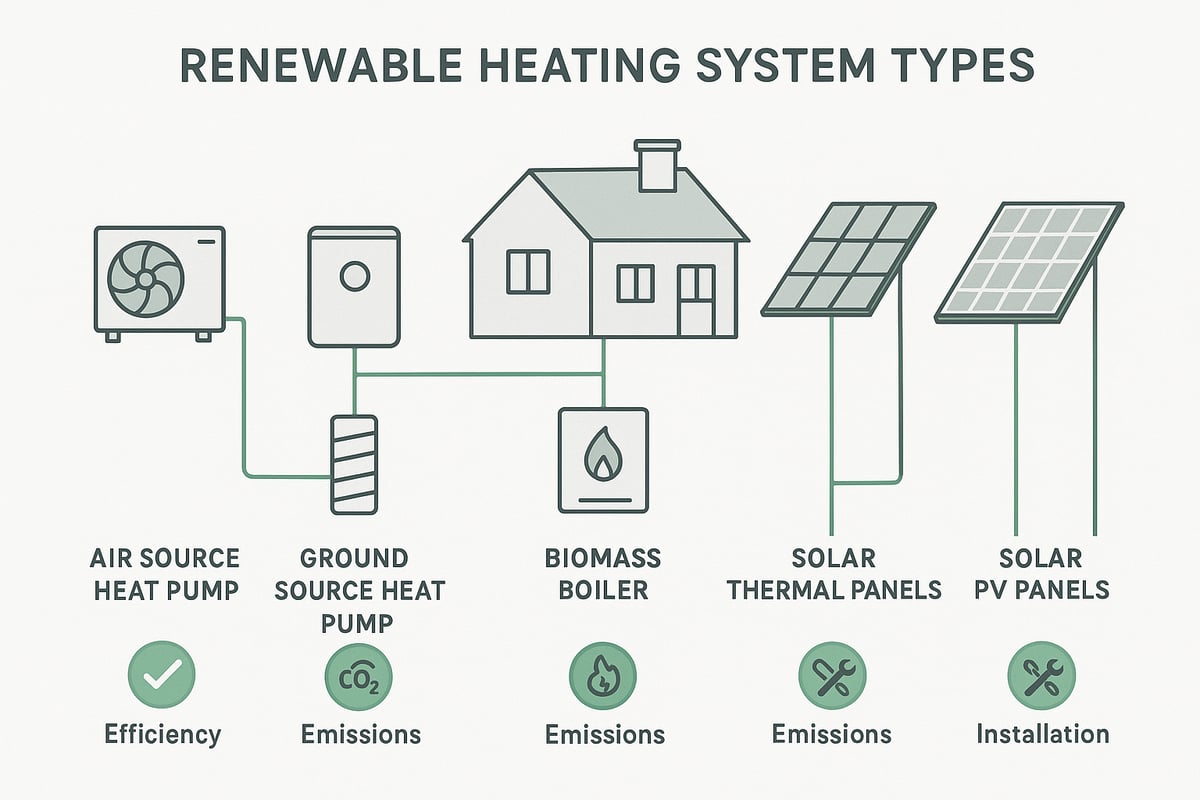
Heat pumps are a cornerstone of the renewable heating system landscape in the UK. They work by extracting heat from the air or ground and transferring it into your home, delivering up to 3.5 units of heat for every unit of electricity used (CoP 3.5). Air source heat pumps are easier to install and suit most properties, while ground source options offer superior efficiency but require outdoor space. Running costs can be as low as 6.7p per kWh for ground source units. Grants up to £7,500 make these systems more affordable. For a detailed breakdown of costs and grants, see the Air Source Heat Pump Costs and Grants guide.
Biomass boilers and stoves provide renewable heating system solutions using organic fuels like wood pellets, logs, or chips. These systems are ideal for rural homes with space for fuel storage. Sustainability depends on sourcing local, managed biomass. Biomass boilers can supply central heating and hot water, while stoves are best for room heating. Typical running costs are around 13.8p per kWh, with emissions at 48g CO₂ per kWh. Regular maintenance is required, including ash removal and annual servicing, making them suited to homeowners comfortable with hands-on upkeep.
Solar technologies offer versatile ways to power your renewable heating system. Solar thermal panels use sunlight to heat water directly, achieving efficiencies of up to 60%. Solar PV panels generate electricity, which can run heat pumps or direct electric heating. Combining PV with heat pumps can push system efficiency above 80%. Solar-only solutions need backup for cloudy weather, but pairing with battery storage increases self-sufficiency. These systems are low maintenance and ideal for homes with good roof orientation and minimal shading.
Direct electric and infrared heating are straightforward options within a renewable heating system, especially when powered by green electricity. Electric heaters are 100% efficient at point of use but can be costly to run unless paired with solar PV or renewable tariffs. Infrared panels heat people and surfaces directly, making them efficient for spot-heating or smaller spaces. While installation is simple, ongoing costs are higher compared to other renewables. These solutions suit well-insulated homes or rooms needing occasional heat.
Microgeneration and hybrid systems maximise the potential of your renewable heating system by combining technologies. Examples include integrating wind turbines, solar PV, battery storage, and heat pumps. Hybrid setups, like a heat pump supported by a backup boiler or solar, boost reliability and efficiency. These systems increase energy independence and can cover up to 90% of a home's annual electricity needs. The right mix depends on your property's location, available space, and energy goals.
Selecting the best renewable heating system for your home is a crucial decision. It involves careful consideration of your property’s characteristics, local climate, financial situation, and long-term sustainability goals. Making the right choice can lead to significant savings, greater comfort, and a smaller carbon footprint.
Before choosing a renewable heating system, begin by evaluating your home's insulation and airtightness. Well-insulated properties maximise efficiency, especially for heat pumps. Examine your existing heating infrastructure. Do you have underfloor heating, radiators, or neither? This affects which systems are most suitable.
Space availability is also important. Air source heat pumps require outdoor units, while biomass boilers need fuel storage. Consider your household’s hot water demand, as larger families may need a system with higher capacity. For an in-depth look at air source heat pumps, see this Air Source Heat Pumps Overview.
Your location can influence which renewable heating system will perform best. Urban homes may face restrictions on biomass due to smoke control regulations, while rural properties could benefit from local fuel sources. The efficiency of air source heat pumps drops in colder regions, so ground source options or hybrid systems might be preferable.
Check if your area is subject to planning limitations or specific environmental rules. Availability of grid access and fuel delivery also plays a role. Always factor in local conditions when making your decision.
Cost is a key consideration when installing a renewable heating system. Upfront expenses vary: heat pumps typically range from £8,000 to £14,000, solar systems from £4,000 to £8,000, and biomass boilers from £7,000 to £15,000. However, generous government grants and incentives can significantly offset these costs.
Investigate what financial support is available, such as the Boiler Upgrade Scheme. Many installers offer flexible financing options, enabling you to spread payments over time. Calculate the long-term savings to understand the real value.
For optimal results, consider how different technologies can work together. Combining a renewable heating system like a heat pump with solar PV and battery storage can maximise efficiency and savings. Smart thermostats and controls further enhance performance by allowing you to tailor heating to your daily schedule.
Evaluate how your chosen system will integrate with existing infrastructure. Compatibility is key for both new builds and retrofits.
Each renewable heating system has its own maintenance requirements. Heat pumps usually need annual servicing and last 15–20 years. Biomass boilers require more frequent cleaning and ash removal, while solar panels need minimal attention and can last 20–25 years.
Plan for ongoing maintenance costs to ensure your system remains efficient and reliable. Regular upkeep will extend its lifespan and enhance performance.
The environmental case for a renewable heating system is compelling, but sustainability depends on responsible choices. For biomass, ensure fuel is sourced from local, well-managed providers. For electric systems, opt for green electricity tariffs to reduce your carbon footprint.
Lowering local air pollution is another benefit. Properly chosen systems can provide clean, efficient heat while contributing to broader climate goals.
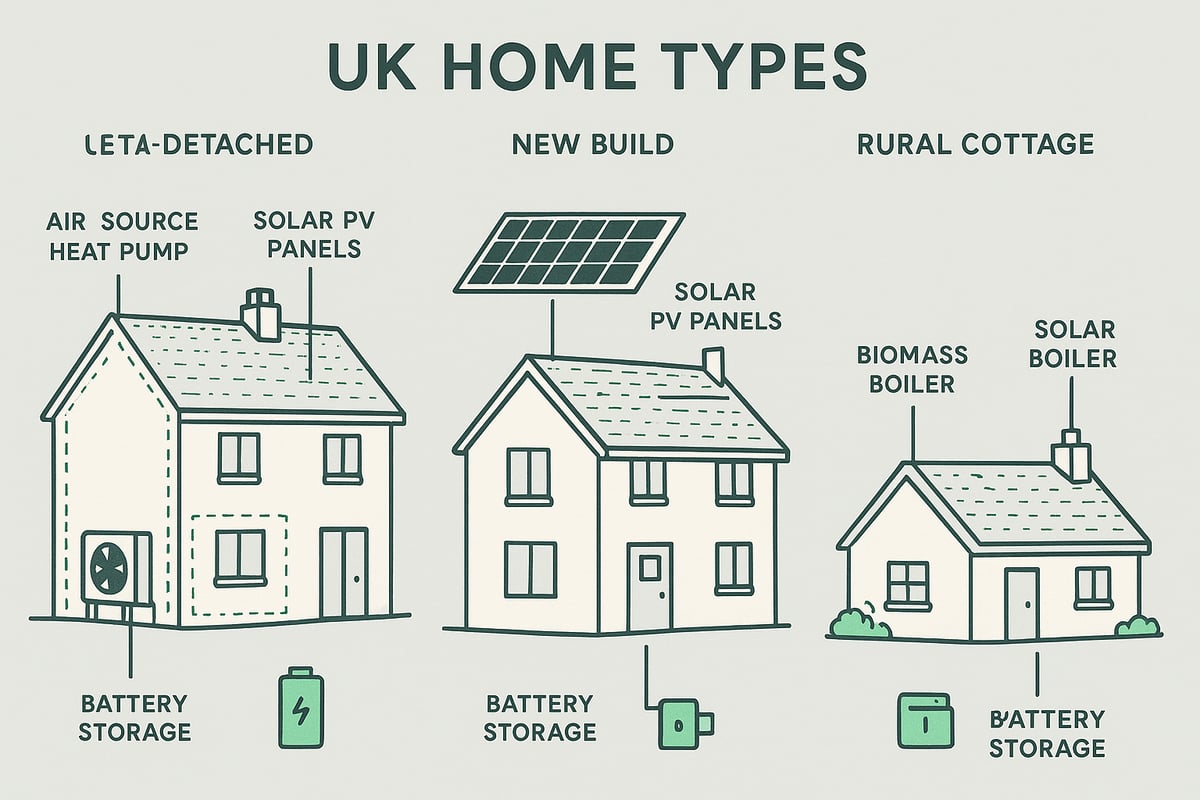
To illustrate, here are real-world scenarios for different property types:
| Scenario | Property Type | Renewable Heating System | Key Considerations |
|---|---|---|---|
| Retrofit | 1930s semi-detached | Air source heat pump | Improved insulation, radiators |
| New Build | Modern detached | Solar PV, battery, underfloor | Integrated design, self-use |
| Rural Cottage | Period stone cottage | Biomass boiler | Local log supply, fuel storage |
These examples show how a renewable heating system can be tailored to fit a variety of homes and needs.
Avoid common pitfalls when selecting your renewable heating system. Do not underestimate the importance of insulation, as poor fabric performance can undermine efficiency. Be careful with system sizing—oversized or undersized units will waste energy or struggle to meet demand.
Lastly, always check local planning and environmental regulations before installation. Taking these steps ensures your investment delivers the comfort, savings, and sustainability you expect.
Upgrading to a renewable heating system is a significant investment, but understanding each stage of the process can ensure a smooth transition. This section guides you through installation, ongoing expenses, available grants, and the practicalities of getting started.
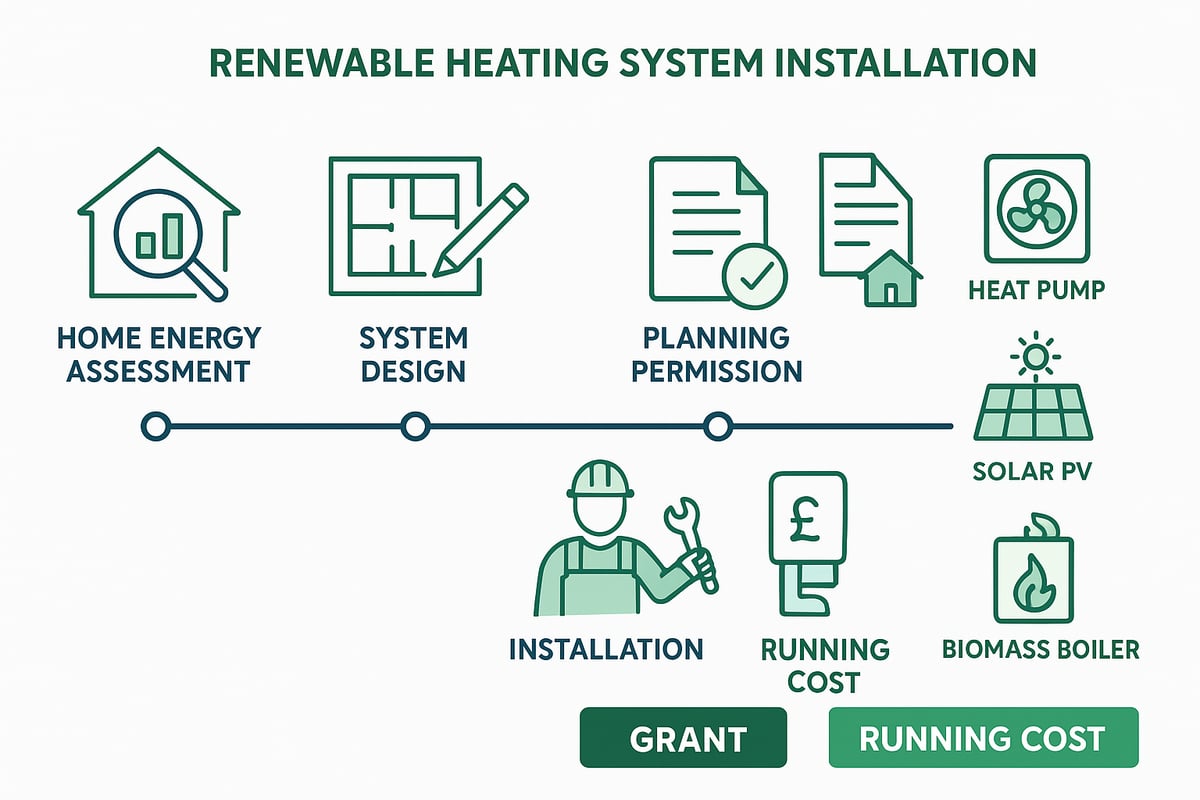
The journey to a renewable heating system begins with a professional home energy assessment. This identifies your household’s needs, insulation levels, and suitable technologies.
Next, your installer designs a bespoke system, considering the best match for your property. Planning permission is rarely needed, but checks ensure compliance with local rules. Support is available when applying for grants or financing, making the switch more affordable. Installation itself usually takes one to five days, depending on system complexity. Afterward, the system is commissioned, tested, and you receive full user training for your new renewable heating system.
Understanding the running costs of a renewable heating system is crucial for budgeting. Heat pumps, for instance, deliver significant savings due to their high efficiency. A typical four-bedroom home uses around 17,000 kWh of heating energy annually. With a ground source heat pump, running costs can be as low as £1,139 per year.
Solar PV systems can reduce electricity bills by up to £1,200 per year, especially when paired with battery storage. Biomass boilers offer further savings with local fuel sources. Regular maintenance should be budgeted—heat pump servicing costs around £150 to £250 annually. These savings make a renewable heating system a smart long-term investment.
| Technology | Typical Annual Cost | Potential Savings | Maintenance Cost |
|---|---|---|---|
| Heat Pump | £1,139 | £500+ | £150–£250 |
| Solar PV + Battery | £800 | £1,200 | £100–£200 |
| Biomass Boiler | £1,300 | £400+ | £250–£400 |
Financial incentives make adopting a renewable heating system more accessible. The UK government’s Boiler Upgrade Scheme offers grants of up to £7,500 for heat pump installations. For official details, see the Boiler Upgrade Scheme grant details.
VAT relief is available on certain renewable installations, and some local authorities offer additional incentives or green loans. Financing options let you spread the cost, sometimes with zero upfront payment. These measures help reduce the initial barrier, making a renewable heating system achievable for many households.
Calculating the payback period for your renewable heating system is essential for financial planning. Most systems reach break-even within five to twelve years, depending on technology and energy use. Homes in off-gas areas, or those generating their own electricity, see the fastest returns.
Switching from oil or LPG to a heat pump typically saves over £500 per year. Solar PV users benefit from reduced grid reliance, while biomass users save by sourcing fuel locally. A renewable heating system not only pays for itself but can also increase property value and energy independence.
Installing a renewable heating system involves meeting certain regulations. Most heat pumps and solar panels fall under permitted development rights, so planning permission is not needed. However, biomass systems in Smoke Control Areas must comply with a strict 3g smoke per hour limit.
All installations must meet Building Regulations and be carried out by certified professionals. MCS certification ensures your renewable heating system qualifies for grants and meets quality standards. Checking local and national rules before starting avoids costly delays and ensures a compliant installation.
Consider a typical grant application for a renewable heating system. First, the homeowner contacts an accredited installer for a home assessment. After confirming eligibility, the installer helps complete the grant application.
Once approved, the system is installed within days. The commissioning process includes final checks and user training. The homeowner sees immediate benefits, with annual bills reduced and a reliable, efficient renewable heating system in place. This journey is increasingly common as incentives and support make renewable heating more accessible than ever.
Optimising your renewable heating system is essential for long-term savings and environmental impact. With the right approach, you can maximise comfort, efficiency, and future readiness.
To achieve the best results from your renewable heating system, focus on regular maintenance and smart controls. Annual servicing helps maintain efficiency and prevents small issues from escalating.
Smart thermostats and zoning allow you to heat only the rooms you use, reducing waste. Monitoring your energy use and adjusting settings seasonally also ensures your system adapts to changing needs.
Small improvements, such as bleeding radiators or cleaning filters, keep your renewable heating system running efficiently. These strategies boost performance and extend equipment lifespan.
Pairing different technologies can elevate your renewable heating system to a new level of efficiency. For example, integrating a heat pump with Solar PV Systems for Homes enables you to power your heating with self-generated electricity.
Adding battery storage allows you to use more of your own energy, even after sunset. Solar thermal systems provide direct hot water, reducing the workload on your main heating source.
Hybrid setups, such as combining a heat pump with a backup electric heater, ensure reliable comfort during peak demand. This approach maximises savings and resilience.
Future-proofing your renewable heating system means staying ready for changes in energy supply and pricing. Many modern systems are compatible with smart grids and dynamic tariffs, letting you take advantage of cheaper electricity rates.
As the UK transitions to greener fuels and potential hydrogen integration, an adaptable renewable heating system will keep your home compliant and efficient. Exporting surplus electricity from solar PV to the grid can even generate extra income.
Monitoring new technologies and government incentives helps ensure your renewable heating system remains current and valuable.
A well-optimised renewable heating system delivers more than just financial savings. It significantly reduces your home’s carbon footprint and improves local air quality.
Efficient systems provide consistent warmth, creating a comfortable living environment all year round. Greater energy independence shields you from price spikes and supply disruptions.
Investing in a renewable heating system can also increase your property’s value, attracting eco-conscious buyers who prioritise sustainability and modern technology.
Many UK homeowners are already seeing the rewards of a high-performing renewable heating system. For instance, families who combine air source heat pumps with solar PV and battery storage have achieved up to 90 percent self-sufficiency in electricity use.
Rural homes that switched from oil to a renewable heating system have cut annual bills by over £500 while lowering emissions. These real-life results demonstrate the value of investing in reliable, future-ready systems.
Wondering if a renewable heating system is the right fit for your home? Here, we answer the most common questions UK homeowners have about upgrading to greener heating, from installation and compatibility to ongoing maintenance.
Is a renewable heating system suitable for older or period properties? Yes, with the right insulation and system sizing, even older homes can benefit. Will it be noisy? Modern heat pumps and biomass boilers are quiet, typically 40–50 dB at a metre, similar to a fridge.
Can you keep your existing boiler as backup? Many hybrid setups allow this, providing extra reassurance in cold snaps. Do you need to upgrade radiators or your hot water tank? Sometimes, especially with heat pumps, as they work best with larger radiators or underfloor heating.
What’s the difference between solar PV and solar thermal? Solar PV generates electricity, while solar thermal heats water directly. For more detail, see Solar Thermal Heating Solutions. Always use an MCS-certified installer for your renewable heating system, and expect installation to take 1–5 days, depending on complexity.
Are renewable heating systems reliable and long-lasting? Absolutely—modern systems are designed for UK climates and typically last 15–25 years with regular maintenance. Can they work with smart home technology? Most systems integrate easily with smart thermostats and controls.
Worried about grants and funding in 2025? The Boiler Upgrade Scheme continues to offer support, but always check current eligibility before applying. If you live in a conservation area or listed building, consult your local authority first.
Adoption rates continue to rise, with the latest UK heat pump installation statistics 2024-2025 showing strong growth, reflecting increasing confidence in renewable heating system performance.
Below is a summary to help compare the main options for your renewable heating system:
| Technology | Upfront Cost | Running Cost | Grant Available | Carbon Savings | Maintenance |
|---|---|---|---|---|---|
| Air Source Heat Pump | £8,000–£14,000 | From £1,139/year | Up to £7,500 | High | Servicing yearly |
| Ground Source Heat Pump | £15,000–£25,000 | From £1,000/year | Up to £7,500 | Very high | Servicing yearly |
| Biomass Boiler | £7,000–£15,000 | From £1,000/year | Varies | High | More frequent |
| Solar Thermal | £4,000–£8,000 | Very low | Varies | High | Minimal |
| Solar PV | £4,000–£8,000 | Very low | Varies | High | Minimal |
For more on solar hot water options, visit Solar Thermal Heating Solutions. Choosing the right renewable heating system depends on your property, budget, and sustainability goals.