No products in the basket.
Wondering how much it will cost to install a heat pump in 2026? With energy prices rising and government incentives frequently changing, getting clear information has never been more important for UK homeowners.
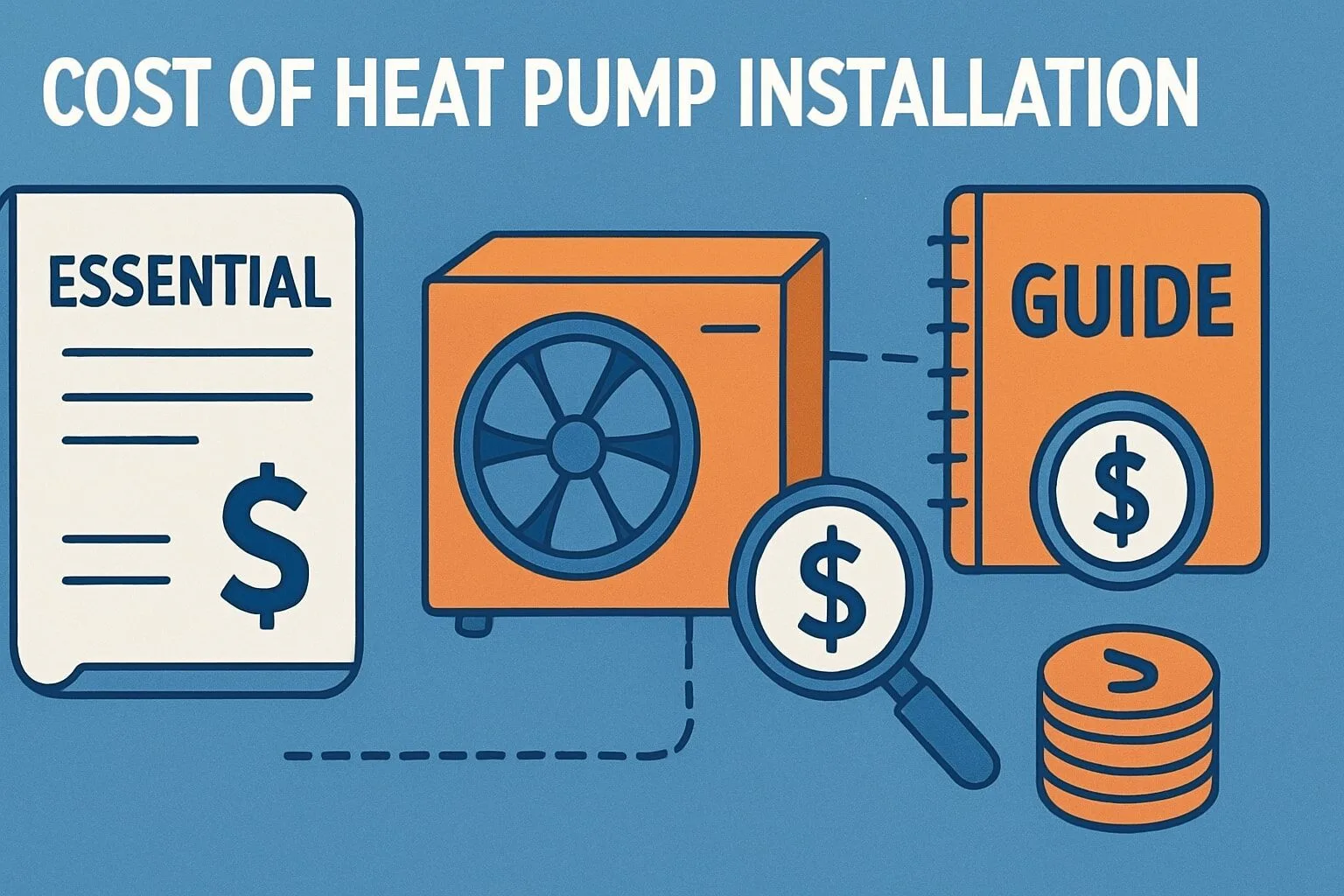
This essential guide delivers a thorough breakdown of the cost of heat pump installation, helping you make informed, cost-effective choices. We will cover heat pump types, key installation factors, current and projected costs, available grants, strategies to save, and tips on selecting the right installer. Discover how to maximise savings and reduce your environmental impact with practical advice tailored for the years ahead.
Heat pumps have become a focal point in the UK’s journey towards cleaner, more cost-effective home heating. With rising interest in the cost of heat pump installation, it is essential to understand how these systems work, their types, and why they are becoming so popular. This section breaks down the fundamentals, offering clarity for homeowners considering a switch to a heat pump.
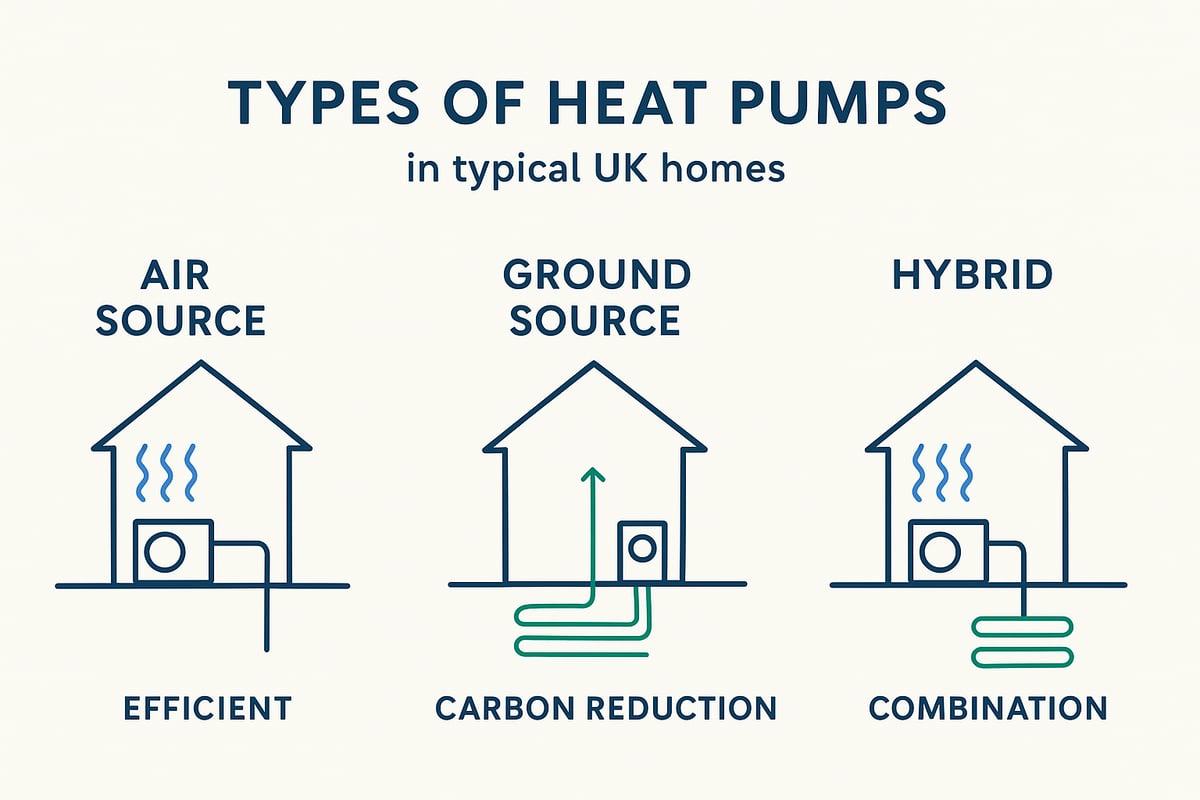
A heat pump is a highly efficient heating and cooling system that transfers heat from outside sources into your home. Instead of generating heat by burning fuel, it uses a small amount of electricity to move thermal energy from the air, ground, or water, depending on the model.
Compared to traditional gas or oil boilers, heat pumps can deliver up to three times more heat energy than the electricity they consume. This makes them a strong contender for reducing household bills and emissions, especially with the cost of heat pump installation becoming more competitive each year.
For the UK’s mild and damp climate, heat pumps are particularly suitable. They operate efficiently even in colder temperatures, making them an ideal choice for both modern and older homes seeking reliable, low-carbon heating.
Homeowners can choose from several types of heat pumps, each with distinct features, advantages, and drawbacks. The three main options are:
Choosing the right type depends on your property, budget, and heating requirements.
Opting for a heat pump system offers several advantages, directly influencing the cost of heat pump installation over time:
These benefits make heat pumps a forward-thinking choice for those aiming to future-proof their homes.
Heat pump adoption is accelerating across the UK. In 2023, over 55,000 units were installed, marking a 25 percent year-on-year increase. The government has set ambitious targets for 2026 and beyond, aiming to reach hundreds of thousands of installations annually.
This growth reflects both rising consumer confidence and stronger policy support, reinforcing the cost of heat pump installation as a worthwhile investment for many households.
Several factors determine whether a heat pump is suitable for a specific property. These include:
For example, new-build homes can integrate heat pumps seamlessly, whereas older properties may need insulation upgrades or radiator replacements. Assessing these factors ensures the chosen system delivers optimal performance and value.
Understanding the cost of heat pump installation in 2026 is essential for UK homeowners planning for a sustainable future. With prices influenced by technology, demand, and policy, getting a clear picture is key. Below, we break down average costs, influencing factors, equipment pricing, labour, and ongoing expenses to help you make an informed decision.
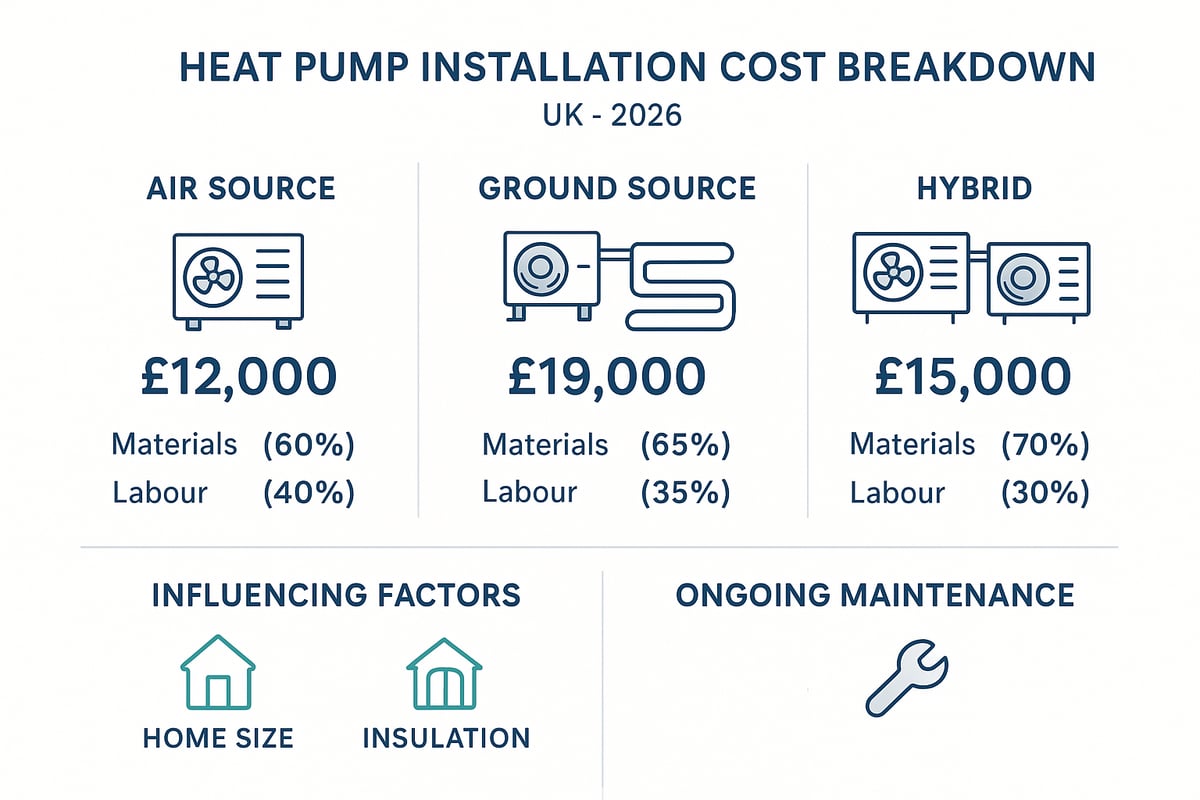
The cost of heat pump installation varies significantly by system type. For 2026, industry estimates suggest the following average installed prices:
| Heat Pump Type | Typical Cost Range |
|---|---|
| Air Source | £7,000 to £13,000 |
| Ground Source | £15,000 to £25,000 |
| Hybrid | £10,000 to £17,000 |
Air source heat pumps remain the most popular, largely due to their moderate cost and straightforward installation. Ground source systems, while offering greater efficiency, require more extensive groundwork and higher upfront investment. Hybrid systems, which combine heat pumps with traditional boilers, are best suited for homes with higher heating demands or specific compatibility needs.
Looking ahead, the cost of heat pump installation is projected to stabilise or even fall slightly due to increased competition and government support. For a detailed comparison of 2026 pricing and influencing factors, see this heat pump installation costs 2026 guide.
Several factors affect the final cost of heat pump installation for your home:
Each of these elements can alter the cost of heat pump installation, so it is vital to assess your property and compare detailed quotes.
The total cost of heat pump installation is made up of several key components:
Choosing quality equipment can enhance reliability and efficiency, but it is crucial to balance upfront costs with long-term savings when planning the cost of heat pump installation.
Labour is a significant component of the cost of heat pump installation. Installer rates in 2026 are expected to range from £1,500 to £4,000, depending on system complexity and regional factors. Choosing an MCS-certified installer is essential, as this not only guarantees workmanship but is often a requirement for government grants.
Accredited professionals ensure compliance with current regulations and provide valuable aftercare. Investing in a reputable installer may cost more initially, but it can prevent costly issues and maximise system performance over time.
After installation, homeowners should budget for annual maintenance, typically between £150 and £300. Compared to gas boilers, heat pumps offer lower running costs, especially in well-insulated homes. The expected lifespan ranges from 15 to 25 years, with many manufacturers providing warranties of up to 7 years.
Factoring in maintenance and energy bills is vital when evaluating the total cost of heat pump installation. Regular servicing preserves efficiency, prevents breakdowns, and protects your investment for years to come.
Navigating the cost of heat pump installation in 2026 becomes far easier with the right financial support. The UK government, local councils, and energy suppliers are offering a range of schemes to help homeowners make the switch to low-carbon heating. Understanding these grants and incentives is vital for reducing upfront expenses and making your investment more manageable.
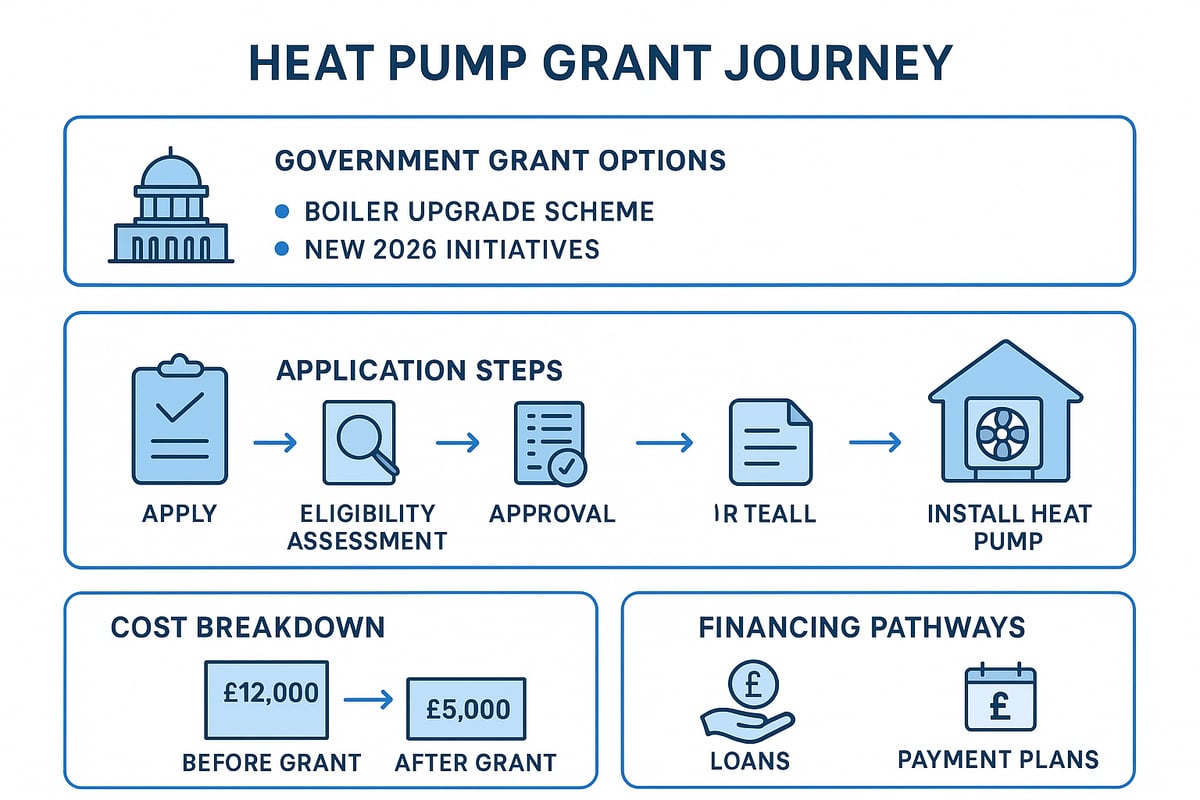
In 2026, the main government support for the cost of heat pump installation is the Boiler Upgrade Scheme (BUS). This grant offers up to £7,500 towards air source or ground source heat pump installations. The BUS is designed to make low carbon heating affordable and accessible to a wider range of UK homeowners.
Additional schemes may be introduced or updated for 2026, as the UK strives to meet its net zero targets. These could include enhanced grants for certain regions or property types. For the latest details on available grants and eligibility, visit the Heat Pump Grants and Incentives page.
Securing a grant to lower the cost of heat pump installation involves several clear steps. First, check your eligibility, which typically requires property ownership and a valid EPC with no outstanding insulation recommendations. Next, gather necessary documents, such as proof of address and installation quotes from MCS-certified installers.
Submit your grant application either online or through your chosen installer. The process generally takes a few weeks, depending on scheme demand. Approval rates are high if all paperwork is in order, so prompt, accurate submissions are key to success.
Government grants can dramatically reduce the cost of heat pump installation. For example, a typical air source heat pump costing £12,000 may drop to just £4,500 after applying the full BUS grant. Ground source systems see even greater reductions due to higher grant amounts.
Regional differences exist, with some areas seeing higher uptake or additional local support. Always check local authority websites for stacked incentives, which can further lower your upfront investment and improve affordability.
Even after grants, the remaining cost of heat pump installation can be financed through a variety of options. Interest-free loans and green finance deals are increasingly common, with flexible terms tailored to home energy upgrades.
Typical repayment periods range from five to ten years, making monthly payments manageable for most households. Comparing upfront payment with financed options helps you decide what fits your budget best, while still taking advantage of available grants and incentives.
Many local councils and energy suppliers offer their own incentives to help offset the cost of heat pump installation. Examples include top-up grants, discounts, or cashback schemes for switching to renewable heating.
These benefits can often be stacked with national grants, further boosting your savings. To maximise your support, consult both your local authority and energy provider before committing to an installation, ensuring you capture every available opportunity.
Installing a heat pump in your home is a significant investment, but with the right approach, you can maximise value and efficiency. This guide breaks down each step of the process, helping you understand what to expect, how to prepare, and how to control the cost of heat pump installation in 2026.
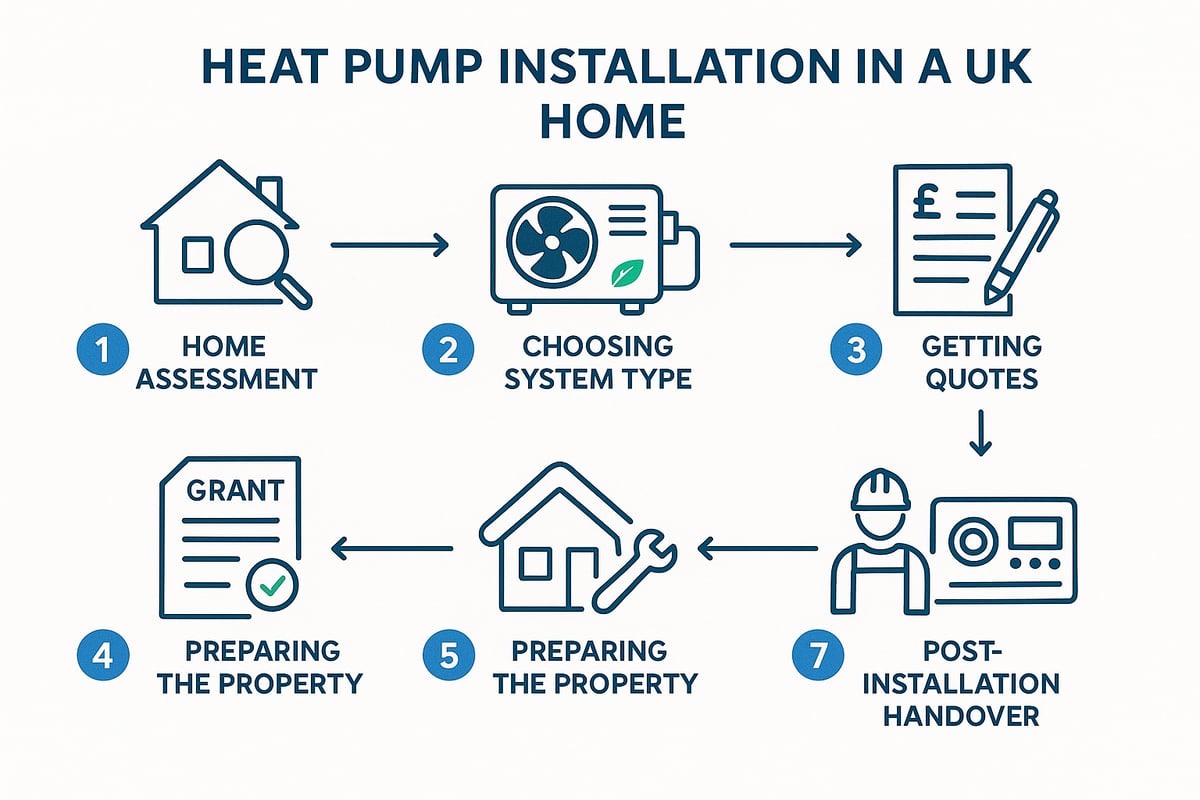
The first step is to determine if your property is a good candidate for a heat pump. Factors such as insulation quality, property age, and layout all influence suitability and the overall cost of heat pump installation.
A professional survey will evaluate your home's Energy Performance Certificate (EPC) rating and identify areas for improvement. Upgrading insulation or sealing draughts can increase efficiency and may reduce both upfront and running costs.
If your home is older or has complex layouts, expect additional considerations. Understanding your starting point helps avoid surprises later and ensures your investment delivers the expected comfort and savings.
Selecting the optimal system is crucial for balancing performance and the cost of heat pump installation. Air source heat pumps are generally suitable for most UK homes, especially flats and semi-detached properties. They are typically less expensive and easier to install.
Ground source heat pumps require more space and groundwork but offer higher efficiency for larger or detached homes. Hybrid systems can be ideal where existing boilers are still in good condition, blending renewables with familiar technology.
Matching the system to your heating needs, property type, and future goals is essential. Consult with an accredited installer to ensure you choose the best fit for your circumstances.
Request detailed quotes from at least three MCS-certified installers to accurately compare the cost of heat pump installation. Look for transparent breakdowns of equipment, labour, and any additional works required.
When reviewing quotes, pay attention to the installer’s experience, previous projects, and customer reviews. Avoid contractors who cannot demonstrate certification or are unwilling to provide references.
Red flags include unusually low prices, vague specifications, or high-pressure sales tactics. Taking the time to select the right installer ensures quality workmanship and long-term reliability.
Securing government grants and appropriate financing can dramatically reduce the cost of heat pump installation. Coordinate your grant application with your installer, as they often assist with the necessary paperwork and ensure eligibility.
Typical grants, such as the Boiler Upgrade Scheme, require proof of property ownership, EPC documentation, and details about your current heating system. Approval timelines can range from a few weeks to several months, so plan accordingly.
Exploring finance options, including interest-free loans or green energy plans, can help spread costs and make your project more manageable without sacrificing quality.
Preparation is key to a smooth and efficient installation. Upgrades to insulation, radiators, or pipework may be needed to optimise performance and keep the cost of heat pump installation under control.
Arrange clear access to the installation area, move furniture as needed, and discuss any logistics with your installer in advance. Some properties may need temporary heating if the process takes more than one day.
By addressing these details early, you help prevent delays and ensure your system is set up for maximum efficiency from day one.
On installation day, expect your installer to carry out safety checks, remove old equipment if necessary, and fit the new heat pump system. The process typically takes one to three days, depending on system type and property complexity.
Installers will configure controls, test the system, and address any issues before handover. For a detailed walkthrough of each stage, see the Electric Heat Pump Installation Explained guide.
Professional installation ensures compliance with safety regulations and helps protect your warranty, both of which are essential for managing the long-term cost of heat pump installation.
After installation, the system will be commissioned, and you’ll receive training on how to use it effectively. Installers should provide full documentation, including user manuals, warranty details, and maintenance schedules to support the cost of heat pump installation over time.
Register your warranty promptly and ask about aftercare services or service plans to maintain peak efficiency.
A thorough handover ensures you are confident in operating your new heat pump and understand the steps to keep it running smoothly for years to come.
Improving the value you get from your heat pump investment requires careful planning and smart choices. By focusing on energy efficiency, system design, and ongoing care, you can reduce the cost of heat pump installation and maximise long-term savings. Explore these practical strategies to make your heat pump work harder for your home and your wallet.
Boosting your property’s energy efficiency is one of the most effective ways to lower the cost of heat pump installation. Well-insulated homes require smaller heat pumps, which reduces both upfront and running costs.
Focus on upgrades such as loft and cavity wall insulation, double glazing, and draught-proofing. These measures can improve your EPC rating, making your home more attractive for grants and reducing heat loss.
Before choosing a heat pump, arrange a professional survey to identify areas for improvement. Investing in energy efficiency first ensures you get the right system size and the best value for your money.
Selecting the correct system size is crucial for controlling the cost of heat pump installation. Oversized or undersized units can lead to poor performance, higher bills, and unnecessary wear.
Accurate heat loss calculations are essential. A qualified installer will assess your home’s heating needs, factoring in room sizes, insulation, and usage patterns.
Refer to resources like the Heat Pump System Price Guide to compare specifications and costs. This helps you avoid overpaying and ensures compatibility with your current heating system.
Combining your heat pump with other renewable energy solutions can further reduce the cost of heat pump installation over time. Consider integrating solar PV panels, battery storage, or smart heating controls.
These technologies work together to cut electricity demand from the grid, lower carbon emissions, and increase your overall savings. For example, solar PV can directly power the heat pump during daylight hours, and batteries store excess energy for use at night.
A holistic approach delivers greater efficiency, futureproofs your investment, and supports UK climate targets.
Ongoing care is vital for maximising the cost of heat pump installation benefits. Schedule annual servicing to keep your system running efficiently and to maintain warranty coverage.
Typical service plans cost between £150 and £300 per year. Regular checks help prevent common issues, such as drops in performance or refrigerant leaks, which could impact running costs.
Opt for installers offering robust aftercare and clear service plans. This proactive approach extends system life, protects your investment, and ensures consistent comfort.
Avoiding common pitfalls can have a significant impact on the cost of heat pump installation. Top mistakes include selecting unqualified installers, missing out on grant eligibility, and neglecting essential home upgrades.
Stay informed about market changes and future price reductions. According to UK heat pump cost reduction projections, installation costs are expected to decrease as adoption grows.
Learn from real-world examples and always seek professional advice. Careful planning and ongoing vigilance ensure you maximise value at every stage.
The UK heat pump market is undergoing rapid transformation as new technologies, evolving policies, and changing consumer expectations shape the future. Understanding how these trends will impact the cost of heat pump installation is essential for homeowners planning upgrades in 2026 and beyond.
Industry experts predict that the cost of heat pump installation will gradually decrease over the next few years. Increased manufacturing scale, supply chain improvements, and a more competitive installer market are expected to drive prices down. As a result, homeowners in 2026 may see average costs drop compared to today, especially for air source heat pumps.
| Year | Air Source (£) | Ground Source (£) | Hybrid (£) |
|---|---|---|---|
| 2024 | 7,000–13,000 | 15,000–25,000 | 10,000–14,000 |
| 2026 | 6,500–12,000 | 14,000–23,000 | 9,500–13,000 |
| 2030 | 6,000–11,000 | 13,000–21,000 | 9,000–12,000 |
Although prices are falling, the overall cost of heat pump installation will still depend on factors like property type and system specification.
The next generation of heat pumps will bring notable advancements, making them more attractive and cost-effective. Manufacturers are introducing:
These improvements will help boost efficiency and reliability, potentially lowering the cost of heat pump installation by reducing running and maintenance expenses. Homeowners can expect greater integration with renewables and smart home technology, supporting long-term savings.
Government policy continues to be a major driver in the heat pump sector. By 2026, the UK is committed to ambitious Net Zero targets, with ongoing support for clean heating technologies. Updated building regulations and stricter efficiency standards are likely to influence the cost of heat pump installation, as systems must meet higher performance criteria.
Key policy milestones include:
These changes aim to accelerate the transition to renewable heating, making heat pumps more accessible.
Consumer interest in heat pumps is set to soar. The government’s goal of 600,000 annual installations by 2028 demonstrates the scale of projected growth. According to UK heat pump adoption statistics 2025, installation rates have risen steadily, with a 25% year-on-year increase in 2023 alone.
This growing demand will likely encourage more competition and innovation, further impacting the cost of heat pump installation. Homeowners are becoming more aware of the environmental and financial benefits, driving market momentum.
As the market expands, the importance of qualified, accredited installers will only increase. MCS certification and ongoing professional training are becoming standard requirements. Industry bodies are enhancing quality assurance, ensuring that every cost of heat pump installation reflects best practices and delivers reliable performance.
A robust installer network will help maintain high standards and protect consumers as adoption accelerates.