
No products in the basket.

Imagine cutting your energy bills while shaping a greener future for your home or business. This guide to renewable technology solutions offers a clear roadmap, empowering you to make smart choices for 2026 and beyond. You will discover the latest trends, core technologies, and expert strategies for successful integration. Explore government incentives, practical steps, and personalised advice designed to maximise savings and sustainability. Ready to take action? Start your journey here and unlock the full potential of renewable energy for years to come.
The renewable technology solutions landscape in 2026 is set to transform how the UK and Europe generate, manage, and consume energy. Driven by policy, innovation, and public demand, new trends and market forces are shaping a future where clean energy is accessible and cost-effective for everyone.
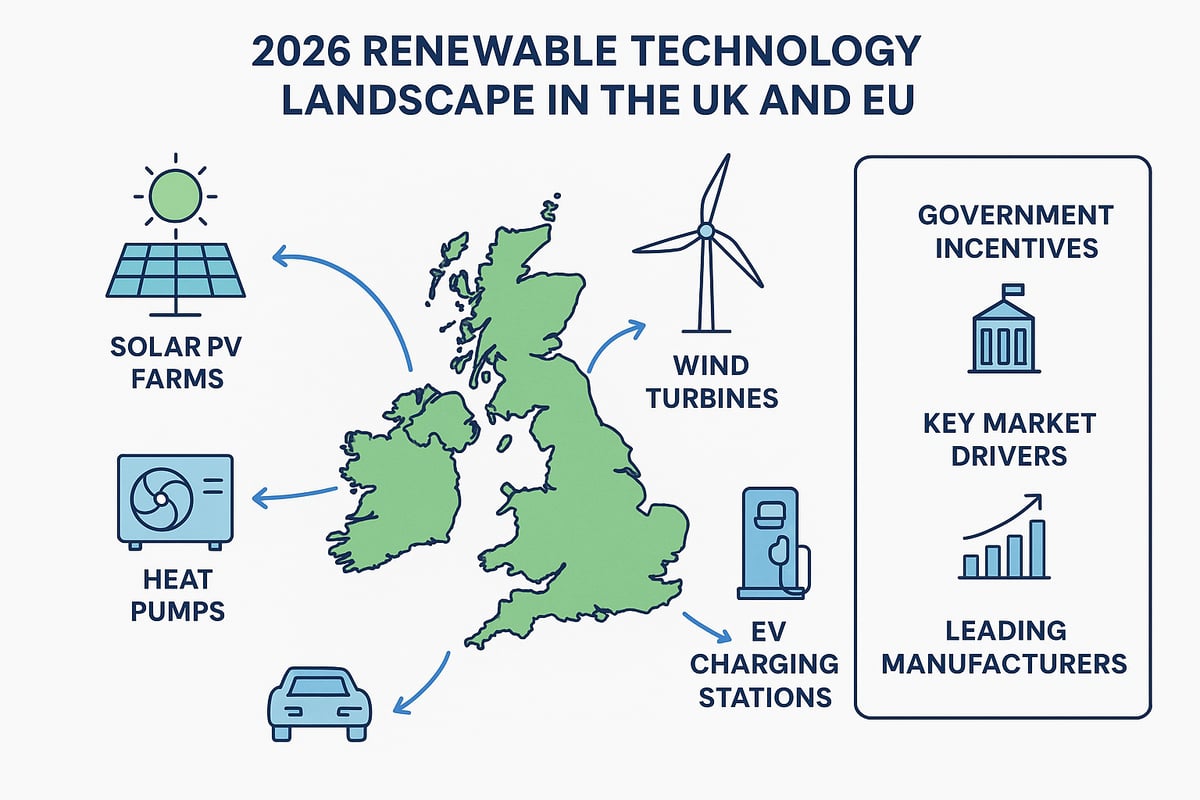
Across the UK and EU, renewable technology solutions are rapidly advancing. Solar PV and wind power have seen record growth, with UK renewable electricity surpassing 50% of total generation in 2024, according to UK renewable electricity surpasses 50% in 2024. This momentum is expected to continue, with UK solar capacity exceeding 15 GW in 2023 and forecasts suggesting it will double by 2026.
Homeowners and businesses are adopting renewable technology solutions at unprecedented rates. The integration of smart grids and IoT devices enables more efficient energy management, while electrification is transforming both heating and transport sectors. The UK government’s 2030 net-zero targets are a major catalyst, encouraging faster uptake and investment.
Another important trend is the rise of local energy communities and peer-to-peer trading. These models allow participants to generate, share, and sell renewable energy directly, fostering energy independence and community resilience.
Several factors are driving the adoption of renewable technology solutions. The cost of solar PV modules has dropped by over 80% since 2010, making clean energy more affordable than ever. Government initiatives, such as the Boiler Upgrade Scheme, Smart Export Guarantee, and VAT reductions, are further incentivising uptake.
Despite these positives, there are still barriers to overcome. Grid connection delays can slow project timelines, while upfront investment remains a challenge for some property owners. Skills shortages in the renewable sector also pose risks to scaling up installations quickly.
Public awareness and climate action movements continue to boost demand for renewable technology solutions. Increased media coverage and educational campaigns have made sustainability a priority for households and businesses alike.
The renewable technology solutions market is shaped by both global manufacturers and local specialists. Leading companies like Tesla (battery storage), Mitsubishi (heat pumps), and SMA (inverters) are setting benchmarks for performance and reliability. They are joined by a growing network of accredited installers who deliver tailored solutions across the UK.
Technological breakthroughs are accelerating progress. Perovskite solar cells offer higher efficiency at lower costs, while advanced hydrogen electrolysers promise cleaner fuel for industry and transport. Local and national installers play a pivotal role, ensuring these innovations reach homes and businesses safely and efficiently.
In summary, the 2026 renewable technology solutions landscape is defined by innovation, policy support, and a growing commitment to sustainability. As costs fall and technology advances, more people than ever can benefit from clean, reliable energy.
Unlocking the benefits of renewable technology solutions in 2026 means understanding how modern systems work together to create a sustainable, efficient, and cost-effective energy future. This section explores the core options transforming UK homes and businesses, from advanced solar panels to integrated smart controls.
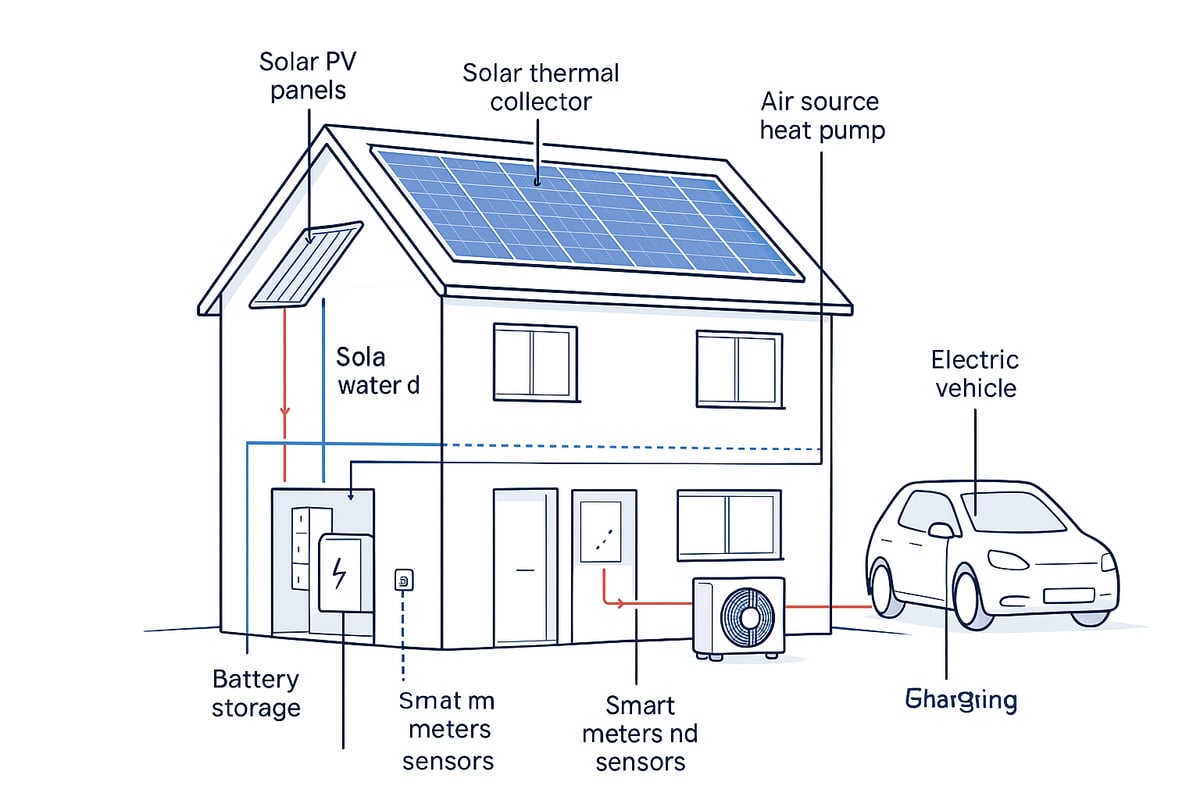
Solar PV systems are at the heart of renewable technology solutions, converting sunlight directly into electricity for homes and businesses. Modern panels now exceed 23% efficiency, thanks to innovations like bifacial modules that capture sunlight from both sides. This leap in technology means UK households can save up to £1,200 per year, while contributing to national decarbonisation targets.
A key advantage is the integration of battery storage, which allows excess solar energy to be stored for use during evenings or cloudy periods. This boosts self-consumption rates and can bring households close to energy independence. For those seeking even greater autonomy, off-grid solar power solutions offer the flexibility to generate and manage all your own electricity without relying on the grid.
With solar PV, renewable technology solutions deliver immediate and long-term savings, making them an essential choice for 2026.
Air source and ground source heat pumps are key renewable technology solutions for low-carbon heating in the UK. These systems work by extracting heat from the air or ground and transferring it indoors, achieving efficiencies (COPs) above 4.5 in the latest models.
Heat pumps are suitable for most property types, especially when combined with good insulation. Financial support is available, with grants up to £7,500 through the Boiler Upgrade Scheme, making installation more affordable.
A real-world example: A family in Yorkshire saw their heating bills drop by 50% after switching to an air source heat pump. By adopting these renewable technology solutions, households can cut both costs and carbon emissions significantly.
Solar thermal systems offer another dimension to renewable technology solutions, capturing sunlight to heat water for domestic use or swimming pools. Unlike solar PV, which generates electricity, solar thermal directly addresses hot water needs.
These systems are particularly effective for reducing energy bills, often cutting hot water heating costs by up to 60%. They can be combined with existing boilers or heat pumps for optimal efficiency.
Solar thermal technology is straightforward to install and maintain, making it a practical addition to many UK properties. By embracing these renewable technology solutions, homeowners can enjoy reliable hot water and lower running costs.
Energy storage is a vital component of renewable technology solutions, enabling users to maximise the value of their home-generated power. Modern lithium-ion batteries, along with emerging chemistries, now offer reliable options for both residential and commercial applications.
By storing surplus solar or wind energy, households can use more of their own power and reduce reliance on the grid. In some cases, battery storage enables up to 90% energy independence, protecting against rising electricity prices.
Energy storage also plays a crucial role in grid balancing, supporting demand response and the seamless integration of multiple renewable technology solutions. For those aiming for full energy autonomy, batteries are a smart investment.
Smart home energy management systems are transforming how renewable technology solutions work together. With the use of smart meters, sensors, and automated controls, households can monitor and optimise energy usage in real time.
Smart systems enable load shifting, which means running appliances when renewable generation is highest, leading to savings of 10–15% on energy bills. Demand response features allow users to automatically adjust consumption based on grid signals or tariffs.
These technologies bring convenience and transparency, ensuring that renewable technology solutions deliver maximum value and comfort for every home.
Integrating electric vehicle charging with renewable technology solutions is becoming standard practice for future-focused households. By pairing home solar PV and battery systems with EV chargers, users can power their vehicles with clean, low-cost electricity.
Emerging vehicle-to-grid (V2G) technology adds further value, allowing EV batteries to supply energy back to the home or grid when needed. This synergy supports both personal savings and wider energy transition goals.
As more drivers switch to electric vehicles, combining EV charging with renewable technology solutions offers a flexible, scalable pathway to a sustainable and resilient energy future.
Embarking on your journey with renewable technology solutions requires a strategic approach tailored to your property and goals. This step-by-step guide empowers you to assess, select, and integrate the right technologies, maximising both sustainability and cost savings. Whether you are a homeowner, property manager, or business owner, following these steps will help you create a clear, actionable renewable roadmap for 2026 and beyond.
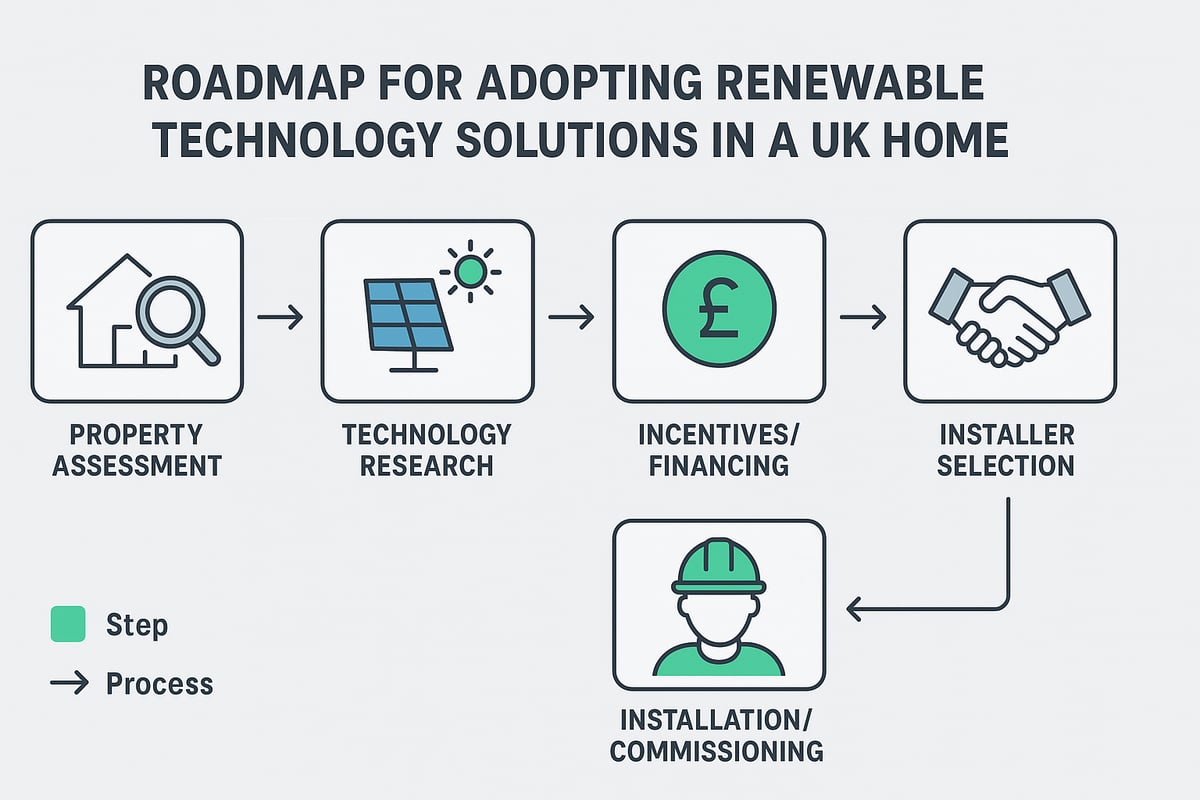
Begin by evaluating your current energy consumption and identifying where renewable technology solutions can have the biggest impact. Review your energy bills and note seasonal patterns. Consider your property's characteristics, such as roof orientation, available outdoor space, insulation quality, and existing heating systems.
A professional site survey provides valuable data on suitability for solar PV, heat pumps, or other systems. This initial assessment forms the foundation for your renewable technology solutions plan, ensuring you focus on upgrades that deliver both environmental and financial returns.
Once you understand your property’s needs, explore the full range of renewable technology solutions available. Compare the benefits of solar PV, air source and ground source heat pumps, solar thermal, and battery storage. Each technology offers distinct advantages depending on your goals and property type.
| Technology | Best For | Typical Savings |
|---|---|---|
| Solar PV | Electricity bills | Up to £1,200/year |
| Heat Pumps | Heating costs | 40–60% reduction |
| Solar Thermal | Hot water | 60% savings |
| Battery Storage | Energy independence | Up to 90% |
Research efficiency, compatibility, and future needs to select the renewable technology solutions that align with your priorities.
Understanding the financial landscape is critical when investing in renewable technology solutions. The UK government offers grants like the Boiler Upgrade Scheme (up to £7,500 for heat pumps), ECO4, and VAT relief on energy-saving materials. You may also benefit from payment schemes for exporting excess solar energy.
Explore UK government renewable energy incentives 2025 to learn about current and upcoming support. Financing options include green loans, leasing, or green mortgages, making renewable technology solutions more accessible and affordable for many households.
Choosing the right partner is essential for successful renewable technology solutions. Look for installers with MCS (Microgeneration Certification Scheme), RECC (Renewable Energy Consumer Code), and Gas Safe certifications. These accreditations ensure compliance with industry standards and eligibility for government incentives.
When comparing quotes, review technical details, warranties, and aftercare support. A reputable installer will tailor renewable technology solutions to your property and provide transparent, itemised proposals, helping you make an informed decision.
With your installer selected, the installation process for renewable technology solutions typically follows a structured timeline. It starts with equipment delivery and system setup, followed by professional installation and thorough commissioning checks. Your supplier will register systems for incentive eligibility and provide you with documentation.
Understanding the stages helps you manage expectations and ensures you meet all regulatory and incentive requirements. On completion, you will be ready to begin generating and saving with your new renewable technology solutions.
Ongoing monitoring and maintenance are vital for maximising the performance of your renewable technology solutions. Use smart apps and energy management systems to track real-time output and spot potential issues early. Schedule regular maintenance as recommended by manufacturers to protect warranties and system longevity.
As technology evolves, consider upgrading components or expanding your setup, such as adding energy storage or EV charging. This proactive approach ensures your renewable technology solutions remain future-ready and continue delivering value.
Unlocking the full value of renewable technology solutions requires more than simply installing one system. True savings and sustainability come from integrating multiple technologies, optimising your setup, and planning ahead for future needs. This section guides you through the essential strategies to maximise your investment, reduce costs, and ensure your home or business is ready for 2026 and beyond.
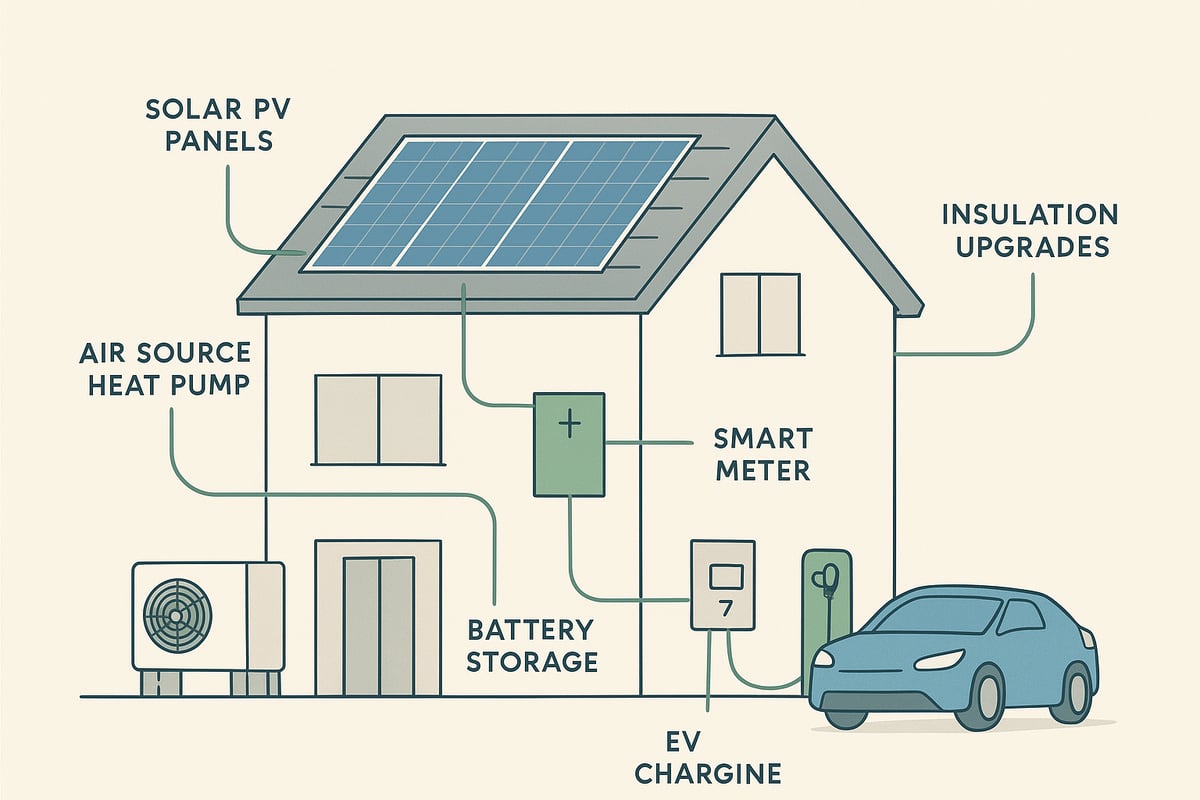
Integrating renewable technology solutions—such as solar PV, heat pumps, and energy storage—creates a powerful synergy. When these systems work together, they can supply most of your property’s energy needs, dramatically cutting costs. For example, solar panels generate electricity during the day, while a battery stores excess energy for evening use. Pairing this with a heat pump ensures efficient heating, even on colder days.
Combining these technologies can reduce annual energy bills by over 70% compared to traditional systems. Homeowners who add green energy storage options further increase self-consumption, making the most of their solar generation and minimising reliance on the grid.
The integration process is flexible. You can start with one technology and add others over time, building a robust energy ecosystem tailored to your needs.
Before investing in renewable technology solutions, it’s vital to address your property’s energy efficiency. Simple upgrades—like adding insulation, draught-proofing, and switching to LED lighting—can significantly reduce wasted energy and improve comfort.
Energy efficiency measures amplify the returns from your chosen technologies. Well-insulated homes require less heating, allowing heat pumps and solar thermal systems to operate more effectively. By combining efficiency upgrades with renewable energy heating systems, you lower your ongoing energy demand, ensuring every unit of renewable energy delivers maximum value.
A layered approach, starting with efficiency and then adding renewable technology solutions, provides the best long-term savings and environmental impact.
To get the most from renewable technology solutions, continuous monitoring and optimisation are essential. Smart meters and energy management platforms provide real-time data on generation, consumption, and storage. This information helps you adjust settings, shift loads, and identify opportunities for further savings.
Households using smart controls typically reduce energy bills by 10-15%. Setting up alerts for unusual patterns or system faults ensures any issues are quickly addressed. Over time, analysing performance data can guide future upgrades or highlight additional integration opportunities.
Effective monitoring not only safeguards your investment but also keeps your renewable technology solutions running at peak efficiency year-round.
Adopting renewable technology solutions delivers meaningful environmental benefits. A typical UK property can cut its carbon emissions by 2 to 4 tonnes per year through a combination of solar PV, heat pumps, and energy-efficient measures. This reduction supports both local community goals and national net-zero targets.
By choosing renewables, you contribute to cleaner air, reduced reliance on fossil fuels, and a healthier environment for future generations. Quantifying your CO2 savings provides tangible evidence of your impact and can inspire neighbours or business partners to follow suit.
Sustainability is not just about financial returns—it is about creating a legacy of positive change through renewable technology solutions.
The energy landscape is evolving rapidly. Planning your renewable technology solutions with scalability in mind ensures you are ready for new developments, such as electric vehicle integration or participation in community energy trading schemes.
Flexible system design allows you to add battery storage, upgrade your heat pump, or connect new devices as your needs change. This adaptability means your investment remains relevant and valuable, even as technology and regulations advance.
By futureproofing your setup, you protect both your savings and your ability to embrace the next generation of renewable technology solutions with confidence.
Navigating government policy is essential for anyone considering renewable technology solutions. The UK and EU are actively shaping a policy landscape that encourages clean energy adoption, making it easier for homeowners and businesses to invest in the future.
The UK government’s Net Zero Strategy sets ambitious targets for decarbonising homes, businesses, and transport by 2030. Policies like the Energy Security Bill and Clean Heat Market Mechanism are driving the shift towards renewable technology solutions, influencing how energy is produced and used.
Regulatory changes have streamlined planning and made it easier to install heat pumps and solar systems. For example, planning permission reforms have significantly boosted UK heat pump sales, helping more property owners access low-carbon heating. EU directives also encourage smart grids, energy storage, and electric vehicle infrastructure, supporting a more flexible, resilient energy system.
A wide range of financial incentives make renewable technology solutions more accessible. The Boiler Upgrade Scheme offers up to £7,500 towards air source and ground source heat pumps, helping to offset upfront costs. The Smart Export Guarantee rewards households for exporting excess solar electricity back to the grid.
VAT relief applies to energy-saving materials and installations, reducing the overall investment needed for technologies like solar PV, heat pumps, and battery storage. These grants and subsidies are regularly updated, so it is vital to check eligibility and application deadlines before starting a project.
Table: Key UK Incentives for Renewable Technology Solutions
| Incentive | Benefit | Applies To |
|---|---|---|
| Boiler Upgrade Scheme | Up to £7,500 grant | Air/ground source heat pumps |
| Smart Export Guarantee | Paid for exported solar electricity | Solar PV systems |
| VAT Relief | 0% VAT on energy-saving materials | Solar PV, heat pumps, batteries |
Ensuring quality and safety is crucial when adopting renewable technology solutions. Accredited installers must hold certifications like MCS (Microgeneration Certification Scheme), RECC (Renewable Energy Consumer Code), and TrustMark. These certifications guarantee that installations meet stringent standards for performance and safety.
Consumer protection is reinforced by clear dispute resolution processes and robust warranties. Homeowners should always verify installer credentials and request documentation before work begins. This approach minimises risk and ensures access to government grants.
Looking ahead to 2026 and beyond, several policy updates are expected to further accelerate the uptake of renewable technology solutions. Planned funding streams and pilot programmes will open new opportunities for integrating solar, storage, and heat pumps into more properties.
Ongoing reforms are likely to simplify processes and remove barriers for both residential and commercial projects. By staying informed and taking advantage of evolving incentives, property owners can maximise their savings and contribute to national sustainability goals.