
No products in the basket.

As 2026 draws near, the world faces a turning point in the journey to clean energy. The ability to store renewable power is now the key to unlocking its full potential and securing a stable, sustainable future.
This essential guide explores the latest renewable storage solutions, showing why they matter and how they are transforming the energy landscape. You will find practical insights for homeowners, businesses, and energy professionals, from types of storage and cutting-edge advancements to integration strategies, economic factors, and future trends.
Take action now to understand renewable storage solutions and position yourself for a smarter, greener tomorrow.
As the world accelerates its shift towards clean energy, the demand for renewable storage solutions has never been greater. The integration of solar, wind, and other renewables is transforming global electricity systems, but also exposing critical gaps in how we store and manage energy.
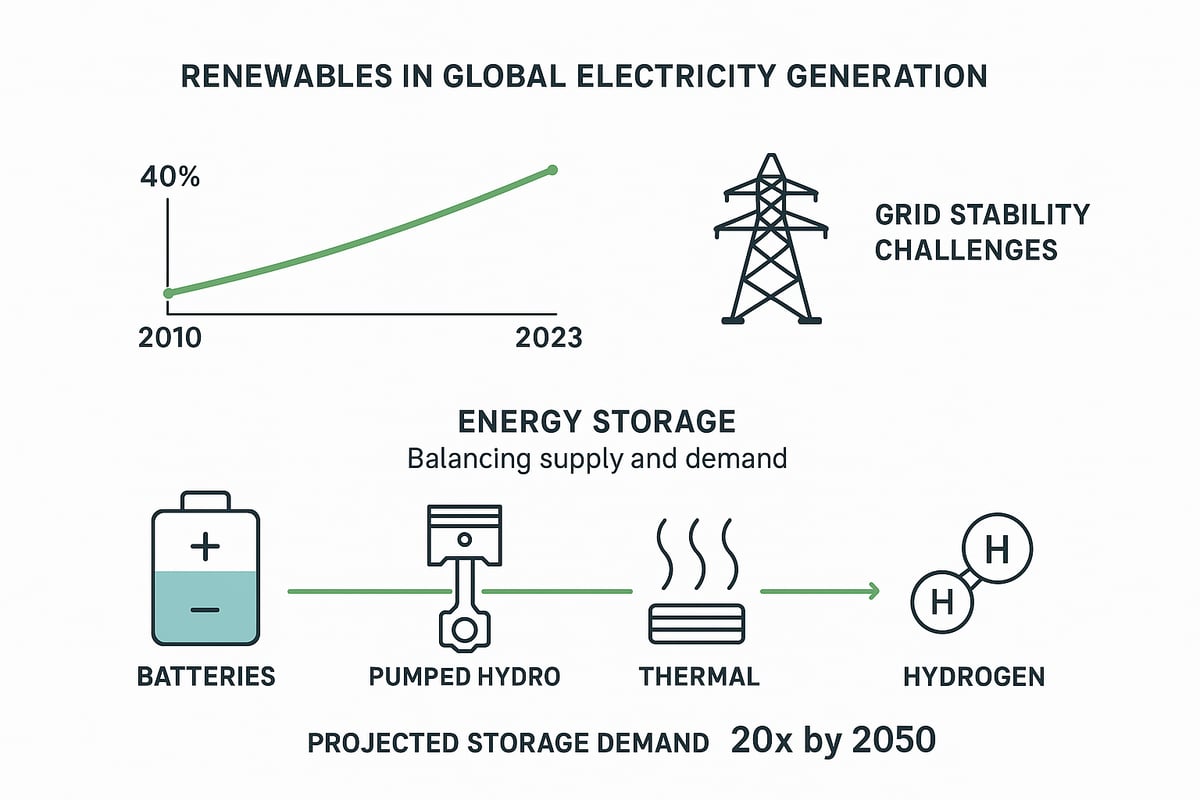
In recent years, renewable energy has seen extraordinary growth. Solar and wind capacity has surged worldwide, driven by falling costs and ambitious climate targets. However, this rapid expansion introduces significant challenges for grid stability, as the output from these sources is inherently variable.
To address these fluctuations, renewable storage solutions are essential. Without effective storage, energy grids face supply and demand mismatches that can cause blackouts or force reliance on fossil fuels. In 2022, global CO2 emissions reached 36.8 gigatons, and projections indicate continued increases until at least 2050 unless decisive action is taken.
Governments are responding with robust policies and incentives. The European Green Deal and the US Inflation Reduction Act are notable examples, offering funding and regulatory support for both renewables and storage. Electrification trends, such as the rise of electric vehicles and heat pumps, add further pressure to grids, making renewable storage solutions even more critical.
China’s aggressive solar and wind deployment highlights both the opportunities and the strain on infrastructure. Meanwhile, the UK faces ongoing concerns about grid stability as it phases out coal and gas. Globally, energy storage demand is poised to grow by 40% year-on-year in 2026, driven by renewables and the rise of data centres, as reported in Global energy storage demand projected to rise 40% year-on-year in 2026. This trend underscores the urgent need for scalable renewable storage solutions to meet both reliability and climate goals.
The economic case for renewable storage solutions is compelling for both consumers and businesses. By storing excess energy during periods of high generation and using it when demand peaks, users can lower electricity bills and reduce exposure to volatile fossil fuel prices.
For businesses, efficient use of renewable storage solutions supports energy independence and long-term savings. Homeowners benefit from increased self-consumption and the ability to participate in demand response schemes.
Environmental benefits are equally significant. Renewable storage solutions help cut emissions, improve air quality, and support the transition to a low-carbon economy. Successful deployments, such as community battery projects and large-scale grid storage, have demonstrated real-world improvements in reliability and sustainability.
Ultimately, the growing need for renewable storage solutions is driven by a combination of policy support, economic incentives, and the urgent imperative to decarbonise. As we approach 2026, storage will remain central to ensuring a resilient, affordable, and sustainable energy future for all.
As we approach 2026, renewable storage solutions are evolving rapidly to meet the demands of a cleaner grid. Understanding the different technologies available is vital for anyone looking to maximise the benefits of renewables. This section explores the main types of renewable storage solutions, their unique features, and how they fit into a sustainable energy system.
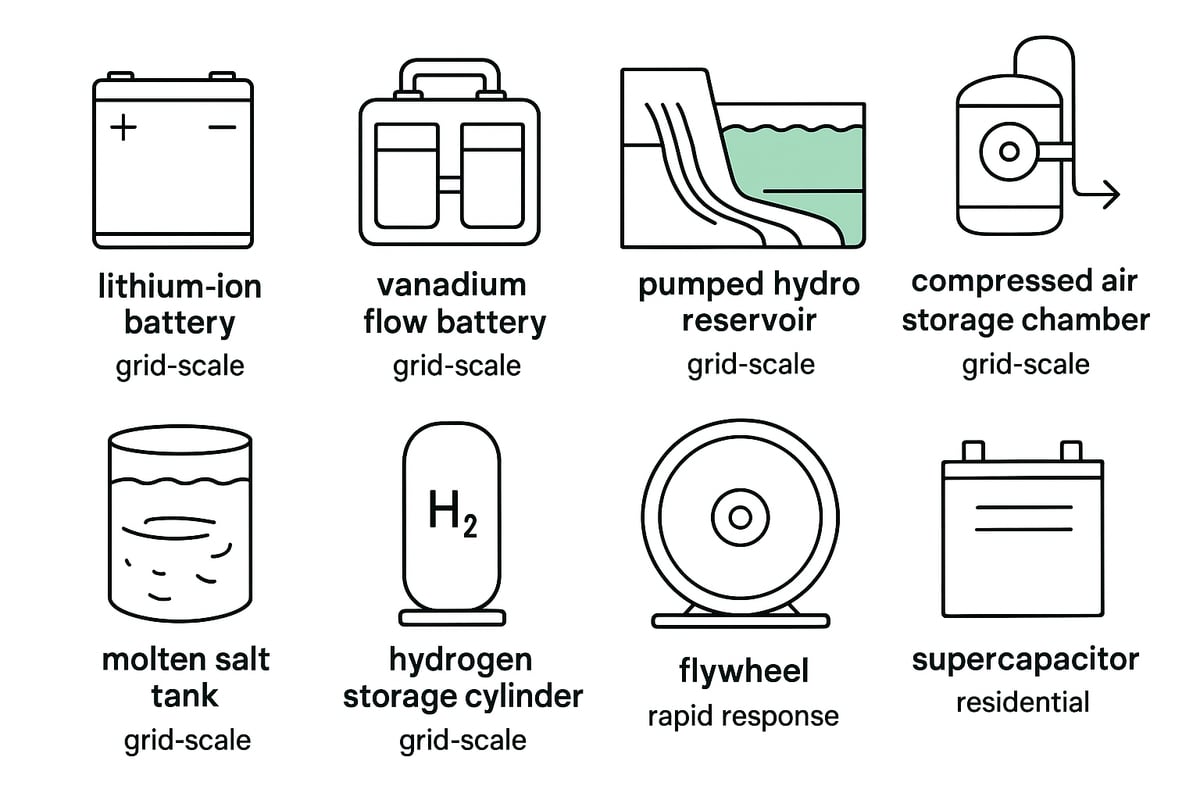
Batteries are at the heart of many renewable storage solutions, offering flexibility for both grid-scale and residential applications. Lithium-ion batteries continue to dominate due to their high energy density and falling costs. However, concerns over raw material sourcing and lifespan are driving innovation.
Flow batteries, such as vanadium redox and zinc-bromine, are gaining traction for large-scale projects. They provide long cycle lives and can be scaled easily, making them ideal for supporting renewables on the grid.
Emerging technologies like solid-state, sodium-ion, and metal-air batteries promise improvements in safety, energy density, and resource availability. Each technology comes with its own balance of cost, lifespan, and performance, as summarised below.
| Battery Type | Energy Density | Lifespan | Cost | Advantages | Disadvantages |
|---|---|---|---|---|---|
| Lithium-ion | High | 10-15 years | Moderate | High efficiency, scalable | Raw material constraints |
| Nickel-Cadmium | Medium | 15-20 years | Higher | Robust, long life | Toxicity, cost |
| Sodium-ion | Medium | 10-15 years | Lower | Abundant materials, safe | Lower density |
| Solid-state | Very High | >15 years | Emerging | High safety, long life | High cost, early stage |
For a deeper dive into green energy storage methods, see Green energy storage options.
Mechanical systems play a crucial role in renewable storage solutions by harnessing physical forces. Pumped hydro storage remains the largest form of grid-scale storage, using excess electricity to pump water uphill and releasing it when needed. While effective, it is limited by geography.
Compressed air energy storage (CAES) stores energy by compressing air in underground caverns, releasing it to drive turbines when demand spikes. Recent innovations are making CAES more efficient and suitable for a wider range of sites.
Flywheel and gravity-based storage systems provide rapid response and high cycling capability. These are particularly useful for balancing short-term fluctuations from solar and wind generation.
Europe's adoption of pumped hydro and new CAES facilities demonstrates the ongoing importance of mechanical solutions in the renewable transition.
Thermal technologies are increasingly integral to renewable storage solutions, especially where heating and cooling are major energy users. Molten salt storage is widely used in concentrated solar power (CSP) plants, storing heat for electricity generation after sunset.
Phase change materials (PCMs) and sensible heat storage are being deployed for building heating and industrial processes. These systems can absorb and release large amounts of energy, helping balance supply and demand.
A notable example is the use of molten salt in large-scale solar plants, which enables several hours of continuous power supply even without sunlight. As electrification increases, thermal storage is expected to play a greater role in grid support and decarbonisation.
Chemical storage options are emerging as promising renewable storage solutions for long-duration needs. Hydrogen, produced from surplus renewable electricity, can be stored and later converted back to power or used in industry. Synthetic natural gas, made from hydrogen and captured carbon, offers further flexibility.
Efficiency challenges remain, but ongoing research is improving round-trip performance. Hybrid systems, which combine batteries, thermal, and mechanical storage, are being deployed in microgrids and remote communities for greater reliability and resilience.
For example, hybrid installations can ensure power continuity during outages and optimise renewable generation throughout the day and night.
Electrical storage technologies such as supercapacitors and superconducting magnetic energy storage (SMES) deliver rapid response times, making them ideal for frequency regulation and grid balancing. While their energy density is relatively low, their ability to charge and discharge almost instantly supports the stability of renewable storage solutions.
These systems are often used in conjunction with other storage types for specialised roles within the power network. As smart grids and automation advance, the role of electrical storage in maintaining power quality is set to grow.
In summary, the landscape of renewable storage solutions in 2026 is diverse and dynamic. Each technology brings unique strengths to the table, supporting the global shift to sustainable energy.
Selecting the right renewable storage solutions is a pivotal decision for homeowners, businesses, and energy professionals. With evolving technologies and diverse options available, making an informed choice requires a clear understanding of technical, economic, and environmental factors.
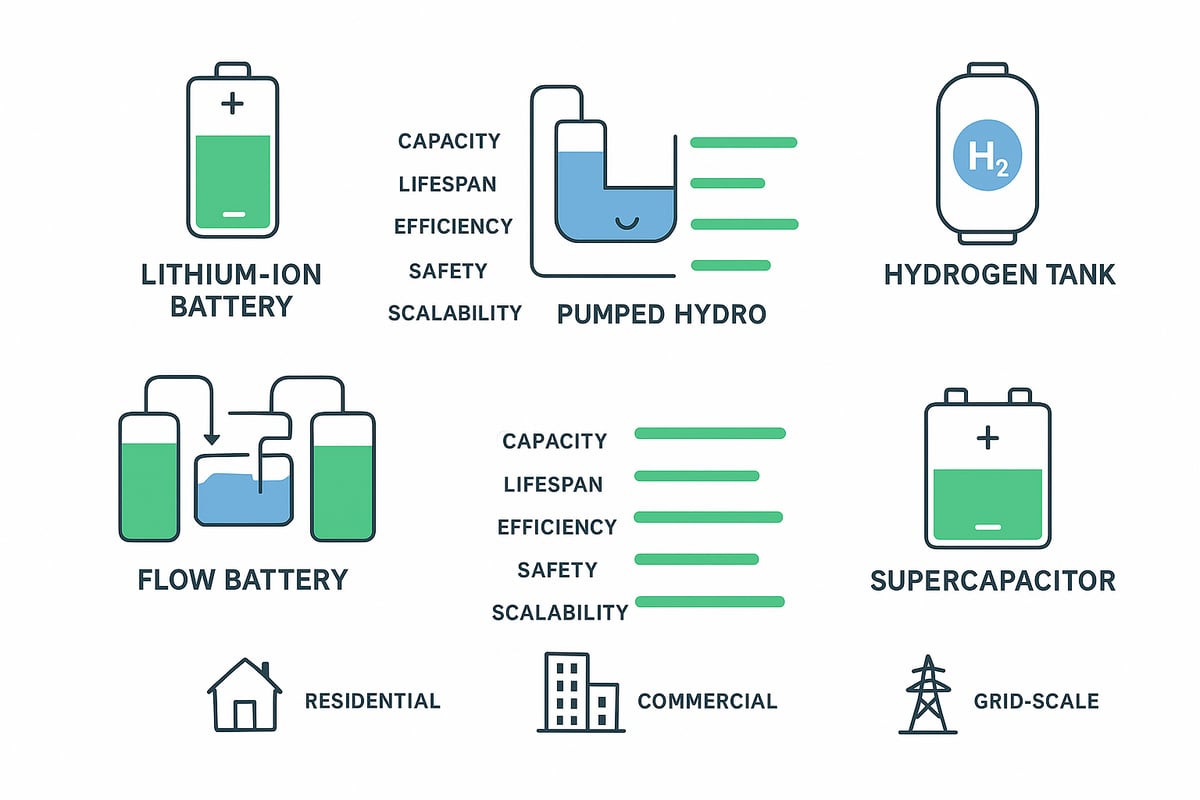
When evaluating renewable storage solutions, technical performance is paramount. Key metrics include capacity (how much energy can be stored), power output (how quickly energy can be delivered), round-trip efficiency, and response time. These factors determine if a storage system aligns with your specific needs.
For instance, lithium-ion batteries are popular for residential and small commercial use due to their high efficiency and modularity. Flow batteries, on the other hand, excel in grid-scale applications where longer duration is essential.
Below is a comparison of common battery types:
| Technology | Energy Density | Lifespan (cycles) | Efficiency | Safety | Scalability |
|---|---|---|---|---|---|
| Li-ion | High | 3,000–7,000 | 90%+ | Good | High |
| Ni-Cd | Moderate | 1,500–2,500 | 70–80% | Moderate | Moderate |
| Sodium-ion | Moderate | 2,000–3,000 | 85% | Good | Emerging |
| Solid-state | Very High | 7,000+ | 95% | Excellent | Developing |
Choosing renewable storage solutions also involves considering lifespan, maintenance requirements, and safety standards. Scalability is vital if future energy needs are expected to grow. For more insights into battery technology and system design, visit Solar battery storage systems.
Assessing the economic impact of renewable storage solutions is crucial. Initial capital expenditure (CAPEX) can be significant, but operational expenditure (OPEX) is often lower compared to fossil-fuel alternatives.
Key financial considerations include:
Renewable storage solutions can deliver substantial cost savings over time, especially as energy prices fluctuate. Businesses benefit from reduced peak demand charges, while homeowners gain protection from grid outages and price volatility. Analysing both short-term costs and long-term returns ensures a balanced approach to investment.
The environmental footprint of renewable storage solutions is increasingly important. Resource availability, such as lithium, vanadium, or rare earth elements, influences the sustainability of various technologies.
Recycling and end-of-life management are key to reducing waste and maximising resource use. Many manufacturers now offer take-back schemes and support circular economy practices.
Community acceptance also plays a role. Well-planned renewable storage solutions can create jobs, improve air quality, and boost local economies. Engaging stakeholders early and considering social benefits helps ensure project success and support for future expansion.
Integrating renewable storage solutions with modern energy systems is becoming essential for achieving energy independence and supporting the transition to clean power. Whether you are a homeowner, business leader, or energy professional, understanding the step-by-step process ensures you unlock the full benefits of emerging technologies while future-proofing your energy infrastructure.
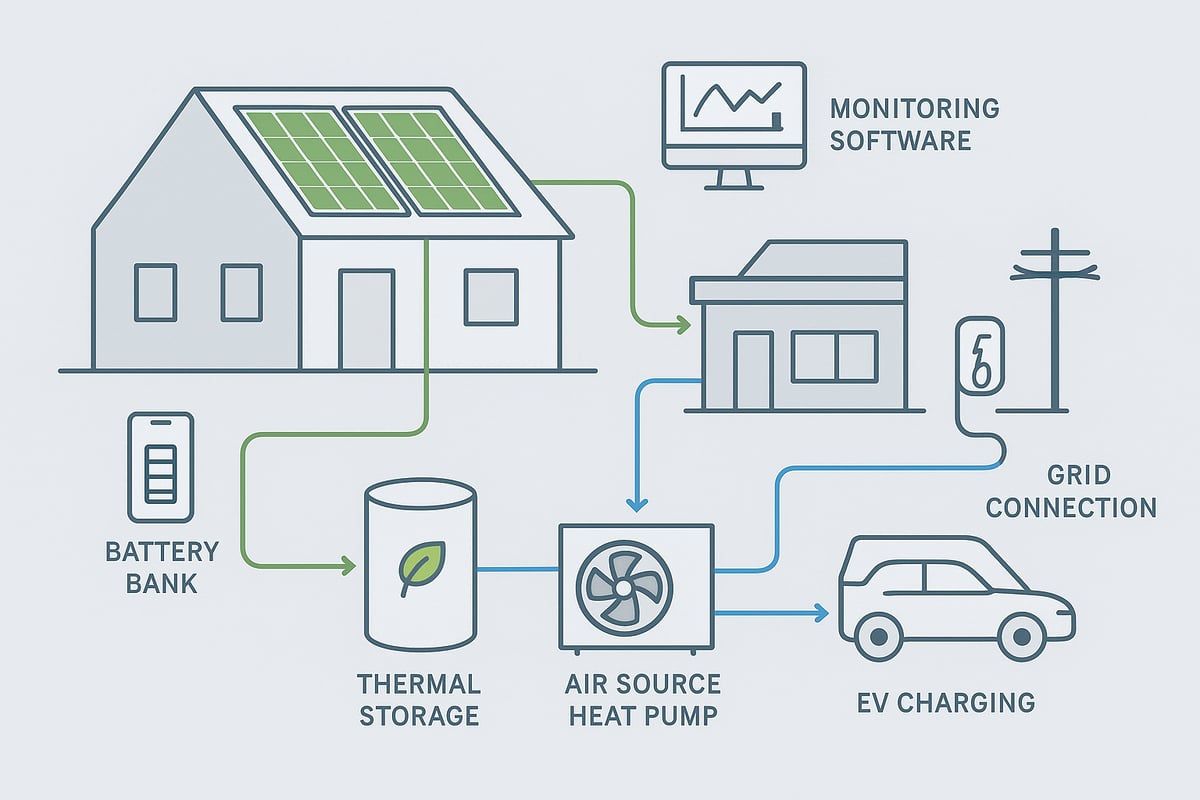
The first step in integrating renewable storage solutions is a thorough assessment of your energy needs. Accurate load profiling helps you understand daily and seasonal consumption patterns, pinpointing when and how much energy you use.
Site-specific factors play a major role. Consider available space for battery or thermal storage units, roof orientation for solar PV, and the suitability of your property for technologies like heat pumps. Evaluate your current infrastructure, including electrical wiring, fuse boxes, and available land for larger systems.
Grid connection and export/import limitations must also be reviewed. Some locations may face restrictions on how much energy can be fed back into the grid, affecting the sizing and operation of your renewable storage solutions. Always consult a certified professional to ensure you meet local regulations and maximise system compatibility.
Designing an efficient system requires careful selection and sizing of renewable storage solutions to match your needs. Choose technologies based on capacity, power output, and compatibility with existing or planned renewables, such as solar panels or wind turbines.
Hybridisation is a powerful strategy. By combining battery storage with thermal units or integrating heat pumps, you can increase reliability and flexibility. For a deeper look at how heating systems interact with storage, explore this Renewable heating system overview.
Smart controls and advanced software are crucial for maximising the performance of renewable storage solutions. These platforms automate energy flows, prioritise self-consumption, and allow for real-time monitoring. Always design with future expansion in mind, ensuring modularity and scalability as your needs grow.
Smooth installation of renewable storage solutions starts with ensuring compliance with regulatory and certification standards. In the UK, this means working with installers who hold accreditations such as MCS for solar and battery systems, or Gas Safe for hybrid heating.
Best practices for installation include detailed site surveys, clear timelines, and transparent communication between you and your installer. After commissioning, regular monitoring is essential. Modern systems offer remote diagnostics and alerts, making it easier to spot issues early.
Maintenance requirements depend on the chosen technology. Batteries may need periodic checks, while thermal systems require fluid changes or insulation reviews. Always verify warranty terms and schedule annual inspections to keep your renewable storage solutions performing optimally.
U and I Renewables provide a comprehensive suite of services to help homeowners and businesses integrate renewable storage solutions with ease. Offerings include solar PV, battery storage, air source heat pumps, and fully integrated systems designed for maximum efficiency.
Homeowners can take advantage of government grants worth up to £7,500, making renewable storage solutions more accessible and cost-effective. Real-world benefits include achieving up to 90% energy self-sufficiency, significant reductions in energy bills, and tailored support throughout the project lifecycle.
Certified installation and ongoing professional maintenance are vital for system longevity and safety. With expert guidance from U and I Renewables, you can confidently embrace renewable storage solutions, knowing your investment is secure and your path to sustainability is clear.
The landscape of renewable storage solutions is evolving rapidly as we move towards 2026. Advances in technology, policy, and sustainability are shaping a market that is more dynamic, efficient, and environmentally responsible than ever before. Understanding these trends is vital for anyone looking to stay ahead in the transition to clean energy.
Innovation is at the heart of the next generation of renewable storage solutions. Solid-state batteries are gaining attention for their improved safety, higher energy density, and longer lifecycle compared to traditional lithium-ion batteries. As commercial readiness approaches, these batteries promise to revolutionise storage for both grid and residential applications.
Flow batteries, such as vanadium redox and zinc-bromine types, are also making significant strides. Their ability to provide long-duration storage with minimal degradation makes them ideal for large-scale deployment. In the UK, cryogenic energy storage is emerging as a promising alternative. Facilities like Highview Power’s 50MW/300MWh cryogenic energy storage facility in the UK demonstrate the potential for storing energy in the form of liquid air, offering scalability and minimal environmental impact.
Artificial intelligence is increasingly integrated into renewable storage solutions. AI optimises energy dispatch, predicts demand, and automates maintenance, leading to greater efficiency and reliability. Decentralised storage models, including community batteries and peer-to-peer trading, are empowering local energy resilience and flexibility.
| Technology | Key Advantages | Typical Applications |
|---|---|---|
| Solid-state | High safety, density | Residential, grid, EVs |
| Flow batteries | Long duration, stable | Grid-scale, renewables backup |
| Cryogenic | Scalable, low impact | Grid support, large installations |
| AI management | Predictive, adaptive | All storage systems |
The future of renewable storage solutions will be defined by these emerging technologies, each addressing unique challenges in the energy transition.
The market for renewable storage solutions is expanding at an unprecedented pace. According to Europe’s battery storage capacity expected to surpass 50 GW by 2030, Europe's battery storage boom is being driven by the rapid adoption of renewables and the pressing need for grid stability. This surge is mirrored globally, with new investments and large-scale projects becoming more common.
Policy developments play a crucial role in accelerating the deployment of renewable storage solutions. Governments are updating grid codes, expanding demand response programmes, and offering incentives to support both innovation and adoption. The Deloitte’s 2026 Renewable Energy Industry Outlook highlights how regulatory frameworks and market mechanisms are evolving to integrate storage more seamlessly with renewables.
Public and private investment in research and deployment is rising, helping to overcome barriers such as upfront costs and market fragmentation. Flexibility markets, where storage providers offer grid-balancing services, are opening new revenue streams and making renewable storage solutions more economically attractive.
As these trends continue, businesses and homeowners will find it increasingly viable to participate in the transition to clean, flexible power.
Sustainability is a key driver behind the latest renewable storage solutions. Advances in battery recycling and second-life applications are reducing waste and extending the lifespan of critical materials. Companies are developing closed-loop systems, especially in Europe and the UK, to ensure that batteries are reused or recycled at the end of their service life.
Sustainable sourcing is also gaining momentum. Manufacturers are prioritising transparent supply chains and ethical extraction of materials like lithium and vanadium. This focus supports both environmental protection and long-term resource availability.
The circular economy approach is being integrated into the design of renewable storage solutions from the outset. Products are now engineered for easy disassembly, repair, and recycling. Community engagement and education are helping to build acceptance for these systems, while creating new jobs in green industries.
Looking ahead, the combination of innovation, supportive policy, and sustainability initiatives will ensure that renewable storage solutions remain at the forefront of the global energy transformation.
The path to widespread adoption of renewable storage solutions is not without obstacles. As the sector matures, stakeholders face a range of technical, economic, and social challenges. Understanding these barriers, and how to overcome them, is central to achieving a resilient and sustainable energy future.
Renewable storage solutions must overcome significant technical and infrastructure challenges before they can be deployed at scale. Complexities in grid integration are a primary concern, with legacy networks often struggling to accommodate decentralised energy flows and bidirectional power movement. Interoperability between new and existing systems frequently requires updated standards and robust certification processes.
Cybersecurity is an emerging risk as storage systems become more connected and reliant on digital controls. Ensuring data privacy and system integrity is vital, especially for large-scale or critical infrastructure projects. These technical hurdles also extend to remote and off-grid environments, where site-specific constraints and limited access to skilled installers can hinder progress. For those seeking resilient options in such areas, off-grid solar power solutions offer an effective integration of renewable storage solutions tailored to unique site needs.
Ongoing research and the development of standardised protocols are crucial. Enhanced training for installers and operators can help address knowledge gaps, while real-world pilots continue to inform best practices for renewable storage solutions.
Despite falling technology costs, high upfront capital expenditure remains a significant barrier for widespread adoption of renewable storage solutions. Many potential users, from homeowners to businesses, struggle to secure affordable financing or navigate complex grant and incentive schemes. Market fragmentation, with varying regulations and limited product interoperability, can also impede investment and slow deployment.
Uncertainty in policy direction may deter long-term planning and commitment. Inconsistent incentives across regions create an uneven playing field, sometimes disadvantaging early adopters. Moreover, consumer awareness is often limited, with many end-users unaware of the economic and environmental benefits renewable storage solutions can provide.
To address these economic and market hurdles, clear information, accessible financing options, and harmonised policies are needed. Transparent payback calculations and demonstration projects can further build confidence among stakeholders considering renewable storage solutions.
Overcoming the challenges facing renewable storage solutions requires coordinated action across the sector. Public-private partnerships can accelerate innovation, pool resources, and share risk. Community-led initiatives, such as shared battery schemes or local microgrids, encourage engagement and foster acceptance.
Education and training for installers, operators, and consumers are essential for safe, efficient deployment. Governments and industry bodies should expand certification programmes and support knowledge exchange. Policymakers can help by streamlining regulations, ensuring stability in incentives, and prioritising research into sustainable materials and recycling.
Successful pilot projects highlight the potential of renewable storage solutions to deliver reliable, cost-effective energy. By learning from these examples and implementing collaborative models, the transition to a sustainable energy system will be both faster and more inclusive.