No products in the basket.
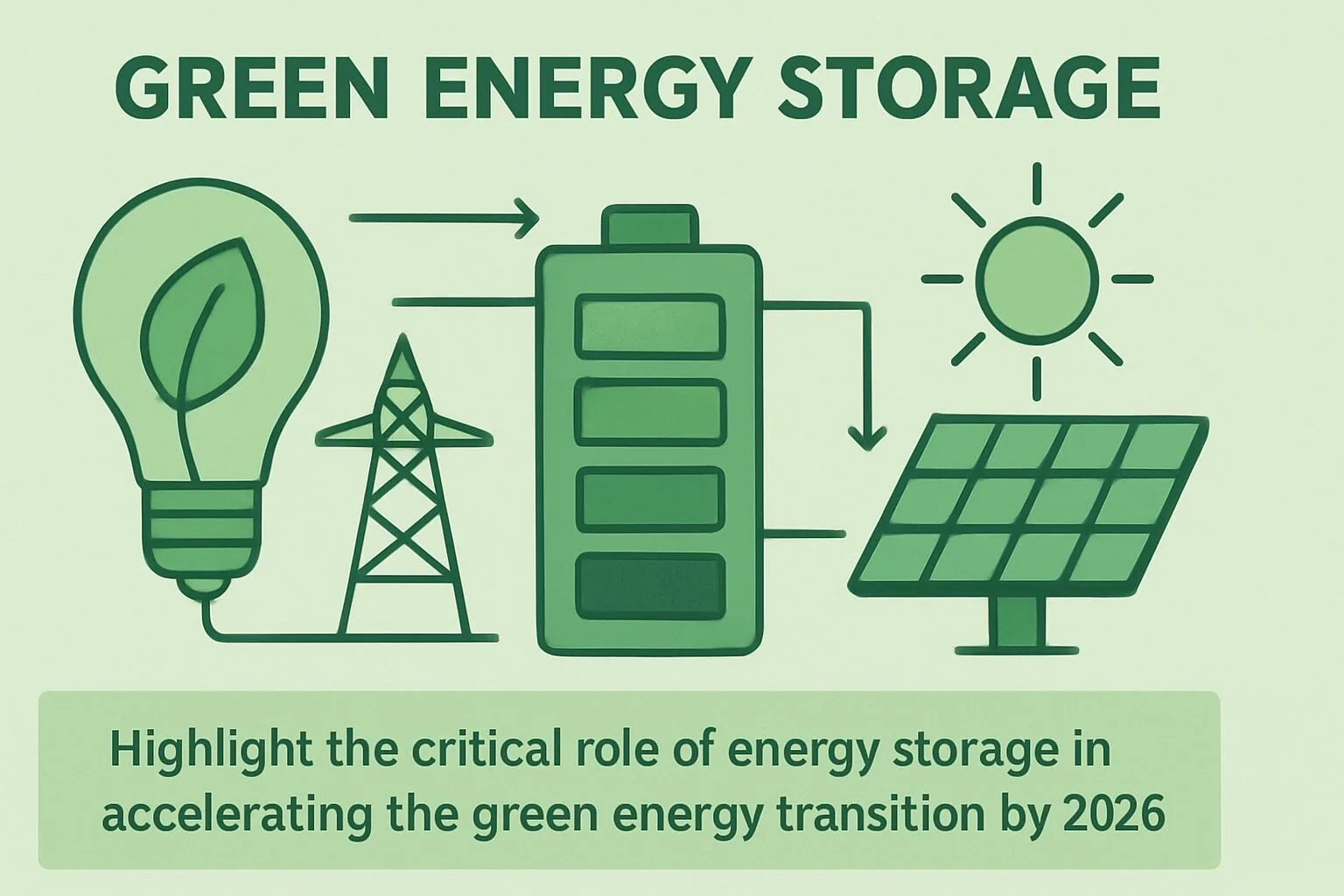
As the world races to combat climate change, the need for reliable green energy storage has never been more urgent. By 2026, advanced storage solutions will be key to unlocking the full potential of renewable resources and ensuring a stable, sustainable energy future.
This article explores seven groundbreaking green energy storage innovations set to transform sustainability and grid reliability. From next-generation batteries and hydrogen to gravity and thermal systems, discover how these technologies are paving the way for a resilient, low-carbon world.
The rapid growth of renewable energy sources is transforming the global electricity landscape. Wind, solar, and hydropower are now central to national energy strategies, but their variable output presents new challenges. As more homes and businesses rely on renewables, the need for robust green energy storage has become increasingly urgent.
One major challenge is intermittency. Solar panels only generate power when the sun shines, and wind turbines depend on the weather. This means supply can fluctuate throughout the day, sometimes producing more electricity than needed, and other times not enough. Green energy storage provides a crucial buffer, capturing surplus power and releasing it when demand spikes or generation drops.
Grid stability is another concern. Traditional grids were designed for steady input from fossil fuel plants, not the variable nature of renewables. In 2023, renewables accounted for over 40% of the UK's electricity generation, a clear indicator that advanced storage solutions are no longer optional but essential.
Energy security is at stake as well. Without adequate green energy storage, grids risk blackouts during peak demand or sudden drops in supply. Storage systems help maintain a reliable flow of electricity, supporting both households and critical infrastructure.
Meeting national decarbonisation goals depends on scalable solutions. As countries aim for net zero emissions by 2050, integrating storage with renewables is key to reducing reliance on fossil fuel peaker plants, which are expensive and carbon-intensive. According to a recent review on energy storage integration for net zero, hybrid systems that combine multiple storage technologies offer promising flexibility for future grids.
Economic benefits are also significant. By smoothing supply and demand, green energy storage can lower long-term costs for utilities and consumers alike.
Common Grid Challenges and Storage Needs
| Challenge | Impact | Storage Solution |
|---|---|---|
| Intermittency | Unpredictable supply | Battery, hydrogen |
| Peak demand | Blackout risk | Thermal, gravity |
| Grid integration | Stability issues | Smart/digital storage |
Government support is a primary driver of innovation in green energy storage. Policies and incentives are accelerating research, development, and deployment, making it easier for companies and consumers to invest in new technologies. Falling costs, especially for lithium-ion batteries, are making storage more accessible and widespread.
However, several barriers remain. Sourcing raw materials for batteries can be complex, and recycling infrastructure is still catching up with the rapid pace of deployment. Integration with existing grid systems poses technical challenges, requiring upgrades and careful management.
Smart grids and digital management systems are playing a growing role in maximising the benefits of green energy storage. By using real-time data and automation, these technologies balance supply and demand more efficiently, reduce waste, and support a higher share of renewables on the grid.
A notable example comes from California, where a surge in battery storage installations has helped the state manage its ambitious renewable energy targets. The lessons learned from this initiative are valuable for regions like Europe, which aim to scale up storage and renewables together.
As the transition to clean energy continues, overcoming these barriers will be vital. Collaboration among governments, industry, and communities will shape the evolution of green energy storage, ensuring it meets the demands of a sustainable future.
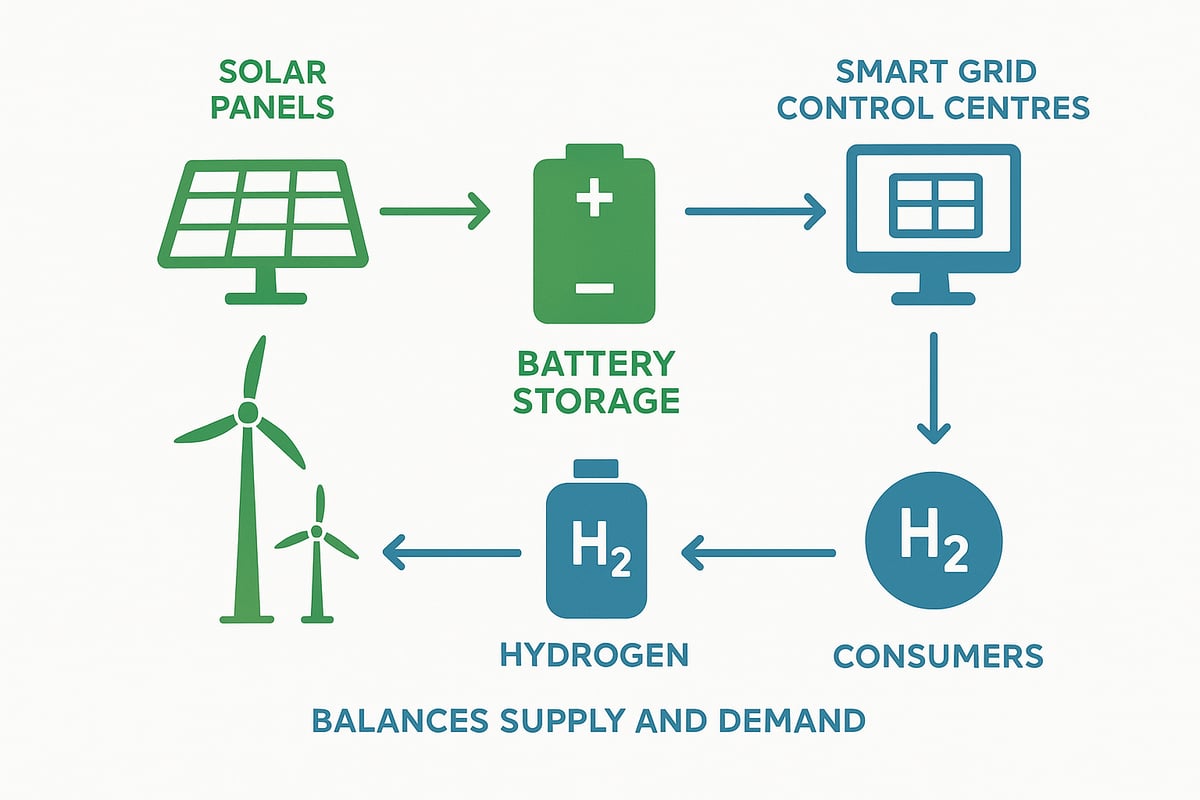
The future of green energy storage is rapidly evolving, presenting a wealth of new opportunities for sustainability and grid reliability. By 2026, a wave of advanced storage technologies will empower homes, businesses, and entire communities to maximise renewable energy use, drive decarbonisation, and ensure energy security. Let us explore seven of the most promising green energy storage solutions set to transform the energy landscape.
Integrated home energy storage systems are redefining how households and small businesses interact with renewable power. By combining solar PV, battery storage, and air source heat pumps, these solutions provide a seamless approach to green energy storage and consumption.
The core features include solar battery storage, which captures excess solar generation for use during evenings or cloudy periods. Air source heat pumps offer efficient heating and cooling, while solar PV and thermal systems supply clean electricity and hot water. Many providers, such as Integrated home energy storage systems, offer government grant support, making these technologies more accessible.
Users can achieve up to 90% electricity self-sufficiency, with potential annual savings reaching £1,200. The reduction in carbon footprint is substantial, supporting both sustainability and financial goals. Homeowners, landlords, and small businesses seeking to lower costs and embrace green energy storage will find these systems particularly beneficial.
Pros include government approval, access to grants up to £7,500, 24/7 customer support, and tailored installation services. The main drawback is the initial installation cost, though this is often offset by grants or financing options. These solutions are most suitable for property owners due to the installation requirements.
The unique selling point is the fully integrated, certified approach, delivered with local expertise and nationwide reach. By 2026, these systems will be at the forefront of residential green energy storage, setting a new standard for sustainability and resilience.
Flow battery systems represent a significant leap in green energy storage for both grid and industrial applications. These batteries use liquid electrolytes stored in external tanks, enabling scalable and long-duration energy storage without the limitations of traditional solid-state cells.
Key features include long cycle life, rapid response times, and straightforward scalability. Flow batteries are ideal for applications needing frequent deep discharges and minimal performance degradation over time. For instance, the UK’s 2024 RedT and CellCube installations are already powering microgrids and supporting remote sites.
Benefits of flow battery systems include enhanced safety, as they are non-flammable, and their robust design ensures minimal degradation even after thousands of cycles. This makes them particularly suitable for green energy storage integration, where reliability is essential.
Typical use cases span utility-scale renewables, microgrids, and off-grid communities. Durability, deep discharge capabilities, and low maintenance are key advantages. However, their lower energy density compared to lithium-ion and higher upfront costs remain challenges.
Looking ahead, advances in vanadium and organic flow chemistries are expected to improve cost and performance by 2026. Flow battery systems will continue to play a vital role in the transition to large-scale green energy storage, supporting the shift to renewables.
Green hydrogen storage is emerging as a versatile solution for seasonal and large-scale green energy storage needs. This approach involves using surplus renewable electricity to produce hydrogen through electrolysis, which is then stored for future use.
A major advantage is that hydrogen storage is entirely emission-free when produced from renewables. Projects like the UK’s HyDeploy, which blends hydrogen into the gas grid, and the European Union’s Hydrogen Backbone vision, demonstrate the growing momentum for this technology.
Green hydrogen enables the decarbonisation of sectors that are difficult to electrify, such as heavy industry and long-haul transport. It also supports grid balancing and provides reliable backup power during periods of low renewable generation.
The benefits include high energy density and versatile applications across multiple sectors. Pros include support for sector coupling and the ability to store energy for long durations. However, challenges remain, including energy losses during conversion, significant infrastructure requirements, and currently higher costs.
By 2026, falling electrolyser costs and expanding hydrogen infrastructure are expected to drive wider adoption. Pilot projects are scaling up, positioning green hydrogen storage as a cornerstone of future green energy storage strategies.
Solid-state battery technology is set to revolutionise green energy storage by offering enhanced safety, higher energy density, and longer lifespans compared to conventional lithium-ion batteries.
These next-generation batteries use solid electrolytes instead of liquid ones, which significantly reduces fire risk and allows for faster charging and discharging. Companies like QuantumScape and Solid Power are preparing pilot manufacturing lines slated for 2025 and 2026, indicating imminent commercial readiness.
The benefits of solid-state batteries include increased storage capacity, lighter weight, and improved durability. They are well-suited for electric vehicles, grid storage, and residential backup, supporting the expansion of green energy storage across different sectors.
Pros involve the potential for rapid mass adoption and improved sustainability due to safer materials. However, manufacturing challenges and high initial costs have limited commercial availability. These barriers are expected to diminish as automakers and battery firms collaborate to accelerate development.
By 2026, solid-state battery technology will likely become more accessible, unlocking new opportunities for green energy storage and contributing to the resilience of future energy systems.
Gravity-based energy storage offers a simple yet innovative approach to large-scale green energy storage. This method stores surplus electricity by lifting heavy weights, converting electric power into potential energy, which is released by lowering the weights to generate electricity when needed.
The main features include minimal degradation, long operational lifespans, and a low environmental footprint. Projects like Energy Vault’s commercial installations in Switzerland and China, as well as Gravitricity’s pilot in Scotland, highlight the growing viability of this technology.
Benefits encompass the absence of chemical waste, scalability from small installations to utility-scale systems, and fast response times for grid balancing. Use cases include smoothing renewable output, providing backup power, and supporting remote communities.
Key advantages are low operating costs, robust performance, and straightforward recycling. The primary limitation is the need for suitable geography or available space, along with lower energy density compared to batteries.
Looking to 2026, urban and industrial applications of gravity-based green energy storage are expected to expand, making this technology an attractive complement to other storage solutions.
Compressed Air Energy Storage (CAES) is a proven technology for grid-scale green energy storage. It operates by using excess electricity to compress air into underground caverns or high-pressure tanks, which is later released to drive turbines and generate power.
CAES systems offer large-scale storage capacity and long discharge durations, making them ideal for supporting renewable integration and managing peak demand. Notable projects include the UK’s Storegga and Highview Power developments, as well as Germany’s longstanding Huntorf plant.
The benefits of CAES include cost-effectiveness for grid-scale applications, long cycle life, and low operational expenses. It is particularly valuable for grid backup, peak shaving, and industrial power management.
Pros are scalability and proven reliability, while cons involve site-specific requirements, such as suitable geology, and lower round-trip efficiency compared to battery systems. Innovations in combining CAES with thermal storage and renewable sources are improving performance and flexibility.
By 2026, CAES is expected to play an increasingly important role in large-scale green energy storage, supporting the stability and sustainability of modern power systems.
Thermal Energy Storage (TES) is an adaptable solution for both heat and electricity, supporting green energy storage across a range of applications. TES systems store excess electricity as heat in materials like molten salts, concrete, or water, which can be converted back to power or used for direct heating.
Core features include high efficiency, the ability to provide long-duration storage, and dual use for heating and electricity generation. Examples include concentrated solar power plants in Spain and Morocco, as well as district heating pilots in the UK.
TES reduces grid demand and helps decarbonise heating, a major source of emissions. It is particularly beneficial for industrial processes, district heating networks, and balancing renewable output.
Advantages are cost-effectiveness, flexibility, and strong support for renewable integration. Drawbacks include heat losses over time and infrastructure needs, making TES most suitable for specific applications.
Looking ahead to 2026, hybrid systems that combine TES with batteries or hydrogen are expected to offer maximum flexibility, further enhancing the role of green energy storage in a net zero future.
The landscape of green energy storage is evolving rapidly, influenced by digital technology, sustainability initiatives, and robust policy support. As the world races to decarbonise, these trends are shaping how energy is stored, managed, and utilised. Understanding these forces is key to unlocking the full potential of green energy storage for a reliable, resilient future.
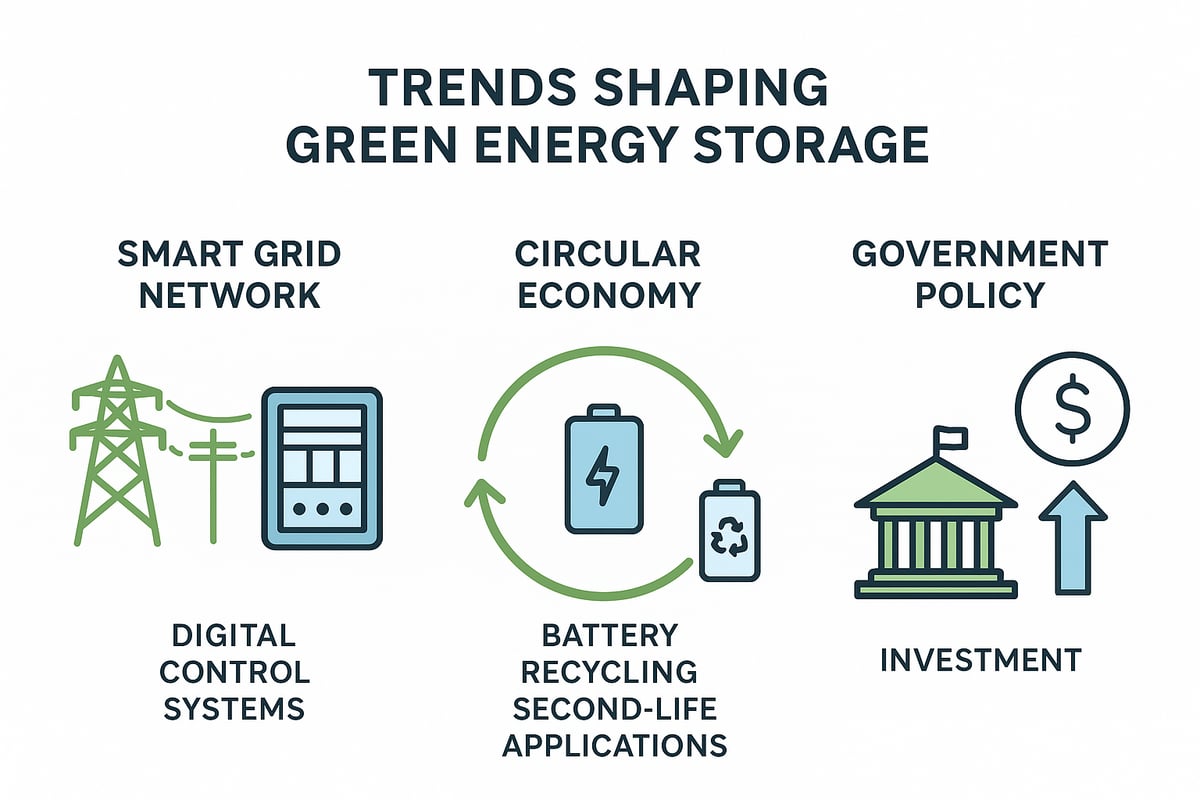
Digitalisation is revolutionising green energy storage by enabling smarter, more adaptive systems. Artificial intelligence, IoT devices, and advanced software are at the heart of this transformation. These technologies allow for real-time monitoring, predictive maintenance, and seamless integration of renewable sources.
For example, the National Grid ESO has deployed virtual power plants and demand response schemes, which balance supply and demand by harnessing distributed storage assets. By 2025, over 70 percent of new storage installations worldwide are expected to use smart grid technology, demonstrating the scale of this shift.
Smart control platforms also optimise solar battery storage solutions, ensuring homeowners and businesses make the most of their renewable generation. As digitalisation expands, green energy storage will become more efficient, reliable, and responsive to grid needs.
Sustainability is central to the future of green energy storage. With increasing focus on the circular economy, manufacturers and policymakers are prioritising recyclable materials, second-life batteries, and the reduction of environmental impact.
Recent UK and EU regulations require battery producers to take responsibility for recycling, ensuring valuable raw materials are recovered and reused. Projects like Nissan’s second-life EV battery initiative are turning used car batteries into home storage units, extending their lifespan and reducing waste.
Circular economy practices lower lifecycle emissions and resource consumption, making green energy storage a cornerstone of sustainable energy systems. As technology advances, these solutions will become even more integral to reducing the environmental footprint of storage infrastructure.
Policy frameworks and financial incentives are accelerating the adoption of green energy storage. The UK’s Contracts for Difference and the US Inflation Reduction Act are two examples of government initiatives driving large-scale deployment.
According to BloombergNEF, the global energy storage market is projected to reach 620 billion dollars by 2040, reflecting strong investment and market confidence. However, challenges remain, including policy uncertainty, permitting delays, and supply chain risks.
Collaboration across public, private, and community sectors is essential for overcoming these barriers. By aligning investment with innovation, the green energy storage sector can scale up to meet the demands of a low-carbon economy and deliver lasting benefits for society.
Across the globe, green energy storage is moving from concept to reality. Cities and communities are demonstrating how innovative technologies can solve real challenges, from urban grid stability to rural energy access. These projects showcase the versatility and impact of next-generation energy storage in diverse settings.
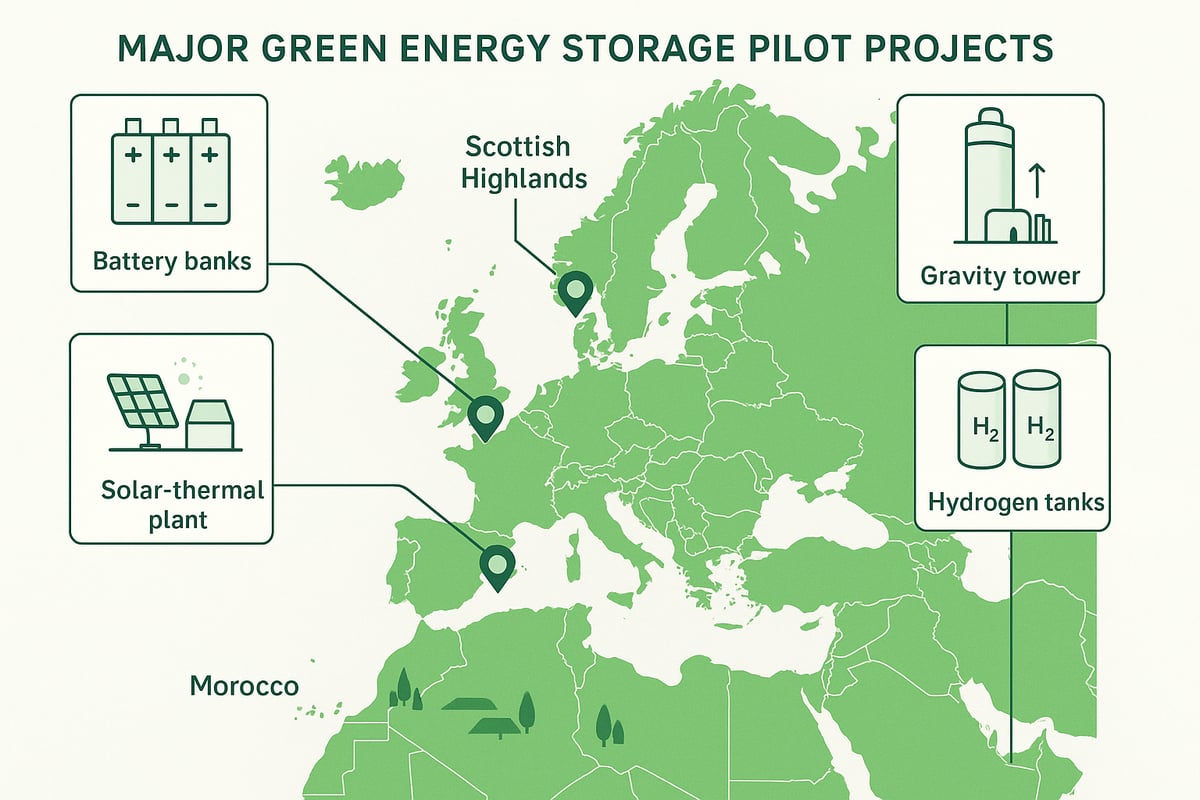
Urban centres and remote regions alike are embracing green energy storage to tackle unique challenges. In London, the 2024 “Big Battery” project delivers 100MW/200MWh of storage, supporting the city’s grid during peak demand. This initiative is a key step toward a more resilient urban energy landscape.
In the Scottish Highlands, Gravitricity’s gravity-based system is powering remote communities where traditional infrastructure falls short. Such projects highlight the adaptability of green energy storage for off-grid scenarios. Germany’s hybrid hydrogen and battery microgrids offer another example, providing rural resilience and reducing reliance on fossil fuels.
For those interested in distributed solutions, off-grid solar power solutions demonstrate how storage and renewables can be combined for energy independence in even the most isolated locations.
Global leaders are setting the pace for green energy storage innovation. California surpassed 5GW of battery storage in 2023, offering a blueprint for large-scale integration. Lessons from this milestone inform policies and inspire similar efforts in the UK and EU.
China’s rapid deployment of flow and gravity storage technologies is driving down costs and scaling up capacity. Meanwhile, Morocco’s Noor Ouarzazate solar-thermal plant, with molten salt storage, illustrates the potential for long-duration solutions in sun-rich regions.
Ambitious expansion plans, such as those described in the US Solar Group Seeks Major Energy Storage Expansion article, reinforce the global momentum behind green energy storage and the drive to secure renewable energy reliability.
Green energy storage is delivering tangible benefits at both community and commercial levels. Local job creation is a direct result of new installation and maintenance needs, while enhanced grid stability reduces the risk of blackouts. Community-led initiatives, like Bristol Energy Cooperative’s battery and solar schemes, empower residents and lower energy bills.
Commercial sectors are also seeing significant gains. Supermarkets and data centres use on-site green energy storage to manage peak loads and meet sustainability targets. These projects not only cut operational costs but also contribute to broader decarbonisation goals.
By investing in green energy storage, communities and businesses are building a more sustainable, resilient energy future that benefits everyone.