
No products in the basket.
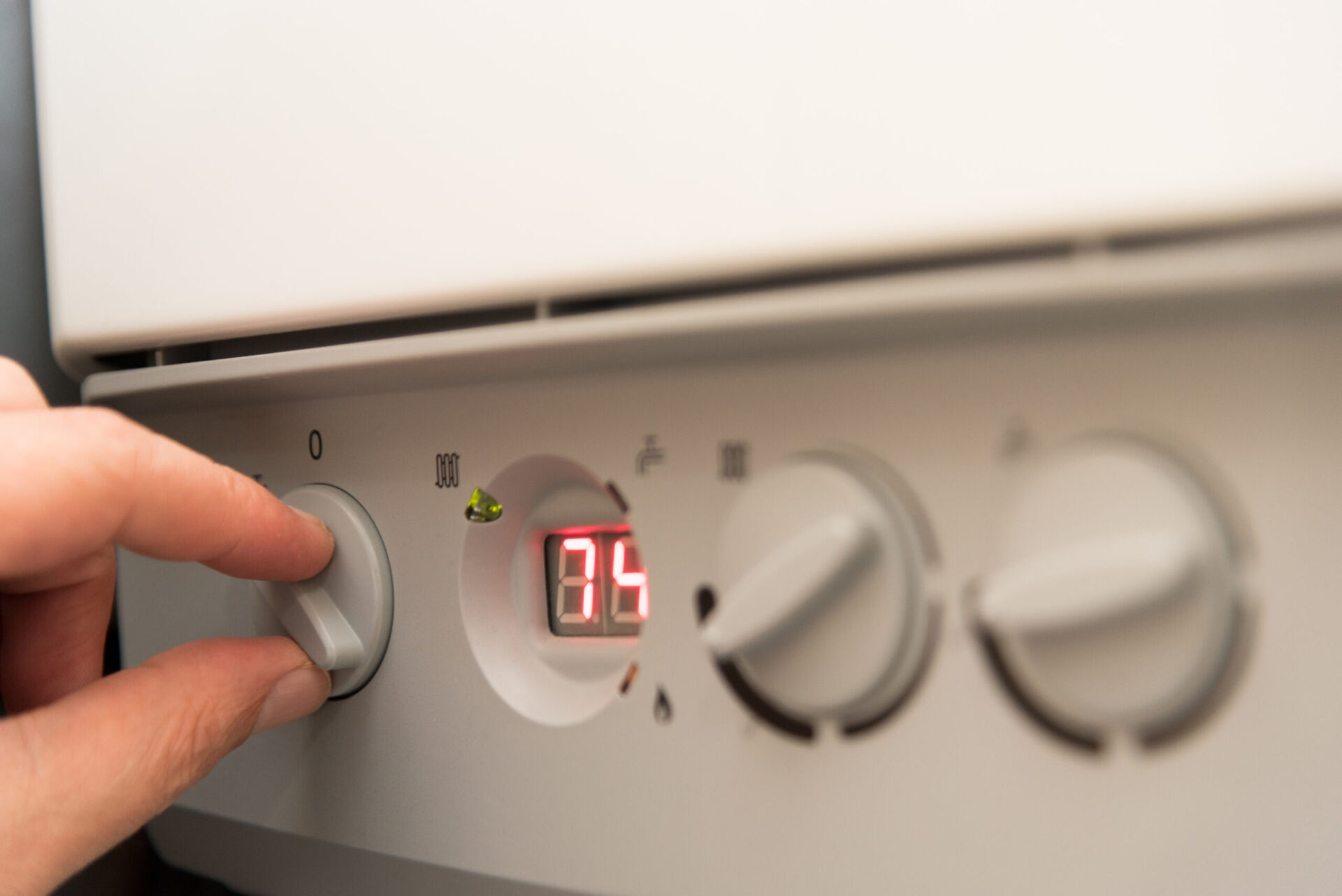

A combi boiler heats water the moment you turn on a tap and needs no hot water cylinder. A system boiler heats a cylinder of stored hot water that several taps and showers can draw on at once. In a combi vs system boiler decision, your house decides: one bathroom and good mains pressure usually points to a combi, while two or more bathrooms, or a household where people shower at the same time, usually points to a system boiler.
There is a second reason to think it through now. A system boiler keeps a cylinder in your home, and a cylinder is what an air source heat pump needs for hot water. If a heat pump is likely in the next ten years or so, that deserves as much weight as this winter’s showers. Below we cover how each boiler works, the three questions about your house that settle it, and the homes where a combi is the right call.
Both are gas boilers, both heat your radiators in the same way, and a modern one of either type is a condensing boiler. The difference is entirely in how they give you hot water.
A combi takes cold water straight from the mains and heats it as it flows through the boiler. There is no cylinder and no tank in the loft, so it frees up the airing cupboard and the installation is usually simpler. Because it heats water as you use it, you never run out, but the flow is shared between every hot tap that is open at the time.
A system boiler heats water into a cylinder, usually an unvented cylinder fed from the mains, which then supplies every hot tap in the house. The pump and expansion vessel are built into the boiler, so there are no tanks in the loft. Several showers can run at once at full pressure, and the cylinder reheats between uses. The trade-off is space for the cylinder and the small amount of heat a well-insulated cylinder loses while it waits.
A conventional (or regular) boiler also heats a cylinder, but the cylinder is fed by a cold water tank in the loft rather than by the mains. You will mostly find them in older homes. Many people comparing a combi vs conventional boiler are deciding whether to clear out the loft tanks. Often a system boiler with an unvented cylinder is the natural upgrade, though a conventional setup still makes sense where mains pressure is weak, because it relies on gravity rather than on the mains.
The right boiler depends far more on the house and the people in it than on the boiler itself. These three questions do most of the work.
One bathroom, perhaps with a cloakroom basin, is combi territory. Two full bathrooms, or a main bathroom plus an en suite with a proper shower, is where a system boiler starts to earn its cylinder. With two showers running from a combi, both share one flow of hot water and both feel weaker.
Count people, and think about the morning. A couple who shower one after the other will be happy with a combi in most homes. A family of four or five getting ready for work and school between seven and eight is asking for hot water in several places at once, and a cylinder handles that comfortably. A bath filling while someone washes up in the kitchen is the same test.
A combi can only deliver as much hot water as the mains feeds it, so a weak supply means a weak shower. An unvented cylinder also needs good mains pressure and flow, and each cylinder manufacturer sets its own minimum. It is worth measuring rather than guessing before you choose a system. Where the supply is poor, a conventional boiler with a vented cylinder, or a cylinder with its own pump, can be the better answer.
A combi is the sensible choice for a lot of homes, and we recommend one whenever it suits the house. It is usually the better fit when:
A system boiler suits homes where hot water demand is high or where you want to keep future options open. It is usually the better fit when:
An air source heat pump heats water steadily and at lower temperatures than a gas boiler, so it cannot supply hot water instantly the way a combi does. Almost every heat pump installation therefore uses a hot water cylinder. That is the point most combi vs system boiler comparisons leave out, and it is the reason we look at it on every boiler survey.
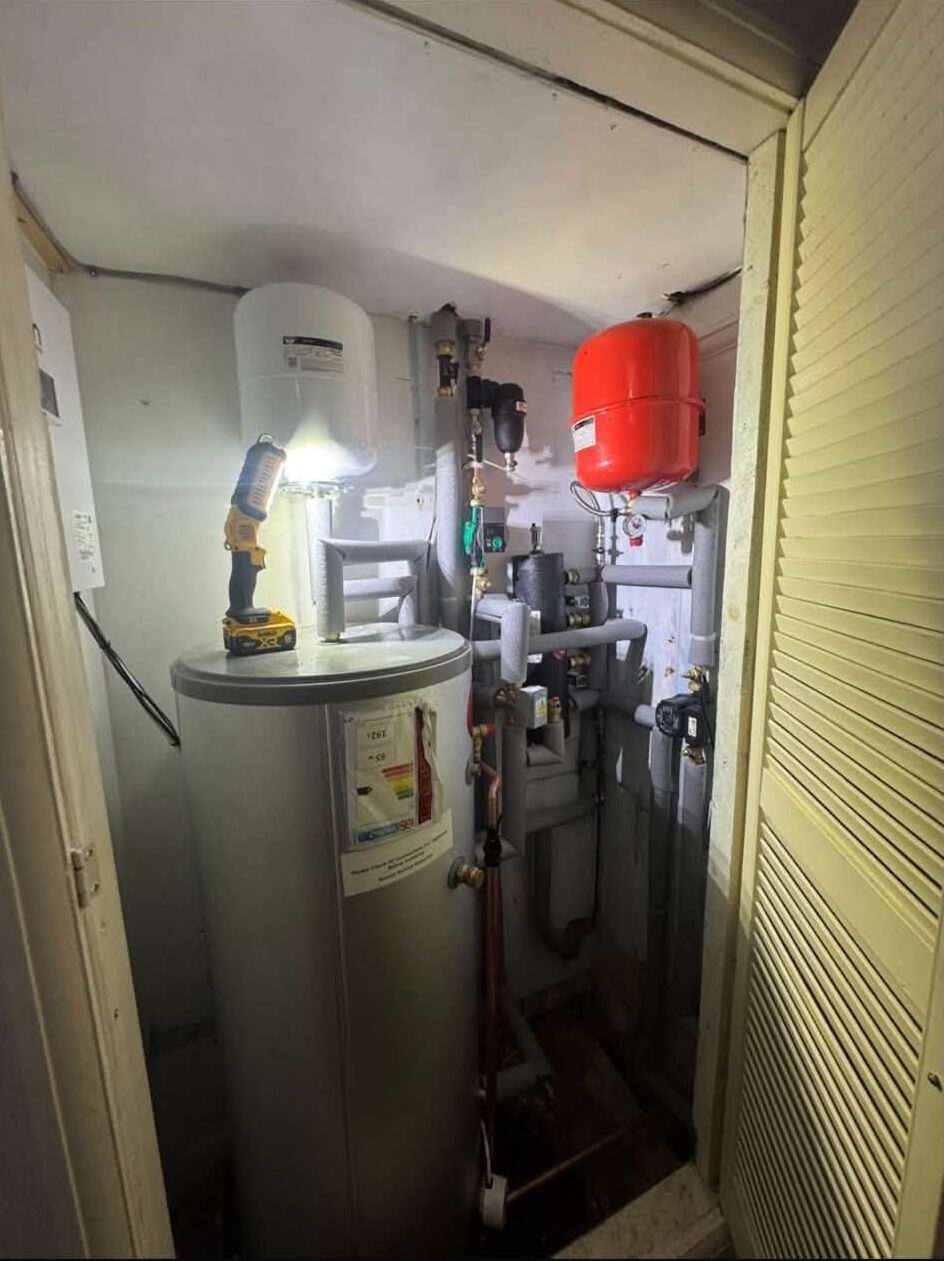
If you swap a cylinder for a combi today, a future heat pump means finding the space again, running new pipework and fitting a new cylinder from scratch. If you keep a system boiler and cylinder, the cupboard, the pipe runs and the hot water layout are already in place. The cylinder itself may need changing for a heat pump model with a larger coil, but that is a straightforward swap in a space designed for it. You can read more about the options on our water cylinders page.
So our advice is simple. If a heat pump is a realistic prospect for your home, and your house suits a cylinder, keep the cylinder when the boiler is replaced. If a heat pump is not on the cards, choose the boiler that suits your bathrooms and your mains supply, which may well be a combi. Our air source heat pump page explains what that move involves, and our guide to air source heat pump grants covers the funding available towards it. The current scheme rules are published on GOV.UK.
A cylinder also earns its place now if you have solar PV. A diverter can send spare daytime electricity to the cylinder’s immersion heater, so sunshine that would otherwise be exported heats your water instead. A twin-coil cylinder can also take heat from solar thermal panels.
We started out as a heating servicing and maintenance business more than 17 years ago, and today we fit gas boilers, cylinders, heat pumps and solar from our base in Doncaster, South Yorkshire. We are Gas Safe registered and MCS certified, and every engineer is directly employed by us. Because we install both boilers and heat pumps, we recommend whichever suits your home and your plans, and we’ll tell you straight which one that is.
Unvented cylinders have to be fitted by an installer qualified to do so under Building Regulations. You can check any gas engineer on the Gas Safe Register. Once your boiler and cylinder are in, the same engineers can look after them: our Bronze service plan covers the boiler and the cylinder together.
Our gas boiler installation page sets out the boilers we fit and the warranties that come with them. Already been quoted? Send it over and we’ll tell you straight whether it’s a good price. You can find out more about us and how we work.
Modern combi and system boilers are both condensing boilers with similar efficiency at heating your radiators. A combi avoids the small heat loss from stored water, while a system boiler lets you heat water with surplus solar electricity or, later, a heat pump, so the better choice depends on how your home uses hot water.
A combi can supply two showers at once, but they share the same flow of hot water, so each one runs weaker than it would on its own. If two showers at the same time is a daily routine in your home, a system boiler with a cylinder will serve you better.
It depends on the bathrooms rather than the bedrooms. A 3-bed house with one bathroom and good mains pressure usually suits a combi, while a 3-bed with a bathroom and an en suite, or a busy family, usually suits a system boiler.
Almost every air source heat pump installation uses a hot water cylinder, because a heat pump heats water steadily rather than instantly. Keeping a cylinder when you replace your boiler makes a future heat pump installation simpler.
Yes. Switching from a combi to a system boiler means finding space for a cylinder, usually in an airing cupboard or loft space, and running pipework to it. An unvented cylinder also needs a safe discharge pipe, and your installer will check your mains supply first.
Both heat water into a cylinder, but a system boiler’s cylinder is usually fed directly from the mains and the pump and expansion vessel are built into the boiler. A conventional boiler relies on a cold water tank in the loft to feed the cylinder, which suits homes with low mains pressure.
If you are weighing up a combi or a system boiler, book a free, no-obligation survey. We will look at your bathrooms, your hot water use and your mains supply, then recommend the boiler that suits your home today and the plans you have for it. Prefer to talk first? Call us on 01302 879038.