
No products in the basket.

With electricity bills climbing and UK households seeking greater energy independence, interest in renewable solutions is at an all-time high. The combination of solar panels and batteries for home solar is rapidly changing how families generate, store, and use electricity.
These systems help reduce reliance on the grid, lower monthly costs, and provide backup power during outages. Homeowners also benefit from improved sustainability and a smaller carbon footprint.
In this expert guide, you will discover everything you need to know about batteries for home solar: from types and sizing, to costs, installation, future trends, and practical tips for 2026.
Homeowners across the UK are increasingly interested in achieving greater energy independence, especially as electricity costs rise and sustainability becomes a priority. At the centre of this shift are batteries for home solar, which store excess solar energy for later use and transform how households manage their power needs.
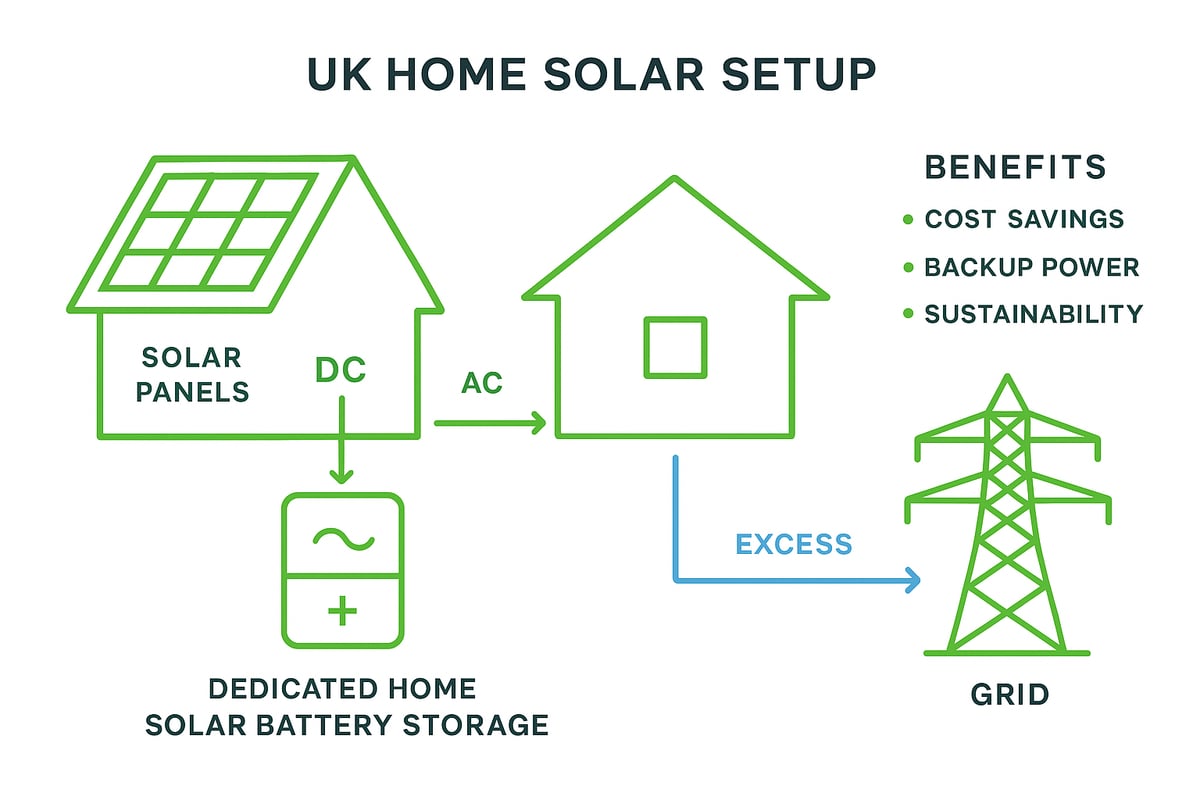
Batteries for home solar act as energy reservoirs, capturing electricity generated by your solar panels during the day. Instead of exporting surplus energy to the grid, these batteries store it for use after sunset or during periods of high demand. This process relies on a seamless interaction between solar panels, inverters, and the battery system. Most solar panels produce direct current (DC) electricity, which is converted by inverters into alternating current (AC) suitable for home appliances. The battery stores DC energy and, with the help of hybrid or dedicated inverters, releases it as needed to power your home.
The benefits of integrating batteries for home solar are significant. Homeowners can increase their self-consumption of solar power, reducing reliance on the grid and shrinking their energy bills. For many, this leads to greater energy independence and peace of mind, especially during power outages, as batteries can provide backup electricity. These systems also contribute to a more sustainable lifestyle by maximising the use of clean energy and reducing carbon emissions.
However, there are important considerations when adopting batteries for home solar. The initial investment can be substantial, with costs reflecting battery capacity, brand, and installation complexity. Space is another factor, as battery units require a dedicated, well-ventilated area, often in a garage or utility room. Battery lifespan is finite—most lithium-ion batteries, for example, last between 10 and 15 years, after which performance gradually declines.
Environmental impact is a central concern for many homeowners. Batteries for home solar help cut a property's carbon footprint by enabling more efficient use of renewable energy. Yet, responsible recycling and disposal of batteries at the end of their life cycle remain challenges for the industry. Manufacturers and installers are increasingly offering take-back schemes and recycling programmes to address these concerns.
Real-world examples from across the UK highlight the transformative impact of batteries for home solar. Some households have managed to reduce their grid electricity consumption by up to 90 percent, particularly when combining a well-sized battery with an efficient solar PV array. According to Home solar battery storage solutions, more than 150,000 UK homes were equipped with solar batteries by late 2025, a figure projected to grow rapidly as technology advances and costs fall.
Despite these advantages, several myths persist about batteries for home solar. It is commonly believed that batteries are only suitable for off-grid properties or rural homes. In reality, most UK installations are in suburban and urban areas, where batteries provide savings and resilience against power cuts. Another misconception is that battery systems are overly complex or require constant maintenance. Modern systems are designed for ease of use, with remote monitoring and minimal upkeep.
To summarise, batteries for home solar play a vital role in the modern energy landscape. They offer homeowners a practical route to cost savings, energy security, and a reduced environmental impact. As adoption accelerates and technology evolves, understanding how these systems work and their real-world benefits is essential for anyone considering a more sustainable, independent future.
Choosing the ideal batteries for home solar is essential to unlocking the full potential of your solar investment. The right battery will maximise your energy savings, offer reliable backup power, and ensure your system performs efficiently year-round. However, getting the sizing wrong can lead to frustration and underwhelming results.
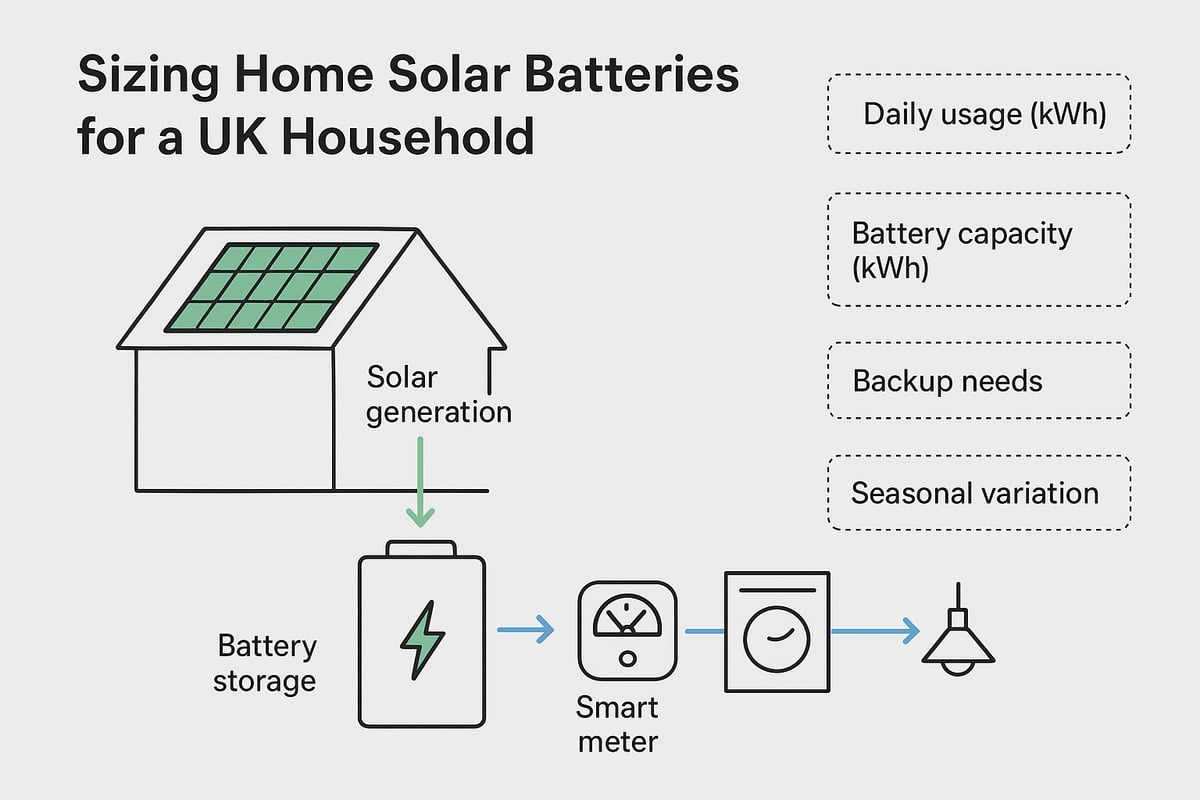
Begin by evaluating your household's electricity usage and your solar PV system's generation patterns. Collect data from your smart meter or recent energy bills to determine daily and seasonal consumption. Analysing this information reveals when and how much power you use, which is vital for matching batteries for home solar to your actual needs.
Also, consider any changes on the horizon. Are you planning to add an electric vehicle, switch to a heat pump, or increase home occupancy? These factors will influence your future energy profile and should be included in your calculations.
Once you know your usage, calculate the required battery capacity. Most UK homes benefit from batteries for home solar sized to cover evening and nighttime demand, when solar panels are not generating. The goal is to store excess solar energy produced during the day and use it later.
A common benchmark for a four-person household with a 4kW solar PV system is an 8-10kWh battery. This typically provides a good balance between cost and savings, allowing you to use most of your solar energy and minimise reliance on the grid.
| Household Size | Solar PV Size | Recommended Battery Capacity (kWh) |
|---|---|---|
| 2 people | 2-3kW | 4-6 |
| 4 people | 4kW | 8-10 |
| 6 people | 5-6kW | 12-15 |
This table offers a starting point, but every home is unique. If you want backup power for outages, consider a slightly larger system.
Several variables affect which batteries for home solar will suit your property:
Integration with your existing solar PV system is crucial. Not all batteries are compatible with every inverter or installation. It is wise to consult a professional installer who can evaluate your current setup.
Ensuring your batteries for home solar work seamlessly with your current solar PV and electrical infrastructure is essential. Some systems require hybrid inverters, while others work alongside existing setups. Always check for compatibility to avoid costly rewiring or unexpected upgrades.
For a deeper understanding of how storage can be integrated with solar and other renewable technologies, explore Renewable energy storage systems. This resource provides insight into broader strategies for maximising your system's flexibility and value.
The UK's climate brings unique challenges and opportunities. Winter days are shorter, limiting solar generation and making efficient batteries for home solar even more valuable. In summer, surplus solar energy can be stored or exported, increasing your savings.
When sizing your battery, factor in seasonal swings. Some homeowners opt for a slightly larger battery to capture summer surpluses, while others prioritise winter resilience.
Many households make the mistake of undersizing or oversizing their batteries for home solar. An undersized battery may not cover your needs, while an oversized one adds unnecessary cost. Avoid "one size fits all" solutions. Instead, base your decision on real usage data, future needs, and professional advice.
In summary, selecting the right batteries for home solar involves careful assessment, accurate calculation, and attention to compatibility. With a tailored approach, you will maximise your energy independence, reduce bills, and support a sustainable future.
Home energy management is evolving rapidly, with batteries for home solar now at the heart of this transformation. Many UK households are seeking greater control over their energy use, especially as smart home technologies become more accessible. Integrating batteries for home solar with digital systems unlocks new ways to save money, reduce carbon emissions, and boost energy independence.
Smart meters are now standard in most UK homes, providing real-time energy data and enabling time-of-use tariffs. When paired with batteries for home solar, these meters allow homeowners to automate charging and discharging schedules. For example, you can charge your battery during off-peak hours when electricity is cheapest, then use stored power later to avoid high tariffs.
Many smart energy management systems use algorithms to optimise battery use based on weather forecasts, historical consumption, and market prices. This automation makes it easier to maximise savings and reduce reliance on the grid. According to the Energy Saving Trust, smart controls can deliver up to 20% extra savings over manual operation.
Batteries for home solar are not just for personal use, they can also support the wider electricity network. By participating in grid services and virtual power plants (VPPs), homeowners can earn income by allowing their batteries to balance supply and demand. Aggregators coordinate thousands of home batteries, creating a flexible energy resource for the grid.
Exporting surplus solar energy is another key benefit. The Smart Export Guarantee (SEG) pays households for energy fed back to the grid, and battery systems can be programmed to export at the most profitable times. This approach not only boosts household finances, but also supports the transition to a cleaner, more resilient energy system. For more on the environmental and economic benefits, see Green energy storage benefits.
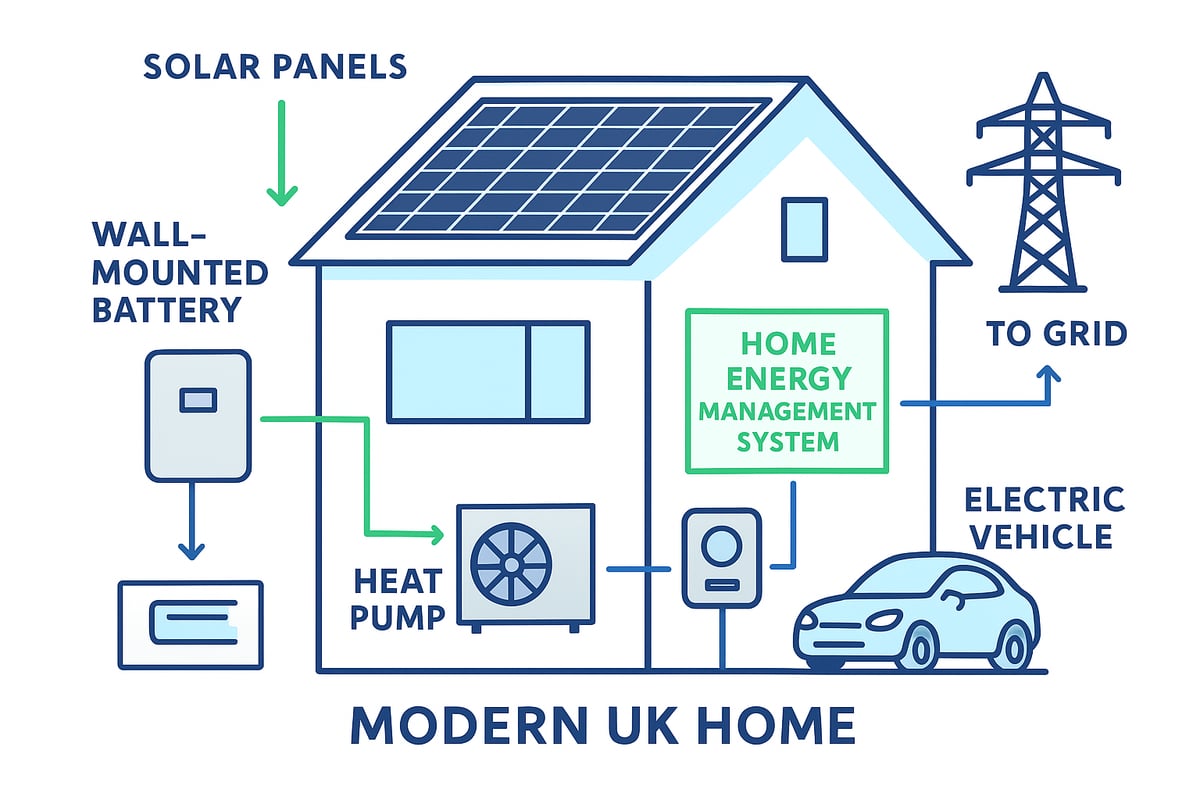
The future of batteries for home solar lies in total home integration. Smart batteries can coordinate with electric vehicle chargers and heat pumps, ensuring that renewable energy is used efficiently throughout the day. For example, a home energy management system might prioritise charging your car overnight when tariffs are low, then switch to heating or cooling as needed.
This level of control helps households make the most of their solar generation, reduce peak demand, and cut carbon emissions. With battery storage, smart controls, and flexible devices working together, UK homes are becoming more self-sufficient and sustainable than ever before.
The UK is on the brink of a significant transformation in how households use batteries for home solar. As demand for clean, reliable energy grows, 2026 will see a wave of new technologies and smarter energy use. The coming years promise more affordable, efficient, and integrated solutions for every homeowner.
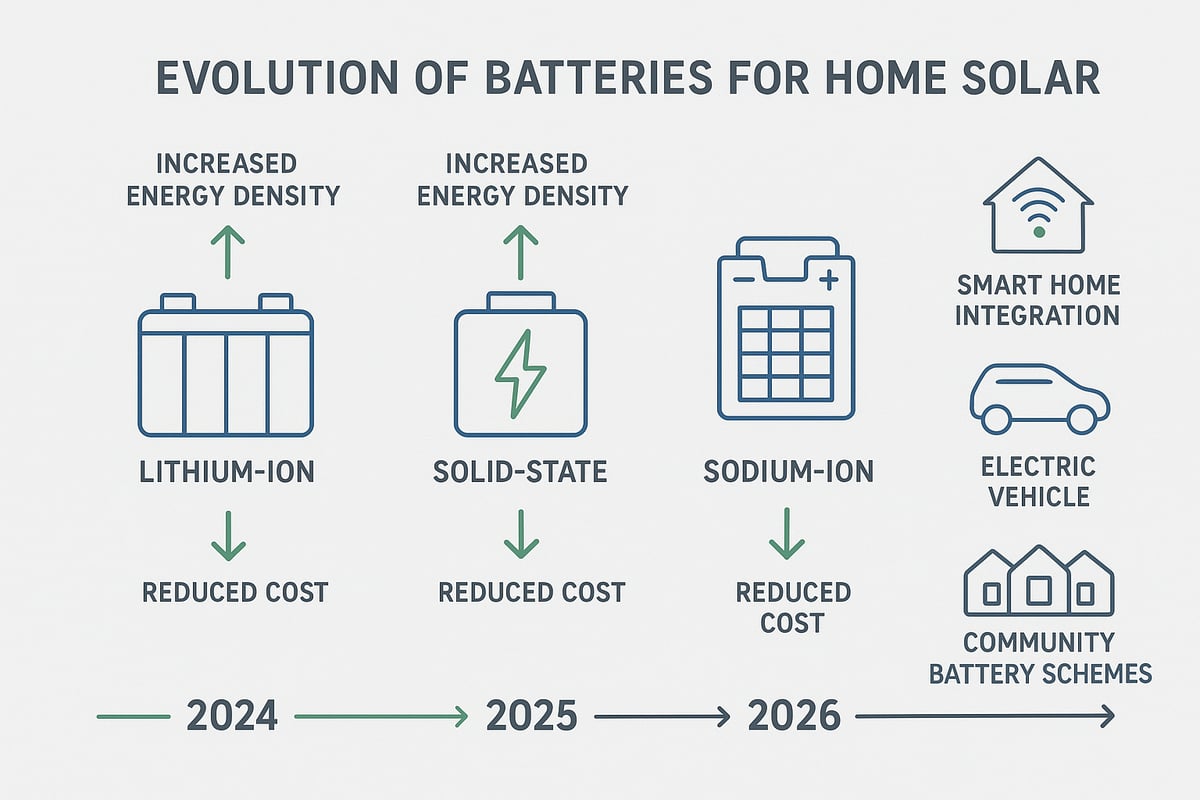
Innovations in battery chemistry are reshaping what is possible with batteries for home solar. By 2026, solid-state batteries are expected to enter the UK residential market, offering greater safety and higher energy density than traditional lithium-ion. Sodium-ion and flow batteries are also gaining traction, providing cost-effective and sustainable alternatives. The table below highlights the key differences among these emerging technologies:
| Battery Type | Energy Density | Safety | Lifespan (years) | Cost Trend (2026) |
|---|---|---|---|---|
| Lithium-ion | High | Good | 10-15 | Falling |
| Solid-state | Very High | Excellent | 15-20 | Rapidly Falling |
| Sodium-ion | Moderate | Very Good | 10-15 | Low |
| Flow | Moderate | Excellent | 20+ | Stable |
Falling costs are making batteries for home solar more accessible for UK households. Increased global production and improved materials are driving prices down. According to the UK solar and energy storage market report 2025, battery prices are expected to drop by as much as 25 percent by 2026, while energy density continues to rise. This means homeowners can store more electricity for less, making payback periods shorter and returns on investment more attractive.
Government policy is also playing a vital role in shaping the future of batteries for home solar. New grants, VAT exemptions, and updated regulations are encouraging more UK residents to invest in storage. Community battery schemes are emerging, enabling neighbourhoods to share renewable energy and reduce reliance on the grid. Peer-to-peer trading platforms are gaining popularity, letting users sell surplus energy directly to others.
Integration with electric vehicles is another trend set to change the market. Vehicle-to-home (V2H) technology allows homeowners to use their EVs as mobile batteries for home solar, further increasing flexibility and resilience. These advances are making it easier to optimise energy use and reduce costs across the entire household.
Adoption is accelerating at a record pace. Over 150,000 UK homes were equipped with batteries for home solar by late 2025, with forecasts suggesting more than 500,000 will benefit by 2026. The recent UK rooftop solar installations surge 2025 highlights this trend, as battery storage records are set year after year.
A real-life example can be seen in Manchester, where a neighbourhood battery pilot is helping dozens of homes cut their grid reliance by up to 90 percent. Projects like this show how batteries for home solar are not just about individual savings, but about building more resilient and sustainable communities for the future.
Making the move to batteries for home solar is a practical investment in energy independence and resilience. Below, you will find a clear, step-by-step guide designed to help UK homeowners confidently navigate the installation process in 2026.
Begin by reviewing your existing solar PV system and household electricity consumption. Accurate assessment is vital for successfully choosing batteries for home solar that meet your needs.
Check your smart meter data or recent energy bills to understand your daily and seasonal usage patterns. Identify any changes in your household that might affect future energy demand, such as planned electric vehicle charging or new appliances. This baseline will guide your next decisions.
Explore the available batteries for home solar by comparing different battery chemistries, brands, and performance metrics. Take note of key features such as capacity, cycle life, and compatibility with your existing solar system.
Calculate the required battery capacity based on your daily energy use, desired backup duration, and any plans for future expansion. Consider your property’s size, occupancy patterns, and possible additions like heat pumps or electric vehicles. This groundwork ensures your battery investment is both efficient and future-proof.
Seek out professional, certified installers with proven expertise in batteries for home solar. Look for companies holding MCS or equivalent accreditation, as this guarantees compliance with UK regulations and access to government incentives.
Request detailed site surveys and transparent, itemised quotes. For a trusted starting point, consider Solar PV installation services that offer tailored advice and integrated solutions. Comparing multiple quotes will help you balance quality, warranty, and cost.
Investigate available funding options, grants, or finance packages to support the purchase of batteries for home solar. Check your eligibility for current UK government grants or VAT exemptions, as these can significantly reduce upfront costs.
Explore finance options that allow you to spread payments over time. Proper research at this stage can maximise your return on investment and make the transition more affordable.
Once you have chosen your system, the installation of batteries for home solar begins with a scheduled timeline and a clear process. Expect an initial survey followed by necessary electrical upgrades and professional installation.
After physical setup, the installer will commission the system, set up monitoring tools, and provide user training. Thorough commissioning ensures your battery operates safely and efficiently, ready to deliver long-term savings and resilience.